Written by Jinna CAMERON, veterinary medical student and dog health researcher. Reviewed for factual accuracy against trusted veterinary sources by DVM ,Carla DONTESK
French Bulldog diarrhea is one of those problems that can look simple at first but feel hard to judge in real life. Sometimes it is caused by a food change or mild stomach upset, and sometimes it is an early sign of a more serious gastrointestinal problem, especially in a breed that is already more prone to digestive issues than many owners realize.
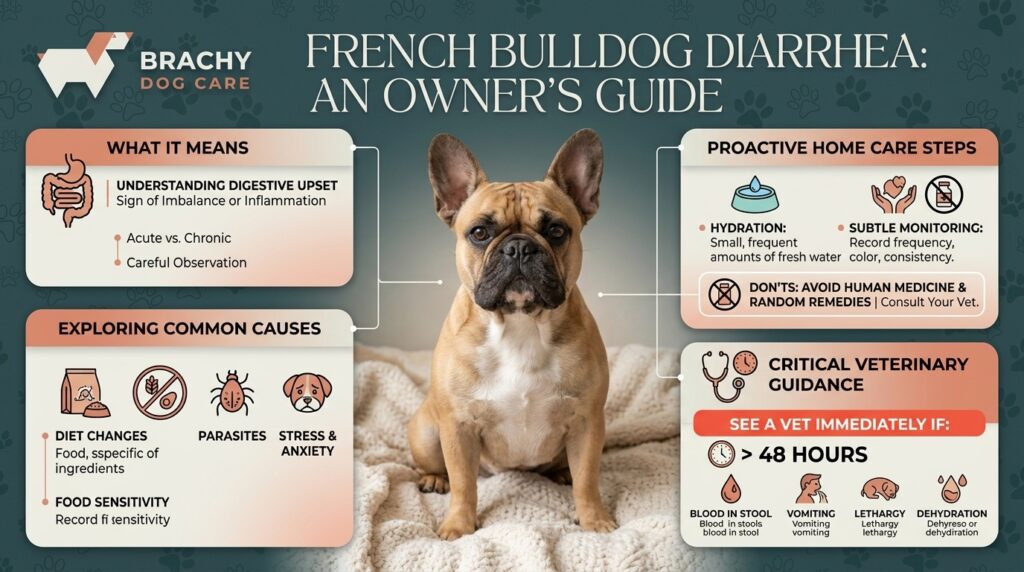
If your French Bulldog has diarrhea, the main goal is not to guess blindly or rush into random home remedies. The safer approach is to look at the pattern, the stool quality, and any other symptoms, then decide whether the problem looks mild, diet-related, or urgent.
Why does my French Bulldog have diarrhea?
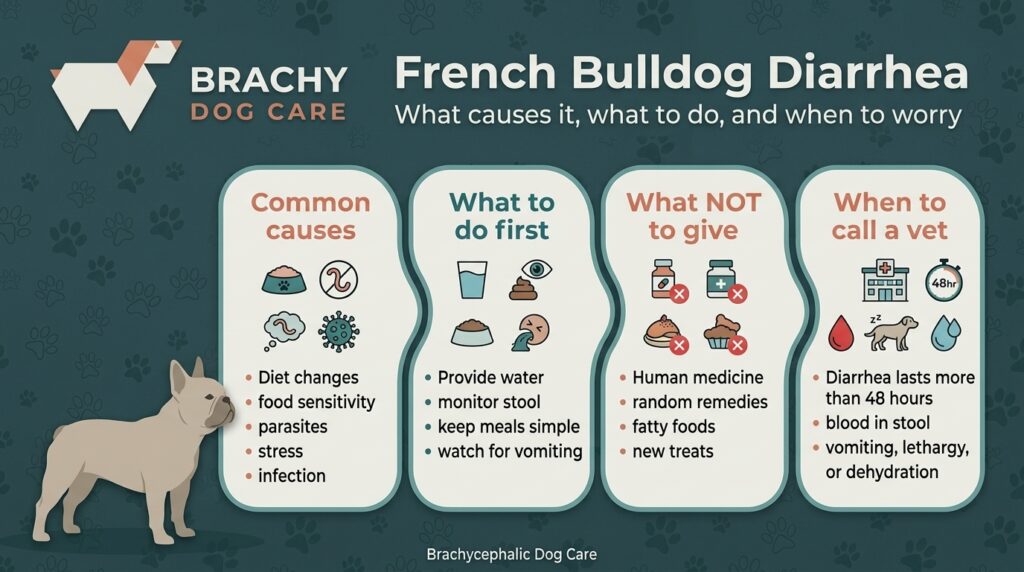
French Bulldog diarrhea can happen for many reasons, and the cause is not always obvious from one stool alone. A Frenchie may have loose stool after a sudden diet change, a rich treat, stress, scavenging something outside, or an infection affecting the gut.
French Bulldogs also seem to come up often in discussions of chronic gastrointestinal sensitivity, which means recurring diarrhea should not be ignored if it keeps happening. In some dogs, the problem is food-responsive and improves with diet changes, while in others it may point to inflammation, parasites, or a condition that needs a veterinarian’s help.
Common reasons French Bulldogs get diarrhea include:
- Sudden food changes.
- Food intolerance or food sensitivity.
- Food allergies.
- Too many treats or fatty foods.
- Stress or excitement.
- Parasites or infectious stomach bugs.
- More serious intestinal disease if the issue is recurring or long-lasting.
If your dog also has itching, ear problems, or recurring skin issues, that can be a useful clue that food sensitivity may be part of the picture. For that reason, this article connects closely with your [French Bulldog Food Allergies] and [French Bulldog Itchy Skin] content.
Why French Bulldogs can be more prone to stomach problems
French Bulldogs are not guaranteed to have digestive problems, but they are a breed that shows up often in GI discussions for a reason. Their tendency toward brachycephalic-related swallowing and air intake, along with reported breed predispositions to certain intestinal conditions, makes owners more likely to notice symptoms like loose stool, gassiness, vomiting, and recurring stomach upset.
That does not mean every French Bulldog with diarrhea has a chronic disease. It does mean repeated diarrhea deserves a more careful look than a one-off mild stool change in a dog with no history of digestive issues.
Owners often describe Frenchie diarrhea as:
- soft stool that never fully firms up.
- sudden liquid stool.
- explosive diarrhea.
- diarrhea mixed with mucus.
- diarrhea that comes and goes.
- diarrhea together with vomiting or a poor appetite.
If the pattern keeps recurring, it becomes less likely that this is just random upset and more likely that the dog needs a more structured veterinary workup.
French Bulldog diarrhea and vomiting: what it means
When diarrhea and vomiting happen together, the situation deserves more caution. A single episode of soft stool may be mild, but diarrhea plus vomiting raises the chance of dehydration and can also mean the stomach and intestines are both irritated at the same time.
This combination can happen with:
- diet indiscretion.
- food intolerance.
- infections.
- parasites.
- inflammatory intestinal disease.
- more serious illness affecting the gut or another organ system.
A French Bulldog with diarrhea and vomiting should be watched closely for:
- reduced drinking.
- lethargy.
- dry gums.
- repeated vomiting.
- blood in stool or vomit.
- abdominal discomfort.
- refusal to eat.
If your dog is small, very young, or already seems weak, the threshold for veterinary care should be lower. Diarrhea may look simple, but in a dog that cannot keep fluids down, it can progress faster than owners expect.
What to give a French Bulldog with diarrhea
The safest first step is usually not a human medicine. It is careful monitoring, access to water, and a simple diet approach if the dog is otherwise bright, alert, and not vomiting repeatedly.
A bland, easily digestible feeding approach is often used for mild stomach upset, but it should be done thoughtfully and not as a substitute for veterinary care when red flags are present. If your dog’s diarrhea is severe, bloody, or paired with vomiting, do not rely on home feeding alone.
Safe general support may include:
- fresh water available at all times.
- small, frequent meals rather than a large meal.
- a simple, easily digestible food if your veterinarian has previously recommended one.
- watching stool quality, energy level, appetite, and hydration.
If your dog is already on a sensitive-stomach diet and suddenly gets diarrhea anyway, that is useful information. It may suggest the problem is not just the food, especially if there is vomiting, blood, or a change in behavior.
For dogs with recurring loose stools or suspected food sensitivity, a structured diet discussion often matters more than trying multiple random foods. That is also why this article connects well to your [Best Food for French Bulldogs with Sensitive Stomachs] and [Best Dog Food for French Bulldogs] pages.
What food firms up dog poop?
There is no single food that fixes every case of diarrhea, because the cause matters more than the brand. Still, some foods are more likely to be tolerated well because they are simple, highly digestible, and less likely to overwhelm an irritated gut.
Foods that may help firm stool in some dogs include:
- a veterinarian-recommended gastrointestinal diet.
- a consistent, easy-to-digest food.
- a temporary bland feeding plan if the case is mild and your vet has advised this approach.
- food that matches the dog’s known tolerance history rather than something completely new and experimental.
What usually does not help is making sudden diet jumps, adding too many ingredients at once, or switching between foods every day in response to stool changes. That often makes it harder to tell what the real trigger is.
If your French Bulldog has repeated diarrhea after certain proteins, treats, or table scraps, that pattern is more useful than one isolated episode. In those cases, the long-term answer may be a more deliberate diet strategy rather than a short-term stomach fix.
Sometimes French Bulldog stool does not become fully watery right away. It may start as soft or loose stool, especially after a food change or when a dog is reacting to something in the diet. If you want to understand the earlier stage of this digestive pattern, our guide to French Bulldog Soft Stool explains what it means and what to feed.
Should you give human medicine?
In general, human medications should not be given casually to a French Bulldog with diarrhea. Owners often search for quick fixes, but what works for people is not automatically safe for dogs, and some products can cause more harm than help.
This includes common over-the-counter drugs that people mention online. Even when a drug is used in veterinary medicine in specific situations, that does not mean it is safe to give at home without guidance.
Avoid:
- guessing at human medication doses.
- combining multiple home remedies.
- using anti-diarrheal drugs without veterinary advice.
- using antacids or stomach medications just because a dog “seems upset.”
The safer move is to contact a veterinarian if diarrhea is persistent, severe, bloody, or paired with vomiting. If a product is only appropriate in very specific situations, your vet should be the one to decide that.
If your French Bulldog’s tummy never seems quite right, even on “good” food, it may be time to look at diet through an allergy and sensitivity lens instead of just switching brands at random. In my guide to the best dog food for French Bulldogs with allergies, I explain which ingredients commonly cause trouble, how to tell allergy from simple sensitivity, and which types of formulas are usually gentler on Frenchie guts
Is pumpkin or rice good for French Bulldog diarrhea?
These are common owner questions because they are simple, familiar foods. In practice, they may help some dogs, but they are not a universal solution and they should not delay a vet visit if the dog seems unwell.
Rice and pumpkin are often discussed because they are easy to digest for many dogs, but they are not a cure for the underlying problem. If diarrhea is from infection, parasites, food intolerance, or inflammatory disease, adding a home food may not address the cause.
The more important point is this:
- mild, one-off loose stool may settle with conservative care.
- repeated diarrhea needs a better explanation.
- diarrhea with vomiting, blood, weakness, or dehydration needs veterinary attention.
So the question is less “Is pumpkin good?” and more “Is this a mild case that can be watched, or is this already past the point where home care is enough?”
If your Frenchie’s poop keeps sliding between the “yellow” and “red” zones on the chart, you might be thinking about probiotics as part of the plan. In this in‑depth French Bulldog probiotics article, I break down when probiotics are a sensible add‑on for soft stool or mild diarrhea, and when they should never delay proper diagnostics and treatment from your vet.
How long is too long for a dog to have diarrhea?
A French Bulldog that has diarrhea for more than a day or two should not be ignored, especially if the stool is watery, frequent, or getting worse. Even when a dog is still acting normal, persistent diarrhea can still lead to dehydration or point to a problem that will not go away on its own.
You should be more concerned if:
- diarrhea lasts beyond 24 to 48 hours.
- the stool is very watery or explosive.
- there is blood or mucus.
- your dog vomits too.
- appetite drops.
- your dog becomes lethargic.
- the diarrhea keeps returning.
A dog can look “mostly fine” and still need veterinary help. That is one reason this topic is worth treating seriously, especially in French Bulldogs, where recurring digestive problems are not unusual.
If you’re not sure whether your Frenchie’s stool still counts as diarrhea or is just softer than usual, it can help to compare what you’re seeing with a clear, visual reference. This detailed French Bulldog poop chart walks through normal, soft, and liquid stool, plus color changes and when each pattern should push you to call your vet.
When diarrhea becomes an emergency
Some cases can wait for a regular veterinary visit, but others should be treated as urgent. Bloody diarrhea, repeated vomiting, marked weakness, collapse, or signs of dehydration are not situations to watch casually at home.
Seek veterinary care promptly if your French Bulldog has:
- blood in the stool.
- black, tarry stool.
- repeated vomiting.
- signs of dehydration.
- abdominal pain.
- fever.
- refusal to drink.
- lethargy or weakness.
- diarrhea in a puppy.
- diarrhea that keeps worsening.
If the stool is liquid and the dog is also vomiting, the risk goes up because fluid loss can become significant faster than many owners expect. A calm but timely veterinary assessment is the safer choice.
Dietary upset is a common cause of loose stools, but some foods do far more than just unsettle the gut. If your Frenchie’s diarrhea started after getting into human food, it’s worth ruling out something more serious, our guide to foods that are toxic to French Bulldogs explains which everyday items can cause real harm and when a stomach upset is actually an emergency.
What if my French Bulldog has diarrhea but is acting normal?
This is one of the most common and most misleading situations. A dog may still be playful, interested in food, and active while having clearly abnormal stool.
That does not mean nothing is wrong. It may mean the issue is mild and early, or it may mean the dog is compensating well for now. What matters is the pattern and duration.
If your French Bulldog has diarrhea but seems otherwise normal:
- monitor stool frequency and consistency.
- watch for vomiting or appetite changes.
- make sure water intake is normal.
- check for blood or mucus.
- avoid changing foods repeatedly.
- note whether the problem follows treats, chews, or a new meal.
If it does not improve within a reasonable time, the issue deserves a veterinary conversation even if your dog still looks bright.
Digestive upsets in this breed rarely travel alone, and the same sensitive gut that causes loose stools often shows up at the other end too. If your Frenchie is dealing with both, it’s worth understanding what French Bulldog vomiting can signal, including how to tell true vomiting from regurgitation and which color patterns mean you should call your vet.
Why does my Frenchie have explosive diarrhea?
Explosive diarrhea usually means the stool is very liquid, passed with urgency, and often happens suddenly. It can happen after something mild like a diet mistake, but it can also occur with more serious intestinal irritation.
Possible reasons include:
- dietary indiscretion.
- abrupt food change.
- food intolerance.
- infection.
- parasites.
- inflammatory bowel disease.
- a significant intestinal upset that needs treatment.
Explosive diarrhea is not a diagnosis. It is a symptom that tells you the gut is irritated enough that the stool is moving through too fast to form normally. If it repeats, worsens, or comes with vomiting or blood, it should not be managed as a minor inconvenience.
Can food allergies cause diarrhea in French Bulldogs?
Yes, food allergies or food-responsive digestive problems can be part of the picture. In some dogs, the digestive signs come with skin problems, ear issues, itching, or paw licking, which is why your allergy cluster and GI cluster naturally support each other.
That said, not every French Bulldog with diarrhea has a food allergy. Owners often assume “it must be food,” but diarrhea can also come from parasites, infection, or other GI disease. This is why a careful diet history matters, and why elimination-style veterinary diet trials are often more useful than guessing.
If your dog also has chronic itching, recurrent ear irritation, or skin flares, that makes the food-allergy angle more relevant. You can point readers toward your [French Bulldog Food Allergies] article for that broader symptom pattern.
How to tell if your French Bulldog is dehydrated
Dehydration is one of the main reasons diarrhea gets more serious. A dog losing fluid through repeated stool and possibly vomiting can become dehydrated faster than expected, especially if drinking less.
Warning signs can include:
- dry gums.
- thick or sticky saliva.
- sunken eyes.
- lethargy.
- decreased urination.
- weakness.
- skin that does not spring back normally.
If you suspect dehydration, do not wait too long to call a vet. Mild dehydration can become more serious if the diarrhea continues or if the dog also starts vomiting.
French Bulldog diarrhea treatment
Treatment depends on the cause, which is why the goal is not just to stop the stool temporarily. Mild cases may improve with conservative care, but recurring or severe diarrhea usually needs a proper diagnosis.
Veterinary treatment may involve:
- physical examination.
- stool testing.
- hydration support.
- diet modification.
- parasite treatment if needed.
- targeted medication when the cause is identified.
- further testing if the diarrhea is persistent or recurrent.
For dogs with chronic or food-responsive signs, diet trials are often a major part of management. That is why long-term improvement often depends more on choosing the right diet strategy than on short-term symptom suppression.
A practical note on products
A veterinarian-formulated gastrointestinal diet can be a practical option if your French Bulldog has recurring loose stool or a sensitive stomach, because these foods are designed to be easier to digest than a standard diet. The key is not to treat it as a quick fix for every case of diarrhea, but as a supportive feeding option to discuss with your vet when the problem is mild, recurring, or linked to diet sensitivity.
When to see a vet
A French Bulldog with diarrhea should see a vet sooner rather than later if any of the following are true:
- the diarrhea lasts more than 24 to 48 hours.
- there is blood or black stool.
- vomiting happens too.
- the dog seems weak, painful, or dehydrated.
- the dog is a puppy.
- the problem keeps coming back.
- appetite or drinking changes.
- the stool is very watery or explosive.
It is especially important not to dismiss diarrhea just because your Frenchie still seems cheerful. Some dogs stay bright for a while even when the underlying problem is still active.
According to Cornell University College of Veterinary Medicine, mild dog diarrhea often resolves on its own, but vomiting, black or tarry stool, blood in the stool, lack of appetite, lethargy, or diarrhea lasting more than 48 to 72 hours are signs that veterinary care is needed.
FAQ
Conclusion
French Bulldog diarrhea is common enough that many owners will face it at some point, but it should never be treated casually if it is persistent, bloody, or paired with vomiting. The safest approach is to think in terms of pattern, severity, hydration, and whether other symptoms are present.
For a young, careful authority site like yours, this article works well because it balances immediate owner help with medically responsible caution. It also supports your larger cluster around food sensitivity, stomach upset, and breed-specific digestive care.
French Bulldog Cost in 2026: Price, Vet Bills, and the True Lifetime Cost
French Bulldog Temperament: Personality, and Are They Good Family Dogs?

Best Dog Toothpaste for French Bulldogs: A Vet-Guided Guide
Do French Bulldogs Shed? Coat, Grooming, and When to Worry
Why Your French Bulldog Chews Everything (and How to Stop It)