Written by Jinna CAMERON, veterinary medical student and dog health researcher. Reviewed for factual accuracy against trusted veterinary sources by DVM ,Carla DONTESK
French Bulldog itchy skin is one of the most common reasons owners start looking for answers, because the pattern can be frustratingly vague at first. A Frenchie may scratch a little more than usual, lick the paws, rub the face, or get red skin that seems to come and go. In other dogs, French Bulldog itchy skin becomes more obvious through repeated ear infections, skin odor, or inflamed folds that never quite settle.
The hard part is that French Bulldog itchy skin is not usually one single problem. It can be linked to allergies, fleas, yeast, bacterial infection, skin-fold irritation, or a mix of several issues happening at once. If you want the broader allergy picture first, our guide to French Bulldog allergies is a useful starting point, and food-related cases are covered in French Bulldog food allergies.
The goal here is to help you understand what French Bulldog itchy skin usually means, what you can safely do at home, and when it is time to get a veterinarian involved.

What French Bulldog itchy skin usually looks like
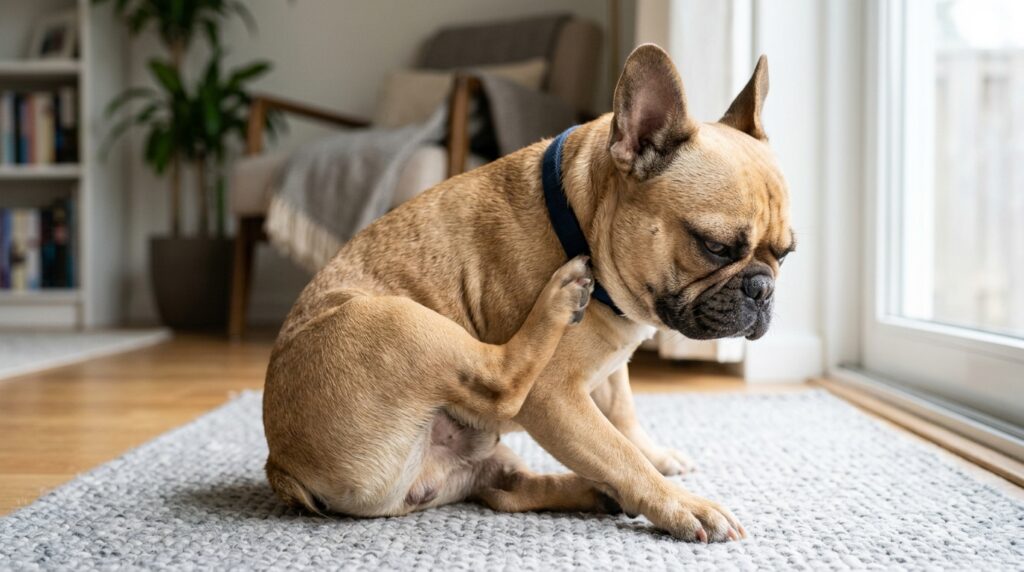
French Bulldog itchy skin often shows up in a few predictable ways, even if the underlying cause is not immediately obvious.
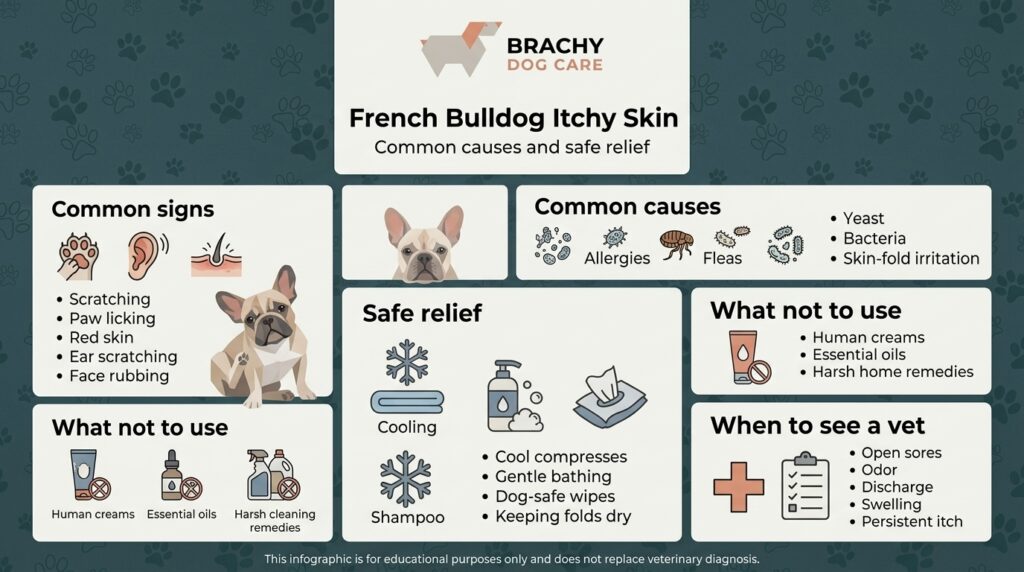
Common signs include:
- scratching or biting at the skin
- licking or chewing the paws
- face rubbing
- head shaking or ear scratching
- red or irritated skin
- belly, groin, or armpit irritation
- skin odor
- rashes or moist irritated patches
- hair loss from repeated licking or rubbing
- darkened or thickened skin in chronic cases
Some signs are more suggestive of a real skin problem than others. French Bulldog itchy skin becomes more concerning when the itching is repeated, persistent, or paired with ear problems, odor, or redness that keeps coming back. A one-off scratch after grooming is much less concerning than a dog that cannot seem to stop licking the paws or rubbing the face.
French Bulldog itchy skin can also look different depending on the cause. A dog with fleas may scratch more on the back end. A dog with allergies may chew the paws or rub the face. A dog with yeast overgrowth may have a greasy, musty smell. Skin-fold irritation may be most obvious around the face, tail pocket, or groin.
Why French Bulldogs are prone to itchy skin
French Bulldog itchy skin is common partly because of the breed’s skin anatomy and partly because many French Bulldogs are prone to chronic inflammatory skin disease. Their folds can trap moisture and debris. Their ears can become inflamed more easily. Their skin barrier is often under more strain than in a longer-muzzled, less fold-prone breed.
That does not mean every French Bulldog itchy skin case is “just the breed.” It means the breed has enough risk factors that minor irritation can turn into something more persistent.
French Bulldogs are also commonly overrepresented in dermatology cases for allergic skin disease and recurrent infection. For a broader veterinary overview of atopic dermatitis in dogs, the Merck Veterinary Manual has a useful summary here: atopic dermatitis in dogs.
In practice, this is why French Bulldog itchy skin often needs a structured approach rather than guesswork. A dog may have allergies, infection, and fold irritation at the same time, and each one can make the others worse.
Common causes of French Bulldog itchy skin
French Bulldog itchy skin can come from several overlapping causes. The most common ones are below.
Environmental allergies
Environmental allergies, also called atopy or atopic dermatitis, are one of the most important causes to consider. These can involve dust mites, pollens, molds, grasses, or other common environmental triggers.
French Bulldog itchy skin from environmental allergies often affects:
- paws
- face
- ears
- belly
- armpits
- groin
The itching may be seasonal in some dogs and year-round in others. Secondary yeast and bacterial infections are common because constant scratching damages the skin barrier.
A key point is that environmental allergies can look a lot like other causes of itch, especially food reactions or skin infection. That is why symptom pattern alone is not enough to diagnose the problem.
Food adverse reactions
Food-related itch is another possible cause, especially if the dog has non-seasonal itching, recurrent ear problems, or a pattern that never fully settles. French Bulldog itchy skin can absolutely be part of a food adverse reaction, but it should not be assumed without a proper trial.
Food-related cases are often discussed online as if switching to a “better” kibble is enough. It usually is not. If food is truly involved, a strict elimination diet trial is usually needed. That topic is covered more fully in our article on French Bulldog food allergies.
When itchiness and skin problems come together with loose stools, vomiting, or “mysterious” stomach upsets, food starts to matter a lot more. In that case, it can help to look at diet from both the allergy and gut side. I’ve written a separate article on best food for French Bulldogs with sensitive stomachs that explains how to choose gentler diets and when a vet-guided elimination plan makes sense.
Flea allergy dermatitis
A single flea bite can trigger days or even weeks of itching in a sensitive dog. French Bulldog itchy skin from flea allergy often shows up on the back end, around the tail base, hind legs, or lower back, but not always.
Even if you do not see fleas, they still need to stay on the list. In an allergic dog, a few bites can create a much bigger skin reaction than owners expect.
Yeast overgrowth
Yeast, especially Malassezia, is a very common secondary problem in dogs with itchy skin. It thrives in warm, moist, inflamed areas, which means French Bulldogs can be especially prone to it because of their folds and ear anatomy.
Signs that raise suspicion include:
- musty or yeasty odor
- greasy skin
- redness
- licking or scratching in folds
- recurring ear inflammation
Yeast does not always begin as the main problem. Sometimes it develops because the skin has already been irritated by allergies or moisture.
When a French Bulldog stays itchy for too long, the skin can start to change in ways that go beyond simple irritation. In some dogs, that itch leads to yeast overgrowth in folds, paws, or ears. For a closer look at what that can look like, read our article on French Bulldog yeast skin infection.
Not every itchy patch stays mild. In some French Bulldogs, repeated licking or scratching can turn a small area of irritation into a more inflamed, infected lesion. If you are trying to tell whether the problem may have moved beyond basic itch, our article on French Bulldog skin infection may help: https://brachydogcare.com/french-bulldog-skin-infection/
Bacterial skin infection
Bacterial infection can also make French Bulldog itchy skin much worse. This may appear as:
- red bumps
- crusting
- pustules
- moist areas
- hair loss
- worsening itch
Like yeast, bacterial infection may be a secondary problem rather than the original cause. That is why persistent itch should not be managed as “dry skin” for too long without reassessment.
Itchy skin is often the first thing owners notice, but it does not always tell the whole story. In some French Bulldogs, redness and scratching stay on the allergy side at first, then infection develops later. If you are trying to tell the difference, our article on French Bulldog allergies vs skin infection may help.
Contact irritation
Some cases are caused by irritation from things like:
- harsh shampoos
- cleaning products
- lawn chemicals
- detergents
- new fabrics or bedding materials
- topical products that do not suit the skin
Contact irritation is often more localized than allergy, and it may improve when the trigger is removed. But it can still be uncomfortable and can still lead to secondary infection if the skin becomes inflamed.
Skin-fold irritation
Skin-fold irritation is especially relevant in French Bulldogs. Moisture, debris, friction, and reduced airflow can cause redness and itching in facial folds, tail folds, groin folds, and other skin creases.
Sometimes this is the main problem. Sometimes it is sitting on top of allergies. Either way, fold care is part of the management plan for many dogs with French Bulldog itchy skin.
What to put on French Bulldog itchy skin safely
This is where many owners feel stuck, because the urge to put something on the skin is completely understandable. The key is to stay within supportive, dog-safe care while you watch for signs that the problem needs a vet.
Cool compresses
A clean cloth dampened with cool or room-temperature water can help soothe hot, inflamed areas for a short time. This is especially useful for irritated facial folds or small red patches.
Keep it gentle. Avoid ice directly on the skin and avoid rubbing.
Gentle bathing
A mild, fragrance-free, vet-appropriate shampoo can help remove allergens, debris, and surface irritants. Bathing can also calm French Bulldog itchy skin if the problem is being made worse by environmental exposure.
That said, overbathing can damage the skin barrier. If the skin is already inflamed, a vet may prefer a specific shampoo schedule rather than frequent washing.

Dog-safe wipes and cleansers
For folds, paws, and small irritated areas, vet-approved wipes or cleansers can help keep the skin cleaner and drier. This is often more useful than adding random creams or home remedies.
The goal is not to scrub the skin raw. It is to reduce moisture and buildup without making the irritation worse.
Keeping skin folds dry
This matters a lot in French Bulldogs. After drinking, walking, or bathing, folds should be dried gently and thoroughly. Moist folds can quickly become a problem area for yeast or bacteria.
If French Bulldog itchy skin is being driven partly by fold irritation, this simple step can make a real difference.
Flea control
Even if fleas are not the main cause, consistent flea prevention is one of the most important supportive steps. It keeps flea allergy dermatitis from confusing the picture and making French Bulldog itchy skin worse.
Barrier-support products
Some veterinary products are designed to support the skin barrier rather than simply cover the symptoms. These may be helpful in chronic itchy skin cases, but they are not a replacement for diagnosing the cause.
What not to put on French Bulldog itchy skin
This part is just as important as the supportive care.
Avoid:
- human steroid creams unless a veterinarian specifically tells you to use them
- undiluted essential oils
- harsh vinegar rinses on inflamed or broken skin
- random “natural” products without veterinary guidance
- human medications without dose instructions from a vet
These can irritate the skin, delay diagnosis, or make infection harder to recognize. French Bulldog itchy skin often looks simple on the surface but is not simple underneath.
Coconut oil and other home remedies
Coconut oil comes up constantly in searches, so it is worth addressing carefully.
There is not strong canine-specific evidence showing coconut oil is a reliable treatment for allergic or infectious itchy skin. It may feel soothing on mildly dry skin, but that is not the same thing as treating the cause of the itch.
In French Bulldogs, coconut oil can also create problems if it is used in folds or on already inflamed skin. It may trap moisture, feed overgrowth, or make the area harder to keep clean.
So the practical answer is this: coconut oil is not a real treatment for French Bulldog itchy skin, and it should not be your main plan.
Other commonly searched home remedies deserve a cautious mention too.
Oatmeal baths
Colloidal oatmeal can be soothing for some dogs with mild irritation. It is not a cure, but it may help temporarily reduce discomfort when used appropriately.
Omega-3 fatty acids
Omega-3s can support skin health and may help reduce inflammation over time. They are supportive, not immediate, and they do not replace diagnosis.
Aloe vera or plant gels
These are sometimes marketed as soothing, but they need to be dog-safe and free of toxic additives. I would not use them casually on an irritated French Bulldog.
Apple cider vinegar
This is commonly suggested online, but it can sting and irritate inflamed skin. I would be cautious with it, especially if the skin is already red or broken.
Not every itchy patch stays simple. In French Bulldogs, ongoing itch can sometimes turn into a red, wet, painful area if the dog keeps traumatizing the same spot. When that happens, it may be worth reading our article on French Bulldog hot spots for early signs, common causes, and safe next steps.
When French Bulldog itchy skin is more than simple dryness
Mild dryness can happen, but it usually does not cause severe or persistent problems on its own.
French Bulldog itchy skin is more likely to reflect a deeper issue if you notice:
- nonstop scratching or licking
- repeated ear infections
- skin odor
- greasy skin
- red, moist, or thickened skin
- paw licking that never really settles
- hair loss from repeated rubbing
- fold redness or discharge
- symptoms that keep returning after temporary improvement
Dry skin may be part of the picture, but it should not be the default explanation when the dog is clearly uncomfortable.
When to see a vet
French Bulldog itchy skin should be checked by a veterinarian sooner rather than later if you see any of the following:
- intense or persistent scratching
- open sores or crusts
- pus or discharge
- skin odor, especially yeasty or foul
- hair loss with redness underneath
- repeated ear infections
- head shaking or ear pain
- facial, paw, or eyelid swelling
- sudden worsening
- obvious discomfort
- vomiting or diarrhea along with the itch
- breathing difficulty or collapse
Breathing problems are especially important in French Bulldogs. If there is any concern about respiratory distress, that is urgent.
subscribe and download a free when to see a vet checklist
How veterinarians usually approach treatment
The right treatment for French Bulldog itchy skin depends on the cause. That is why a careful exam matters.
A vet may:
- check for fleas or other parasites
- look for yeast or bacterial infection
- assess skin folds and ears
- recommend a medicated shampoo or topical care plan
- treat infection first if it is present
- consider allergy management if the signs fit that pattern
- use an elimination diet if food reaction is suspected
- discuss longer-term options for chronic allergic skin disease
In allergic cases, vet-directed anti-itch medications may help, but they are not meant to replace diagnosis. If food is part of the issue, the diet trial needs to be strict. If environment is part of the issue, long-term management may be needed.
French Bulldog itchy skin is often manageable, but it usually becomes manageable only when the underlying cause is identified, not when the symptoms are simply covered up.
FAQ
What stops itching immediately?
The fastest relief usually comes from vet-prescribed anti-itch medication, but it should be used under veterinary guidance. There is no safe one-size-fits-all instant fix for every dog.
Are French Bulldogs prone to itchy skin?
Yes. French Bulldogs are prone to several skin problems, including allergies, fold irritation, and secondary infection, which is why French Bulldog itchy skin is so common.
Can coconut oil help Frenchie dry skin?
It may soothe very mild dryness, but it is not a real treatment for French Bulldog itchy skin. It can also worsen moisture problems in skin folds.
What human medicine can I give my dog for itching?
None should be given without a veterinarian’s direction. Some human medicines are unsafe or are not appropriate for dogs at human doses.
Final thoughts
French Bulldog itchy skin is usually a sign that something deeper is going on, even if the skin only looks mildly irritated at first. The most useful first step is to stay calm, keep the skin clean and dry, and look for patterns: paws, ears, folds, odor, redness, and recurrence.
If the itch keeps coming back, French Bulldog itchy skin should not be written off as “just dryness.” It may be allergies, infection, fleas, or a mix of causes that need proper treatment. The earlier you sort that out, the easier it usually is to control.
Itchy skin is often the first clue, but it is not always the whole picture. In French Bulldogs, repeated scratching can eventually lead to inflamed spots, bumps, crusts, or a French Bulldog skin rash that needs closer attention. If you are trying to tell the difference between simple irritation and something more concerning, our French Bulldog skin rash article breaks it down in a practical way.

French Bulldog Cost in 2026: Price, Vet Bills, and the True Lifetime Cost
French Bulldog Temperament: Personality, and Are They Good Family Dogs?

Best Dog Toothpaste for French Bulldogs: A Vet-Guided Guide
Do French Bulldogs Shed? Coat, Grooming, and When to Worry

Why Your French Bulldog Chews Everything (and How to Stop It)