Written by Jinna CAMERON, veterinary medical student and dog health researcher. Reviewed for factual accuracy against trusted veterinary sources by DVM Carla DONTESK.
An ear infection in French Bulldog is usually not just a dirty ear or a little scratching. Most of the time, it is otitis externa, which means inflammation and infection of the external ear canal. In French Bulldogs, that problem is common enough that owners should know what early signs look like, what makes the breed more prone to it, and when home care is not enough.
A lot of owners first notice small changes. A Frenchie starts shaking its head more often. It scratches at one ear. There is a smell that was not there before. The ear may look red or feel sensitive. Sometimes the signs are mild at first, then they become more obvious over a few days. An ear infection in French Bulldog can move from irritation to a full infection faster than many people expect, especially if the dog has allergies, wax buildup, or repeated moisture in the ear.
That is why this topic matters. An ear infection in French Bulldog is not only about itchiness. It can be painful, and if it is ignored, it can become chronic. In some dogs, it can even affect the middle ear or hearing. The good news is that early recognition and proper veterinary treatment usually make a big difference.
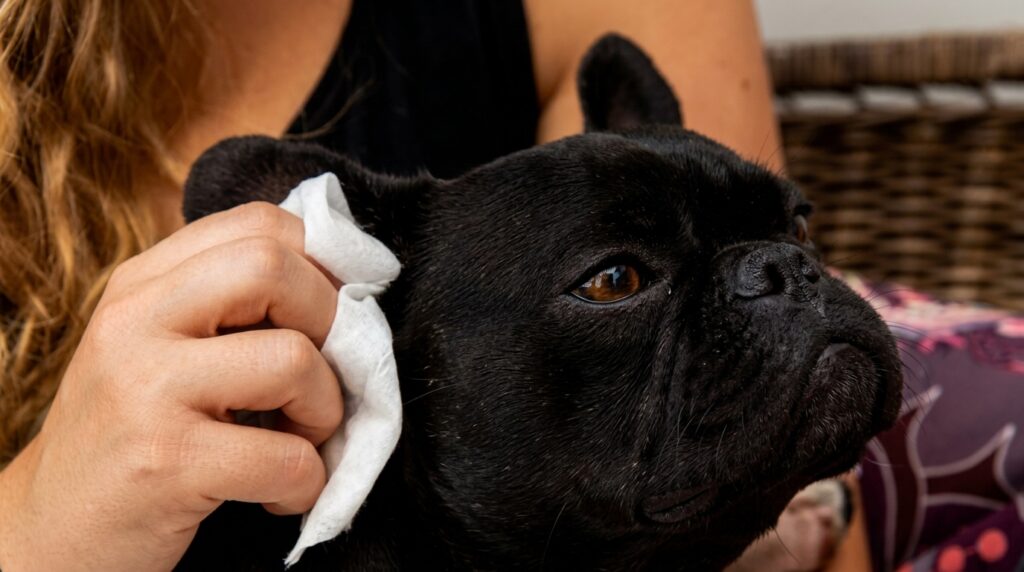
What an ear infection in French Bulldog looks like
The first thing many owners notice is repeated head shaking. Sometimes it looks like the dog is trying to fling something out of the ear. Other times it is just a small but frequent movement that keeps happening through the day. Scratching is another common early sign. A French Bulldog may rub the ear with a paw, against furniture, or against the floor.
An ear infection in French Bulldog often comes with odor. The smell may be yeasty, sour, or just clearly “off.” Some ears produce brown waxy debris. Others produce yellow, tan, or even dark discharge. The skin inside the ear may look red or swollen. The ear flap can also seem warm or tender.
Pain matters too. Some dogs will pull away when the ear is touched. Others will lower their head or tilt it slightly to one side. If the ear is painful enough, the dog may not want anyone near it. That does not mean every itchy ear is a severe infection, but it does mean the problem deserves attention.
In more serious cases, the signs can go beyond the ear itself. A dog with an advanced ear infection in French Bulldog may act quieter than normal, hold the head tilted, or walk with a little imbalance. Those signs suggest the problem may be deeper than the external canal and should be checked promptly.
Why French Bulldogs get ear infections
An ear infection in French Bulldog is often tied to more than one factor at the same time. Breed anatomy matters, but it is not the whole story. French Bulldogs are prone to skin inflammation and allergies, and that often affects the ears as well. When the skin in the canal becomes inflamed, wax increases, the canal gets moist, and yeast or bacteria have a better place to grow.
French Bulldogs also have a head shape and ear canal structure that can make drainage less efficient than in some other dogs. That does not mean every Frenchie will get ear disease, but it does help explain why the breed shows up so often in ear-infection discussions. If the canal traps heat, debris, or moisture, it creates a good environment for irritation to become infection.
Allergies are a major reason recurrent ear disease happens. A dog with atopic skin disease or food-related sensitivity may develop inflamed ears again and again. That is why an ear infection in French Bulldog is sometimes a symptom of a bigger underlying problem rather than a standalone issue. If the skin is constantly inflamed, the ears often become part of the picture.
This is also where other French Bulldog skin issues can matter. If your dog already struggles with fold irritation or itchy skin, that can go hand in hand with ear problems. You may find it useful to read French Bulldog Skin Fold Dermatitis and How to Clean French Bulldog Wrinkles Safely, because the same inflammatory tendency that affects the folds can also affect the ears.
Ear yeast infection vs bacterial ear infection
Not every ear infection in French Bulldog is caused by the same organism. Yeast and bacteria are both common, and sometimes both are present together. From the outside, they can look similar. That is one reason owners should be careful about guessing the cause at home.
Yeast infections often produce a strong smell and a waxy, brownish discharge. The ear may look greasy or irritated, and the dog may scratch a lot. Bacterial infections can also smell bad and cause discharge, redness, and pain. In real life, the difference is not always obvious to the eye. Many ears contain a mixed infection, which means yeast and bacteria are both involved.
That is why a vet visit matters. An ear infection in French Bulldog usually needs more than visual inspection. A veterinarian can use a microscope slide from an ear swab to look at the cells and organisms that are present. That step helps determine whether the problem is mostly yeast, mostly bacteria, or a mixed infection. Without that information, treatment can miss the real cause.
Owners sometimes ask whether one type is “better” than the other. The honest answer is no. Both can be painful. Both can become chronic. Both can recur if the underlying problem is not addressed. The real issue is not naming the organism at home. It is getting the right diagnosis so the ear can be treated properly.
Ear problems and skin problems often go together in French Bulldogs, especially when allergies are involved. If your dog has ear irritation plus itchy or red skin, it may point to a broader allergy pattern or secondary infection. Our guide to French Bulldog allergies vs skin infection explains the clues in more detail.
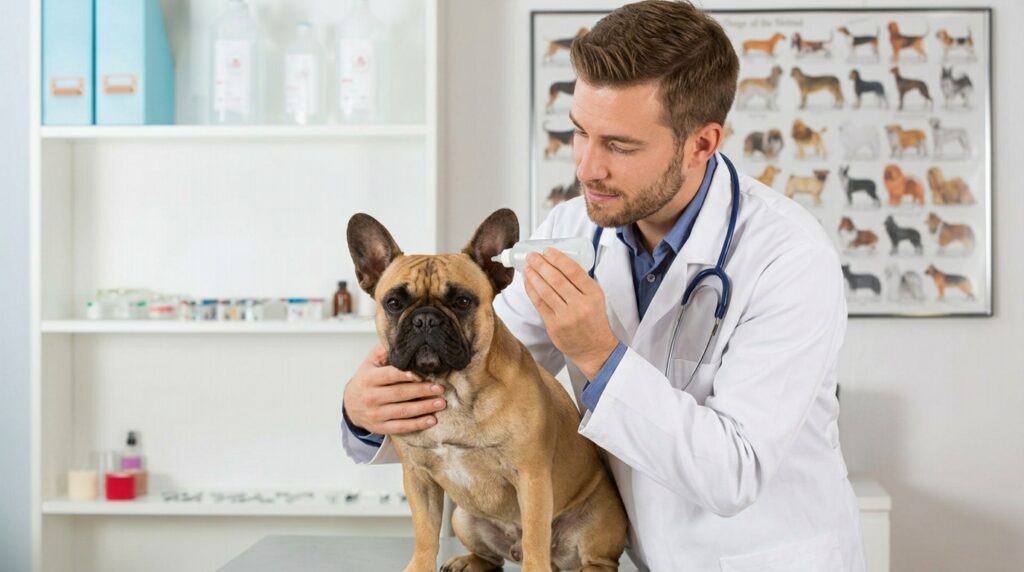
What causes a severe or recurring ear infection
A one-time ear infection in French Bulldog may happen because of a temporary irritation, a little water trapped in the ear, or a short flare of inflammation. But when the problem keeps coming back, there is usually an underlying driver that has not been fixed.
Allergies are the most common long-term reason. Food sensitivity and environmental allergies can both contribute to chronic ear inflammation. Moisture also matters. Baths, swimming, humid weather, or poorly dried ears can make the canal stay damp longer than it should. That dampness encourages yeast and bacteria to grow.
Wax buildup can be part of the problem too. Some dogs simply produce more cerumen than others. If the wax thickens and stays in the canal, it can trap debris and make the ear harder to clean naturally. In a French Bulldog, that can turn into a cycle where irritation leads to infection, and infection leads to even more irritation.
Foreign bodies are less common but still possible. Grass seeds, dirt, or small bits of plant material can get into the ear canal and trigger sudden pain or head shaking. This is one reason a dog with a sudden ear problem should not be assumed to have a simple infection without an exam.
The key point is that a repeated ear infection in French Bulldog is often a sign of a bigger pattern. If the ear keeps flaring up, it is worth asking why. Otherwise the dog may keep going through the same cycle.
If you are trying to figure out whether your French Bulldog just has a little debris or may be developing a real ear problem, it helps to understand what safe routine care looks like first. This French Bulldog ear cleaning guide explains how to clean the ears gently, how often to do it, and what not to use so you do not accidentally irritate an already sensitive ear.
If your Frenchie keeps getting ear infections even after treatment, allergies might be the underlying cause. I wrote a guide that explains how to tell the difference between an ear infection and ear allergies in French Bulldogs: French Bulldog Ear Infection vs Ear Allergies.
When an ear infection in French Bulldog becomes severe
A mild ear problem can become a more serious ear infection in French Bulldog if it is left untreated. One of the first warning signs of severity is pain that is obvious enough that the dog will not let the ear be touched. If the dog yelps, pulls away sharply, or seems frightened when you approach the head, that is not something to ignore.
Another red flag is imbalance. If the dog starts to lean, circle, or tip the head, the problem may involve the middle or inner ear rather than only the outer ear canal. Abnormal eye movements can also happen in more advanced ear disease. These signs deserve prompt veterinary attention.
Here are the clearest red flags to watch for:
- sudden head tilt or loss of balance
- strong pain when the ear is touched
- swelling, bleeding, or pus
- lethargy, poor appetite, or obvious illness
If any of those are present, an ear infection in French Bulldog should not be managed as a simple home problem. The dog needs to be examined soon, and some cases need same-day care.
A chronic ear infection can also damage the canal itself. Over time, the tissue can thicken and narrow, which makes future infections more likely. That is one reason “waiting it out” can backfire. A small problem today can become a long-term problem later.
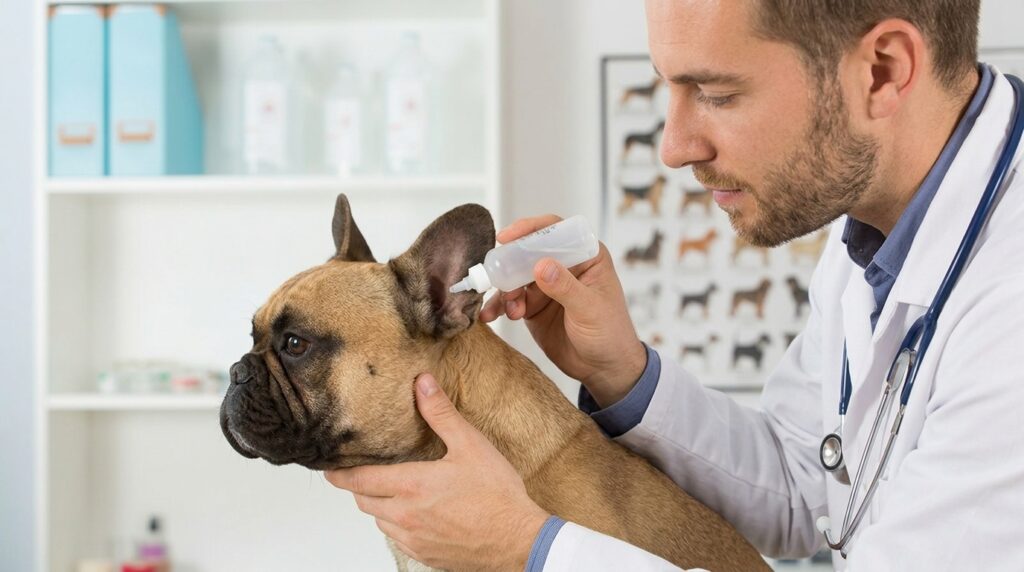
Can you treat an ear infection in French Bulldog at home?
This is where I want to be careful. A true ear infection in French Bulldog should not be treated by guessing at home. There is no reliable way to know, from the outside, whether the problem is yeast, bacteria, allergy-related inflammation, a foreign body, or something deeper. The wrong drops or the wrong home remedy can make things worse.
Hydrogen peroxide is not a good idea in an inflamed ear. Vinegar can sting and irritate. Witch hazel and “natural antibiotics” are also not safe bets when you do not know what is in the canal. Some over-the-counter ear products are fine for maintenance in some dogs, but they are not a substitute for diagnosis when the ear is already infected or painful.
If your dog is scratching hard, the safest thing you can do while waiting for a vet is limit further damage. Do not put cotton swabs down into the canal. Do not try to flush the ear aggressively. Do not keep testing it over and over if the dog is clearly uncomfortable. If your Frenchie is injuring the ear from scratching, a cone can help prevent extra trauma until the appointment.
The most important point is this: an ear infection in French Bulldog is one of those problems where “natural” does not automatically mean safe, and “quick home fix” does not usually mean effective.
What a veterinarian usually does
A veterinarian will usually start with a look inside the ear using an otoscope, if the dog allows it. That helps check for swelling, debris, ruptured tissue, foreign material, or deeper disease. A swab from the ear canal can then be examined under a microscope. That step is called cytology, and it is one of the most useful parts of ear-infection workups because it tells the vet what organisms are actually present.
If the case is complicated or recurrent, the vet may also recommend culture and sensitivity testing. That is especially useful if the infection is severe, keeps coming back, or does not respond to the first treatment. A culture helps identify which bacteria are involved and which medications are most likely to work.
Treatment usually starts with topical medication, because many ear infections are best managed directly in the ear canal. Those drops may contain an antibiotic, an antifungal, and a steroid to calm the inflammation. In more severe cases, or when the middle ear is involved, oral medication may also be needed. If the ear is full of debris, the vet may clean it carefully first, because medication works better when it can actually reach the tissue.
The Merck Veterinary Manual gives a solid overview of ear infections in dogs and is a useful owner-level reference for how diagnosis and treatment are generally approached.
If the dog has allergies, the vet may also talk about managing the underlying allergy problem. That matters because treating the infection alone does not always stop the cycle. A recurring ear infection in French Bulldog often improves more when the underlying inflammation is addressed too.
What happens if it is left untreated
A mild ear infection in French Bulldog can become a much bigger problem if it is ignored. The canal can become more inflamed, thicker, and narrower. That makes it easier for wax and debris to collect again, which increases the chance of another infection. Once the canal is chronically irritated, the ear becomes harder to manage and more uncomfortable for the dog.
The infection can also move deeper. If the middle ear becomes involved, the dog may develop head tilt, balance problems, or more severe pain. If the condition keeps going long enough, the inflammation can lead to long-term changes in the ear canal and, in some cases, hearing loss.
That is why I do not think of ear disease as a small nuisance problem. A recurring ear infection in French Bulldog can affect comfort, behavior, sleep, and quality of life. Some dogs get more withdrawn. Some get more irritable. Some shake their heads so much that they bruise the ear flap or create a secondary injury.
The practical lesson is simple. Early treatment is easier than chronic treatment. A dog that is seen promptly usually has a better chance of getting relief before the ear canal is deeply damaged.
How to help prevent repeat ear infections
Prevention is not about keeping a French Bulldog’s ears perfectly sterile. That is unrealistic, and overcleaning can irritate the canal. It is about keeping the ears dry, clean enough, and monitored so problems are caught early.
Regular ear checks are useful. You do not need to probe deep into the canal every day. You do want to notice odor, redness, debris, or new discomfort before the ear is fully inflamed. If your dog gets dirty, wet, or bathed, drying the outer ear gently can help reduce moisture. If your veterinarian recommends a specific cleanser, use that product exactly as directed rather than choosing random home ingredients.
Grooming matters too. Some dogs benefit from keeping the hair around the ear opening neat so air can move more freely. That should be done carefully. Aggressive plucking or rough cleaning can irritate the canal and make the problem worse. If your dog has allergies, managing those allergies is often one of the most important preventive steps.
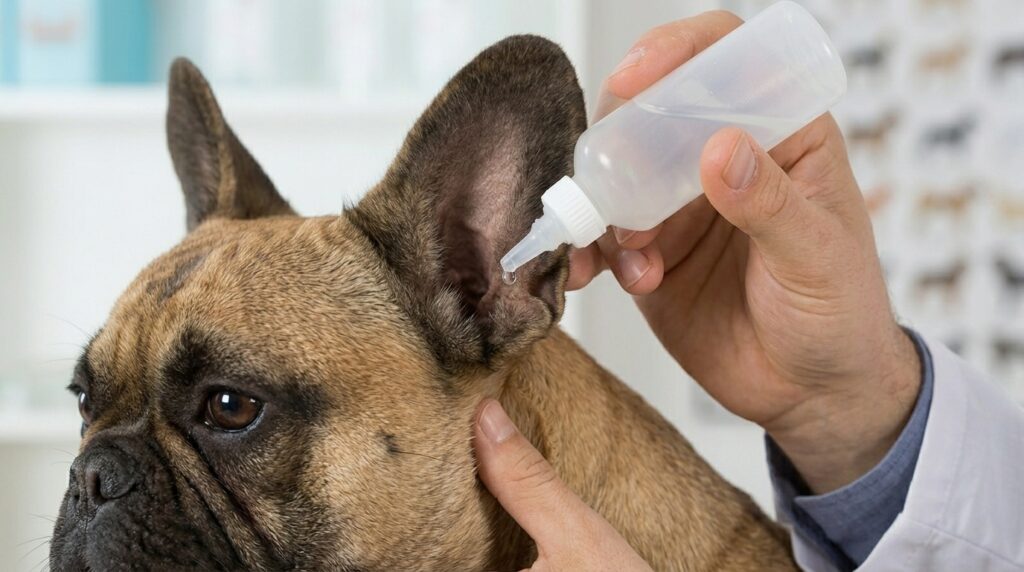
If your Frenchie keeps getting the same ear infection in French Bulldog pattern, it is worth looking at the bigger picture. The ear may be reacting to skin inflammation elsewhere. That is why a dog with recurrent ear disease sometimes benefits from a broader skin exam rather than just another round of ear drops.
How ear problems connect with other French Bulldog health issues
An ear infection in French Bulldog does not always sit alone. In a lot of dogs, it connects to the same inflammatory tendency that shows up in the folds, paws, or belly skin. If your Frenchie is already dealing with itchy skin, fold odor, or repeated skin irritation, the ears may be part of the same underlying issue.
That is why it can help to think of French Bulldog care in clusters instead of isolated symptoms. Ear problems, fold problems, and allergy-related itching often overlap. If you have not already read them, the articles on French Bulldog Skin Fold Dermatitis and How to Clean French Bulldog Wrinkles Safely fit naturally with this topic.
That kind of linked care approach is usually more realistic than trying to treat each flare-up as if it came from nowhere. A recurring ear infection in French Bulldog may be one more sign that the dog needs ongoing skin and allergy management, not just short-term symptom relief.
FAQs
Final thoughts
An ear infection in French Bulldog is common, but common does not mean harmless. The early signs are often small, and that is exactly why owners miss them. Head shaking, scratching, odor, and discharge may seem like a minor annoyance at first, but they can be the start of a real infection that needs proper treatment.
If you catch it early, treatment is usually much easier. If you wait too long or keep trying random home remedies, the ear can become chronically inflamed and harder to manage. That is especially true in French Bulldogs, where allergies and skin inflammation often keep the cycle going.
If your dog has repeated ear problems, do not just treat the ear itself. Ask why the problem keeps happening. That broader view is often what helps most in the long run.

French Bulldog Cost in 2026: Price, Vet Bills, and the True Lifetime Cost
French Bulldog Temperament: Personality, and Are They Good Family Dogs?

Best Dog Toothpaste for French Bulldogs: A Vet-Guided Guide
Do French Bulldogs Shed? Coat, Grooming, and When to Worry
Why Your French Bulldog Chews Everything (and How to Stop It)