Written by Jinna CAMERON, veterinary medical student and dog health researcher. Reviewed for factual accuracy against trusted veterinary sources by DVM ,Carla DONTESK
French Bulldog poop is not a glamorous topic, but it’s one of the clearest windows into your Frenchie’s digestive health. A well‑structured French Bulldog poop chart can help you see what’s normal, what’s a mild upset, and when it’s time to stop searching forums and call your vet.
I’m writing this as a veterinary medical student and dog‑health researcher. This guide is educational only. It’s here to help you interpret what you see and decide when to act, not to diagnose or replace a proper veterinary exam.
Why your French Bulldog’s poop matters
Your French Bulldog can’t tell you “my stomach feels off today” or “this new food isn’t working.” What you see in the stool is often the first real clue that something in the digestive system has changed.
French Bulldogs are also a high‑risk breed for gut sensitivities, food‑responsive enteropathies, and chronic digestive problems. In practice, they show up again and again in GI case series and chronic enteropathy studies, which is why a French Bulldog poop chart is particularly useful for this breed.
Think of your Frenchie’s poop as a simple feedback system that can:
- Reassure you when their current food and routine are working
- Warn you early when diet or gut health is going wrong
- Help your vet narrow down possible causes much faster
The goal is not to turn you into a vet, but to give you language and structure when you’re deciding whether to watch and support at home or book an appointment.
What healthy French Bulldog poop looks like
Before a poop chart can help, you need a clear picture of “normal.”
Healthy color and shape
Healthy French Bulldog stool is usually:
- Color: medium to dark chocolate brown
- Shape: log‑shaped, segmented, and easy to pick up in one or two pieces
- Consistency: firm but not rock‑hard, similar to soft modeling clay
- Coating: no visible mucus, no blood, no greasy film
- Smell: yes, it smells like poop—but not so strong that it seems “rotten” or extreme
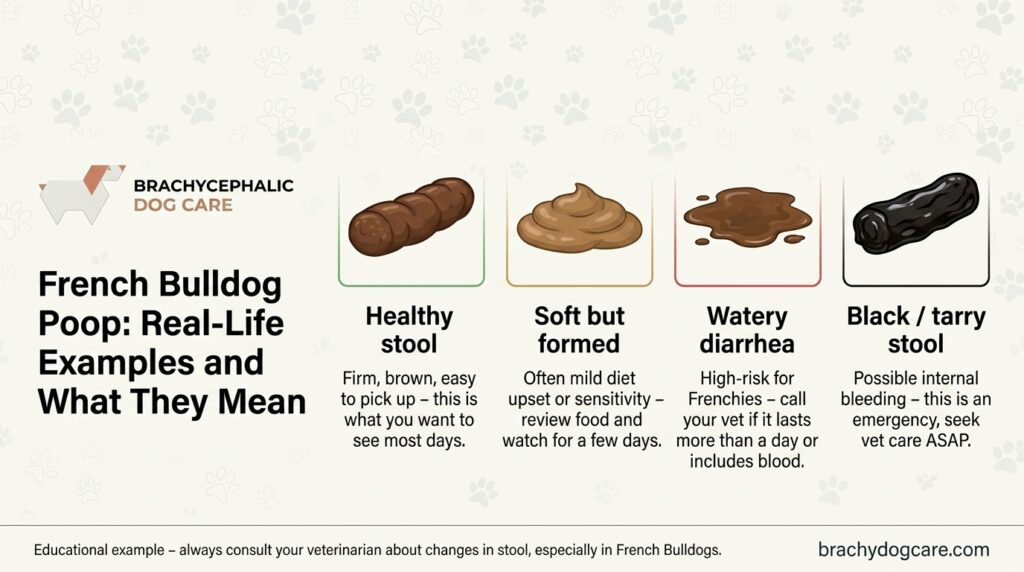
Minor color changes can happen with different protein sources or treat types. A slightly darker brown stool on a new beef‑based diet, or a slightly lighter shade after a change in kibble, can still be normal if your dog is otherwise acting well.
Normal French Bulldog stool frequency
Most healthy adult French Bulldogs:
- Poop 1–3 times per day
- Tend to go after meals, in the morning, and sometimes in the evening
French Bulldog puppies:
- Often poop 3–5 times per day
- Commonly go shortly after each meal and after naps
Here, the pattern matters more than the exact number. A Frenchie who has always gone once a day and suddenly needs to go five times with looser stool is more concerning than a dog who has always been a “three times a day” dog with well‑formed stool.
If your Frenchie is straining, is clearly uncomfortable, or starts having accidents when they were previously housetrained, that’s a behavioral clue your vet will want to know about as well.
French Bulldog poop chart: consistency and what it might mean
You can imagine the French Bulldog poop chart as a simple consistency scale: too hard → ideal → soft but formed → watery. Each zone can point to different causes and different levels of concern.

Very hard, dry, or pellet‑like stool
What it looks like
- Small, hard “pebbles” or dry pellets
- Crumbly, often difficult to pick up cleanly
- Your dog may strain or take longer to pass stool
What it might mean
- Dehydration or not drinking enough
- Too much bone or calcium in the diet (for example, from certain chews or home‑prepared diets)
- Very low fiber intake
- Holding stool too long because of pain, anxiety, or limited outdoor breaks
How to think about it
If it happens once or twice and your French Bulldog otherwise feels fine, gently increasing water access, adding safe activity, and reviewing diet fiber is reasonable. If straining, pain, or very hard stool continues for more than a day or two—or your dog seems distressed—you should involve your vet to rule out constipation or more serious issues.
Ideal, healthy stool
What it looks like
- Firm, log‑shaped, segmented
- Moist but not sticky
- Holds its shape when picked up, leaves minimal residue
This is the “target zone” on any French Bulldog stool chart. When you see this most days, it suggests:
- The current diet is reasonably balanced and digestible
- Hydration is adequate
- There’s no obvious ongoing inflammation in the gut
Seeing this consistently is a reassuring sign that your dog’s digestion is coping well with their food and routine.
Soft but formed “pudding” stool
What it looks like
- Still basically one log or pile, but too soft
- Loses shape when you pick it up
- Leaves noticeable residue on the ground or bag
- Often described as “pudding poop” or “soft‑serve”
What it might mean
- Recent diet or treat change
- Too many extras (chews, scraps, training treats) on top of their main food
- Mild stress (travel, boarding, visitors, big routine changes)
- Early food intolerance or food allergy
- Mild colitis (large bowel irritation)
French Bulldogs are famous for living in this “soft but formed” zone. Many owners end up here: not true diarrhea, but never truly firm either. That’s exactly the pattern you explore in depth in your article French Bulldog Soft Stool: Causes, Food Triggers, and What to Feed.
How to think about it
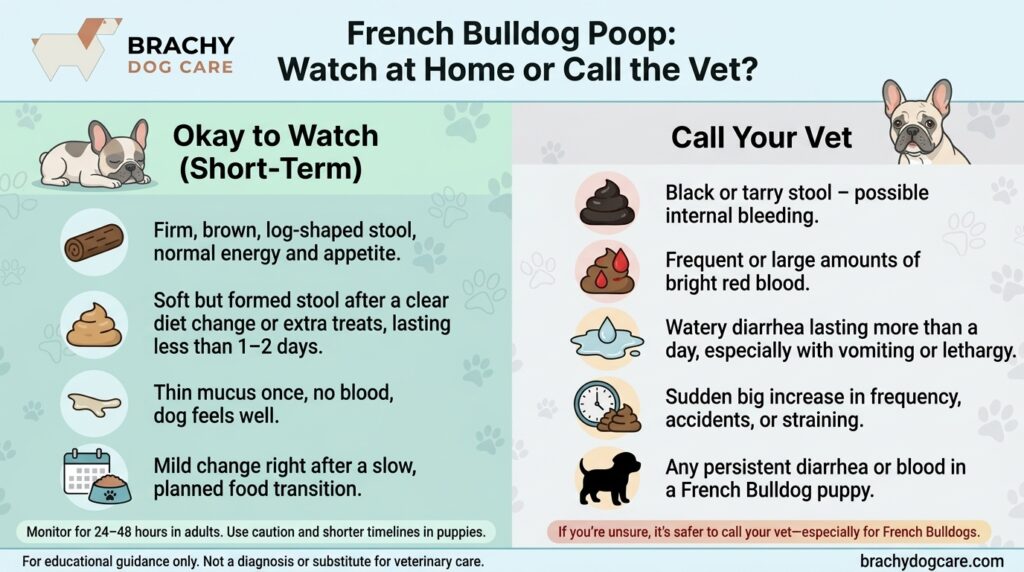
- If your Frenchie has one or two soft but formed stools after a clear cause (like a sudden treat overload), monitoring for 24–48 hours with a stable diet is often reasonable.
- If this consistency becomes the norm for days, weeks, or months—especially alongside gas, itch, or ear issues—it points more toward gut sensitivity or food allergy. At that point, combining this chart with your Best Food for French Bulldogs with Sensitive Stomachs and Best Dog Food for French Bulldogs with Allergies guides, plus a vet visit, makes sense.
Watery or liquid diarrhea
What it looks like
- No real shape, puddle‑like or splattered
- Often urgent, with poor control
- May contain mucus, blood, or bits of undigested food
What it might mean
- Viral or bacterial infection
- Intestinal parasites (Giardia, worms, etc.)
- Food poisoning or toxin ingestion
- Pancreatitis
- Inflammatory Bowel Disease (IBD) flare
- Acute stress colitis
- A very sudden, major diet change
In a small, brachycephalic breed like the French Bulldog, watery diarrhea is never something to shrug off for long. Dehydration, electrolyte disturbances, and more serious complications can develop rapidly, especially if vomiting is also present.
For full management details, your article French Bulldog Diarrhea: Causes, Treatment, What to Give, and When to Worry should be the deep‑dive resource that this poop chart points owners to when they hit the “liquid puddle” zone.
How to think about it
- One or two episodes of mild diarrhea in an otherwise bright, eating adult dog may be monitored closely for a short time, especially if there was an obvious dietary mistake.
- Diarrhea lasting more than about a day, diarrhea with blood, repeated episodes, or diarrhea combined with vomiting, lethargy, or pain should be treated as a reason to call your vet. For puppies, you should be even more cautious and treat diarrhea lasting more than about 12 hours as something to discuss urgently with a veterinary professional.
Poop color guide for French Bulldogs
On a French Bulldog poop chart, consistency is one axis. Color is the other major one. Color alone never gives the full story, but it can be a strong clue when combined with your dog’s behavior and stool texture.
Brown (normal range)
- Medium to dark chocolate brown is considered normal.
- Slight shifts lighter or darker with different diets are common and usually harmless if everything else is normal.
When your dog is acting normally and stool is well‑formed, brown poop is usually good news.
Yellow or orange stool
This can be associated with:
- Faster GI transit (food moving through too quickly)
- Certain infections or protozoal issues
- Liver or bile duct problems
- Foods or treats with strong yellow/orange coloring or very high fat
One odd stool in this color range, with a clear food reason, isn’t automatically alarming. Repeated yellow or orange stools—especially with soft consistency, poor appetite, or lethargy—should be discussed with your vet.
Green stool
Possible reasons include:
- Eating grass or plant material
- Rapid intestinal transit
- In some cases, gallbladder issues or certain toxins
If your Frenchie just raided the lawn and otherwise feels fine, green may simply reflect that. But if you suspect access to toxins like rodenticide, or if your dog seems unwell, green stool deserves prompt veterinary attention.
Black or tarry stool (melena)
This is one of the most serious color changes.
Black, tar‑like stool often indicates digested blood from higher up in the GI tract. Causes can include:
- Stomach ulcers (from disease, medications, or toxins)
- Severe inflammation or tumors in the upper GI tract
- Ingested blood (like swallowing blood after a nosebleed)
On any French Bulldog stool chart, melena belongs firmly in the “emergency” category. A Frenchie with black, tarry stool should be seen by a vet as soon as possible.
Bright red blood (hematochezia)
Bright red blood usually comes from the lower intestines, colon, or rectum.
Possible causes:
- Colitis (large bowel inflammation)
- Rectal irritation or minor injury
- Parasites
- Polyps
- Hemorrhagic gastroenteritis (HGE), which can be serious
A thin streak of bright red blood on otherwise normal stool can occasionally happen after straining or minor irritation. Larger amounts of blood, frequent streaks, or stool that is mostly blood should never be managed at home without veterinary guidance.
Grey, pale, or clay‑colored stool
These shades often suggest:
- Lack of bile reaching the stool
- Poor fat digestion
- Problems such as Exocrine Pancreatic Insufficiency (EPI), pancreatitis, or biliary obstruction
This type of stool—especially if greasy, bulky, or very foul‑smelling—is a high‑concern finding and should prompt a veterinary visit rather than a “wait and see” approach.
White specks or visible worms
If you see:
- Small, rice‑like white segments
- Long, spaghetti‑like worms
- Moving white pieces in or on the stool
you’re probably looking at parasites such as tapeworms or roundworms. Deworming should always be done under veterinary guidance, ideally after a fecal exam.
For a general, vet‑reviewed reference on poop color and consistency, a good external resource is the Purina guide to types of dog poop and what they mean, which aligns well with the color and texture principles adapted here specifically for French Bulldogs.
Mucus, blood, and “jelly” coating
On a French Bulldog stool chart, the “coating” is just as important as the inside.
Mucus or “jelly” on the stool
A small amount of clear or slightly cloudy mucus once in a while can be normal; the large intestine naturally produces mucus. But frequent jelly‑like coating, especially with soft stool, often points to colitis—inflammation of the colon.
In French Bulldogs, this can be triggered by:
- Sudden diet changes
- Stress (boarding, travel, routine disruption)
- Food intolerance or allergy
- Infectious causes
If mucus is mild and your dog is otherwise well, you can monitor for a day or two while keeping diet simple. If mucus keeps returning, or if it appears alongside blood, diarrhea, or weight loss, it’s time to involve your vet and to consider issues like food allergy using resources such as French Bulldog Food Allergies: Signs, Common Triggers, and How to Confirm It.
Bright red blood vs dark, tarry stool
A small streak of bright red blood on otherwise normal stool may reflect mild irritation from straining or a small rectal issue. But:
- Repeated bright blood
- Clots of blood
- Stool that’s mostly blood
- Or any black, tarry stool (melena)
are all reasons to seek veterinary care. In French Bulldogs, ignoring these signs risks missing serious disease early.
Puppy vs adult French Bulldog poop
Puppies are not just smaller adults; their stool patterns and safety margins are different.
What’s often normal in puppies
- More frequent stools (often 3–5 times per day)
- Slightly softer stool, especially during diet transitions or immediately after deworming
- Occasional small accidents while house‑training
Why puppies need a lower threshold for concern
- They dehydrate faster.
- They’re more likely to carry parasites.
- Infections can escalate more quickly.
For a French Bulldog puppy, you should treat as concerning:
- Diarrhea lasting more than about 12 hours
- Diarrhea plus vomiting or refusal to eat
- Blood in the stool, black stool, or very pale stool
- Poor weight gain or obvious weight loss
In those cases, a vet visit is not overreacting—it’s appropriate caution for a high‑risk breed.
How this poop chart fits with diet, sensitivities, and gas
Stool patterns in French Bulldogs are tightly connected to:
- Diet quality and digestibility
- Food sensitivities and allergies
- General gut sensitivity
- Gas and flatulence
- Weight and activity level
When you’re dealing with soft or messy stools, having a sturdy, leak‑proof poop bag and a good quality outdoor poop scoop or tray makes clean‑up less stressful for both you and your Frenchie, especially if you’re monitoring changes over several days.
If your French Bulldog poop chart observations show chronic soft stool, frequent changes, or combinations like gas plus mushy stool, it makes sense to connect what you’re seeing with the rest of your digestion content:
- French Bulldog Soft Stool: Causes, Food Triggers, and What to Feed
- French Bulldog Diarrhea: Causes, Treatment, What to Give, and When to Worry
- Best Food for French Bulldogs with Sensitive Stomachs: Safe Diets, Common Triggers, and When to See a Vet
- Best Dog Food for French Bulldogs with Allergies: Vet-Informed Guide
- French Bulldog Gas: Normal Farts, Food Triggers, and When to Worry
By using this chart together with those guides, you can move from “the poop looks off” to a structured plan: what to adjust at home, what to track, and when to involve your veterinarian.
French Bulldog Cost in 2026: Price, Vet Bills, and the True Lifetime Cost
French Bulldog Temperament: Personality, and Are They Good Family Dogs?

Best Dog Toothpaste for French Bulldogs: A Vet-Guided Guide
Do French Bulldogs Shed? Coat, Grooming, and When to Worry
Why Your French Bulldog Chews Everything (and How to Stop It)