Written by Jinna CAMERON, veterinary medical student and dog health researcher. Reviewed for factual accuracy against trusted veterinary sources by DVM ,Carla DONTESK
French Bulldogs are almost famous for being gassy, but constant or very smelly French Bulldog gas is not always “just a Frenchie thing.” Some gas is normal for this breed, but sometimes it’s a diet issue, and sometimes it’s an early warning sign that the gut or overall health needs attention.
I’m writing this as a veterinary medical student and dog‑health researcher. This article is here to help you understand French Bulldog gas better, not to diagnose or replace a vet visit. If your Frenchie has worrying symptoms like pain, vomiting, collapse, a swollen belly, or blood in the stool, treat that as urgent and call a veterinarian or emergency clinic.
Why French Bulldog gas is so common
Brachycephalic anatomy and swallowed air
French Bulldogs are brachycephalic: they have a shortened skull and a compressed upper airway. That cute flat face means the nose, soft palate, and throat are all squeezed into a smaller space. When a Frenchie eats, drinks, or pants, they often have to work harder to move air, and that extra effort means they swallow more air than a longer‑nosed dog.
This swallowed air (aerophagia) travels into the stomach and intestines and eventually escapes as gas. In brachycephalic breeds, aerophagia is one of the main reasons their flatulence is more noticeable and more frequent than in many other dogs.
Many French Bulldogs also live with some degree of Brachycephalic Obstructive Airway Syndrome (BOAS). Narrow nostrils, an elongated soft palate, and a relatively narrow windpipe all increase resistance to airflow. The harder your dog has to work to breathe, the more air they gulp in while eating or breathing with their mouth open, and the more French Bulldog gas you’ll notice later.
Sensitive guts and “Frenchie stomachs”
On top of their anatomy, French Bulldogs are known for sensitive digestion. Owners and vets frequently see patterns like:
- Soft stool after small diet changes
- Loose stool or gas with new treats
- “Random” diarrhea when food quality is poor
The evidence for “Frenchies have more GI sensitivity” is mostly clinical experience and breed‑specific guidance rather than big formal studies, but the pattern is consistent in practice. When you combine a sensitive gut with brachycephalic anatomy and aerophagia, you get exactly what people complain about: a lovable, gassy Frenchie.
If your dog already has soft stool, diarrhea, a sensitive stomach, or known food allergies, that underlying issue can amplify their French Bulldog gas and make it harder to ignore.
Everyday (non‑emergency) causes of French Bulldog gas
Most French Bulldog gas is not an emergency. It’s a response to diet, feeding habits, and lifestyle. Understanding the common non‑emergency triggers gives you realistic things to adjust at home.
Diet composition and fermentable ingredients
A big part of gas comes down to how well your dog can digest what you’re feeding.
Common diet‑related contributors include:
- Poorly digestible carbohydrates: cheap fillers or by‑products that reach the large intestine and are fermented by bacteria, producing gas.
- Legumes: peas, lentils, chickpeas, and beans are common in some grain‑free diets and can create more gas in sensitive dogs.
- Excessive or poorly balanced fiber: extra fiber can be helpful in some cases, but in the wrong dog or formula it can increase fermentation.
- High‑fat foods: rich meals or fatty extras can slow stomach emptying and lead to both gas and soft stool.
Adult dogs are also often somewhat lactose‑intolerant. Dairy products such as cheese, ice cream, or milk can trigger both French Bulldog gas and loose stool. Cruciferous vegetables (broccoli, cabbage, cauliflower, Brussels sprouts) are another classic gas trigger in both people and dogs.
If your Frenchie suddenly has more gas right after you changed food, added a new topper, or tried a different treat, it’s very likely that diet is part of the story.
- French Bulldog Diarrhea: Causes, Treatment, What to Give, and When to Worry – for liquid or very frequent loose stools.
- French Bulldog Soft Stool: Causes, Food Triggers, and What to Feed – for “pudding‑like” stool that never seems fully firm.
- Best Food for French Bulldogs with Sensitive Stomachs: Safe Diets, Common Triggers, and When to See a Vet – for Frenchies that seem to react to every change.
- Best Dog Food for French Bulldogs with Allergies: Vet‑Informed Guide – for dogs with combined gut and skin/ear issues.
Those articles help you connect what you see in the poop to what’s happening higher up in the digestive tract.
Eating style and aerophagia
How your Frenchie eats can matter just as much as what they eat.
Because of their facial structure, many French Bulldogs:
- Eat very quickly
- Use big “scooping” motions with their tongues
- Breathe hard while eating
All of this increases aerophagia. The faster your dog eats, the more air they swallow with each mouthful. That swallowed air has to go somewhere, and in a Frenchie, it often comes back out as very noticeable gas.
Things that make this worse:
- One large meal per day instead of smaller, spaced meals
- Competition with other dogs that encourages gulping
- Slippery bowls that offer no resistance and encourage speed
This is one of the reasons why “just changing food” may not fully solve French Bulldog gas if you don’t also change how your dog eats.
Table scraps and human food
French Bulldogs are convincing beggars, and a lot of gas starts at the dining table rather than in the dog‑food bag.
Common human‑food triggers:
- Fatty meats (bacon, sausage, skin from roast chicken, fat trimmings)
- Fried foods
- Heavily seasoned or spicy dishes
- Dairy desserts (ice cream, whipped cream, cheese‑based sauces)
- Large amounts of bread, pasta, or leftover casseroles
Even if your dog seems to tolerate small amounts of “safe” table food, the combination of fat, spice, and sudden diet changes can easily cause a night of impressive flatulence, especially on top of a sensitive gut.
If gas is always worse after family meals, weekends, or parties, there is a good chance the issue is as much about human food as dog food.
Low activity and extra weight
French Bulldogs are prone to being overweight, and they often have breathing issues that make owners understandably cautious about exercise. That combination can lead to:
- Slower gut motility (food moves more slowly through the digestive tract)
- More time for fermentation in the colon
- More frequent or more intense French Bulldog gas
Extra weight can also put more pressure on the abdomen and make breathing and digestion less efficient. Your Overweight French Bulldog: Healthy Weight, Fat Frenchie Risks, and Safe Weight Loss Guide article already explains why “cute chunky” is not as harmless as it looks.
Low activity doesn’t cause gas on its own, but it can amplify diet and anatomy problems and make gas more persistent.
Gas and poop: what your Frenchie’s stool is telling you
Because gas and stool quality are so closely connected, it’s worth taking a moment to look at what’s happening in the poop as well as what you smell.
You should pay attention to:
- Consistency: very soft or watery stool, “pudding” stool, or alternating normal and loose stool
- Frequency: needing to go much more often than usual
- Coating: mucus, shiny strands, or a “jelly” on the stool
- Color: very pale, very dark, or streaks of red blood
If gas comes with ongoing soft stool or diarrhea, your French Bulldog Diarrhea and French Bulldog Soft Stool articles are key resources. They help you separate simple dietary mistakes (like too many treats) from patterns that suggest deeper gut problems or food sensitivities.
When French Bulldog gas is a warning sign
Not every fart is a crisis, but French Bulldog gas can sometimes be a quiet early sign of disease. The key is to look at what comes with the gas.
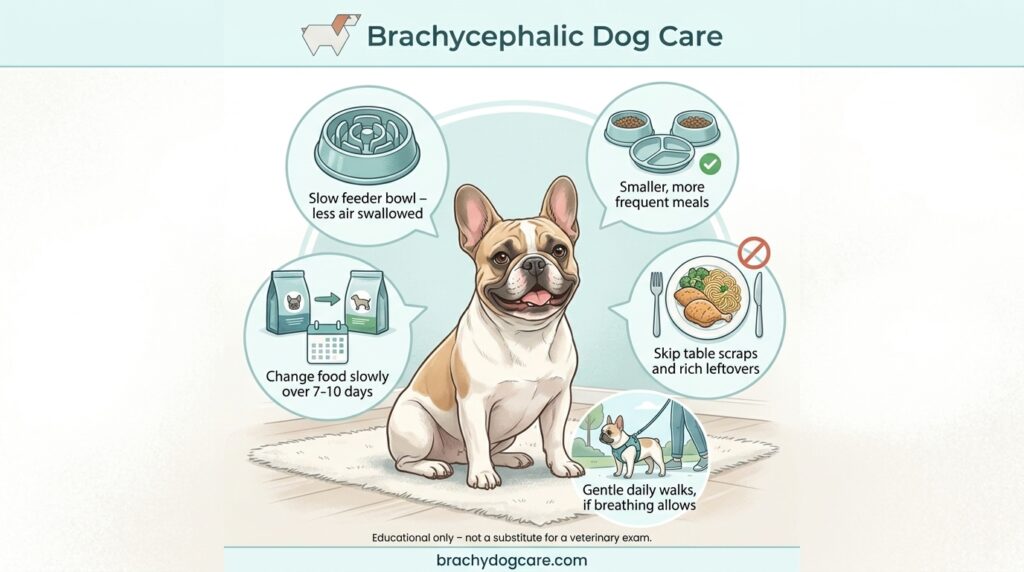
Gas plus ongoing diarrhea, soft stool, or mucus
Gas combined with frequent loose stools is a genuine red flag. Chronic or recurrent flatulence plus disturbed stool can fit with:
- Chronic food intolerance or food allergy
- Inflammatory Bowel Disease (IBD)
- Intestinal parasites such as Giardia or certain worms
- Bacterial overgrowth or infection
Patterns that should make you pause:
- Several weeks of soft or loose stool plus gas, even after removing table scraps
- Stool with mucus or a shiny coating
- Occasional small streaks of blood
- Increased urgency, straining, or accidents in the house
Gas plus skin or ear issues
Gas alone can be anatomical or diet‑related. Gas plus clear skin or ear problems pushes food allergy and atopy higher up the list.
Concerning combinations include:
- Recurrent ear infections alongside gas and softer stool
- Chronic itch (chewing paws, rubbing face, scratching flanks) plus noticeable flatulence
- Year‑round or seasonal allergies that seem to “move” from skin to gut or back again
Gas plus weight loss or poor coat
If your Frenchie is losing weight without a planned weight‑loss program, and you see:
- Chronic gas
- Larger‑than‑usual or greasy stool
- A dull or thinning coat
- Lower energy or reduced interest in food
this raises concern for conditions such as Exocrine Pancreatic Insufficiency (EPI), chronic inflammation of the intestine, malabsorption syndromes, or other systemic illnesses. These conditions require diagnostics and long‑term management, not home treatment alone.
Acute red‑flag combinations (emergency)
Certain symptom groups are emergencies until proven otherwise:
- Gas plus a tight, distended, or very painful abdomen
- Repeated attempts to vomit or retch with little or nothing coming up
- Sudden, marked restlessness, anxiety, or inability to settle
- Repeated vomiting plus refusal to eat
- Large amounts of blood in the stool or very dark, tar‑like stool
- Severe lethargy, collapse, or inability to stand
Full gastric dilatation‑volvulus (GDV or “bloat”) is more classic in deep‑chested dogs, but any dog can experience life‑threatening abdominal issues. If you’re seeing these signs, don’t wait to see whether the gas “passes.” Treat it as an emergency and seek veterinary care immediately.
Gas rarely happens in isolation—most of the time, your Frenchie’s poop is changing too, even if it’s subtle. If you want to see whether your dog’s gas and stool are still in the “normal Frenchie” range or drifting into a red‑flag pattern, this French Bulldog poop chart gives you a simple, stool‑based way to check.
What your vet may do if gas is chronic
If you’ve cleaned up the diet, slowed feeding, removed table scraps, and your French Bulldog gas is still frequent or severe, the next step is a proper veterinary evaluation.
A typical workup might include:
- History and physical exam: what your dog eats, how they eat, stool patterns, weight changes, medications, and previous illnesses.
- Fecal testing: to look for parasites or abnormal bacteria.
- Bloodwork: to assess pancreas, liver, kidney, and general health.
- Diet trial: a structured elimination diet or a switch to a novel or hydrolyzed protein under supervision if food allergy is suspected.
- Imaging: X‑rays or ultrasound if there is concern about foreign bodies, obstruction, or structural disease.
- Referral: if severe or complicated gut disease is suspected, your vet may refer you to a veterinary internal medicine specialist.
Knowing this ahead of time helps you prepare: take notes on your Frenchie’s poop, gas pattern, food brand and recipe, treats, and any other symptoms before the appointment.
If you’ve already tidied up food choices and feeding habits but your Frenchie still has regular gas or tummy gurgling, it’s normal to wonder about gut supplements. I’ve put together a detailed guide on French Bulldog probiotics that explains when they genuinely help gas and sensitive stomachs, and when it’s better to focus on diet changes or a vet visit instead.
Safe ways to reduce French Bulldog gas at home
If your Frenchie is otherwise bright, eating, and has normal energy and stool, you can safely try to reduce gas at home with a structured approach. The goal is not to eliminate every fart, but to reduce frequency and intensity while watching for any new red flags.
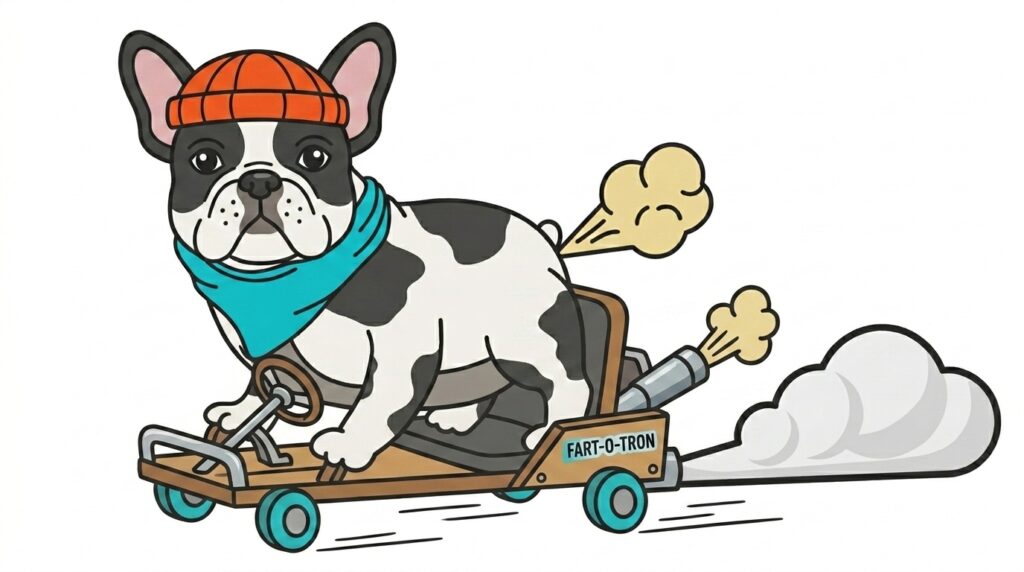
1. Slow the eating down
Because aerophagia is such a big driver of French Bulldog gas, slowing down meals is one of the most practical changes you can make.
Helpful strategies:
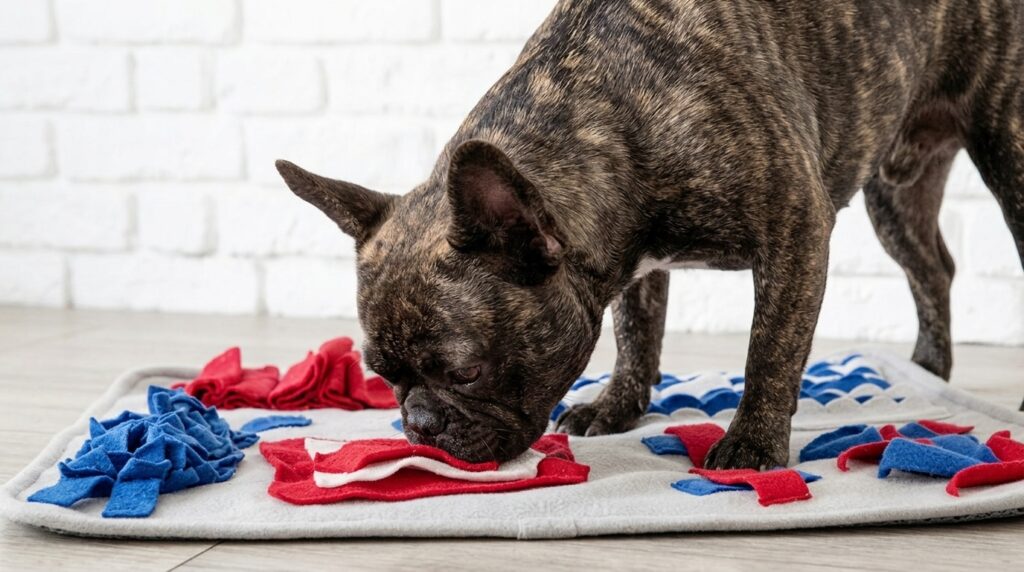
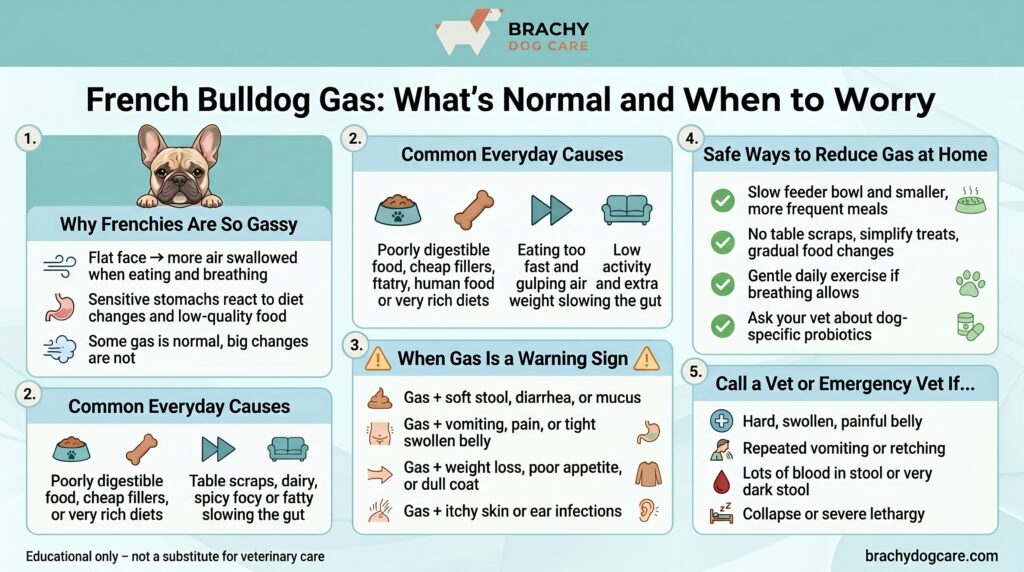
- Use a slow‑feeder bowl or puzzle feeder with ridges that gently force your dog to work around the pattern and eat more slowly.
- Split the daily food into two or three meals instead of one large meal.
- Feed your Frenchie in a quiet space away from other dogs if competition makes them gulp food.
- For some dogs, a low, slightly elevated, wide bowl can make eating more comfortable; discuss this with your vet if you’re unsure, especially if there is any concern about bloat in your dog.
A high‑quality slow‑feeder bowl that is sturdy, dishwasher‑safe, and designed for flat‑faced breeds is a sensible product to invest in. It directly addresses a real cause of French Bulldog gas—swallowed air—without acting like a medication or a shortcut.
2. Clean up diet triggers
Next, look honestly at your dog’s diet and extras.
For at least 2–3 weeks:
- Completely stop table scraps and human food.
- Remove dairy treats, cheese “rewards,” and rich leftovers.
- Simplify treats to a single‑ingredient, easy‑to‑digest option (like plain dehydrated meat) while you’re testing.
- Avoid adding raw cruciferous vegetables as snacks.
The goal is not to find a mythical “anti‑gas” food, but to switch to a more stable, digestible pattern and hold that pattern long enough to see whether gas improves.
3. Transition food slowly and carefully
Any major change in diet should be gradual. Sudden switches—even to a better food—can temporarily increase gas and stool looseness in a sensitive Frenchie.
A typical safe schedule:
- Days 1–3: 75% old food, 25% new food
- Days 4–6: 50% old food, 50% new food
- Days 7–9: 25% old food, 75% new food
- Day 10 onward: 100% new food
If your dog has reacted badly to food changes before, you can stretch each phase out a little longer. Make only one big change at a time so you can clearly see what helps.
4. Support healthy gut motility and activity
Even gentle, well‑managed exercise supports healthier digestion.
For a Frenchie with gas but no other illness signs, you can:
- Add one extra short, comfortable walk each day, watching carefully for any breathing struggle.
- Use low‑intensity indoor games (sniffing games, short fetch in a hallway) to keep them moving.
- Keep weight in a healthy range so abdominal and breathing mechanics remain as efficient as possible.
Here, your Overweight French Bulldog guide ties in nicely. Better weight and safe activity improve both breathing and gut motility, which can indirectly reduce gas over time.
5. Probiotics – cautious, realistic use
Probiotics are popular, but they are not a guaranteed fix for French Bulldog gas. Most veterinary research has focused on probiotics for diarrhea, not flatulence alone, and not every dog responds.
If you decide, with your vet’s blessing, to try a probiotic:
- Use a veterinary‑formulated product designed for dogs.
- Follow the dosing instructions, and give it several weeks to see if there is a consistent change.
- Avoid human probiotic capsules or dairy‑based “home probiotic” experiments, especially in a dog that already seems sensitive to dairy.
- Keep your vet informed, especially if your dog is on other medications.
6. What you should not try without a vet
There are clear boundaries you should respect:
- Don’t start prescription‑style elimination diets without veterinary guidance and follow‑up.
- Don’t give over‑the‑counter human gas medications or enzyme supplements without your vet’s approval.
- Don’t use leftover or borrowed antibiotics.
- Don’t try to manage suspected pancreatitis, IBD, or parasites with diet alone.
If gas is bad enough that you’re reaching for medications, you’re also at the point where a vet exam is needed.
When to see a vet about French Bulldog gas
You don’t need to see a vet for every fart. You do need to involve a vet when gas is persistent, changing, or clearly associated with other signs.
Routine vet visit (soon, but not emergency)
Book an appointment in the near future if:
- Gas continues for 2–3 weeks despite removing scraps and making careful diet changes.
- Gas is clearly associated with chronic soft stool, intermittent diarrhea, or mucus in stool.
- Your Frenchie is slowly losing weight or has a poorer coat while staying gassy.
- Your dog has recurrent ear infections or itch plus significant GI signs (gas, soft stool, occasional vomiting).
- Stool quality, color, or frequency has changed and stayed different.
Emergency vet visit (immediately)
Treat French Bulldog gas as an emergency if you see:
- A clearly distended, tight, or very painful abdomen
- Repeated retching or attempts to vomit with little or nothing produced
- Sudden, intense restlessness or distress
- Repeated vomiting and refusal to eat
- Large amounts of blood in stool or black, tarry stool
- Severe lethargy, collapse, or inability to stand
In these situations, waiting “to see if the gas passes” is not safe. Emergency assessment is always the right call.
Frequently asked questions about French Bulldog gas
For a general veterinary perspective on flatulence and gastrointestinal signs in dogs, you can read a flatulence or GI‑health article from a major veterinary hospital group such as VCA Animal Hospitals, where content is written or reviewed by veterinarians. That kind of resource pairs well with this breed‑specific guide and offers another layer of evidence‑based information.
Final thoughts
French Bulldog gas is partly a side effect of the body they were born into. That doesn’t mean you need to accept constant, room‑clearing farts as normal, or feel silly for worrying. By looking at:
- How your Frenchie eats
- What you’re actually feeding (including scraps)
- Stool quality, weight, and energy level
- Any skin, ear, or breathing issues
you can tell the difference between “typical Frenchie gas” and early signs that something deeper is going on.
French Bulldog Cost in 2026: Price, Vet Bills, and the True Lifetime Cost
French Bulldog Temperament: Personality, and Are They Good Family Dogs?

Best Dog Toothpaste for French Bulldogs: A Vet-Guided Guide
Do French Bulldogs Shed? Coat, Grooming, and When to Worry
Why Your French Bulldog Chews Everything (and How to Stop It)