Written by Jinna CAMERON, veterinary medical student and dog health researcher. Reviewed for factual accuracy against trusted veterinary sources by DVM Carla DONTESK
Walk down the calming aisle, or scroll it online, and every product radiates the same confidence: this one will fix your anxious dog. Most of them won’t, at least not on their own, and a fair few contain so little of the ingredient that matters that they can’t do much of anything. But some genuinely help, and knowing which is which saves you money and, more importantly, actually helps your Frenchie. That’s what this guide is for.
I run this site after losing my own French Bulldog, Pearly, and I’d rather give you the honest, evidence-based version than add to the marketing noise. Calming aids can take the edge off mild and situational anxiety, but they are not magic, and they are not a substitute for addressing the root of the problem. I’m a veterinary medical student and dog-health researcher, not a licensed vet, so please treat this as informed guidance and run anything new past your own vet, especially if your dog is on medication.
Do Calming Aids Actually Work?
Here’s the honest answer up front: some do, for some dogs, some of the time. Calming aids can genuinely help with mild to moderate anxiety, and they’re at their best with situational stress, the predictable triggers like thunderstorms, fireworks, car travel, or you leaving the house. What they don’t do is eliminate anxiety, and none of them come close to prescription medication for a dog in genuine panic. They reduce, they don’t cure.
There’s a catch worth understanding before you spend a penny, because it explains why so many owners feel let down. The calming product market has almost no regulatory oversight. Unlike prescription medicines, which must prove they work through clinical trials, over-the-counter calming aids are regulated as food, which means the manufacturer has to keep them safe but does not have to prove they’re effective before selling them. The practical consequence is that many cheap calming treats contain only trace amounts of the good ingredients, too little to have any real effect. So the question isn’t just whether calming aids work in general, it’s whether a specific product contains a meaningful dose of something that’s actually been shown to help. Not all calming aids are built equally, and the gap between the good and the useless is enormous. Get that right and your odds improve dramatically.
First, Is It Anxiety, or Just a Hyper, Hot Frenchie?
Before you reach for calming aids at all, it’s worth making sure you’re solving the right problem, because two very common situations get mistaken for anxiety and don’t call for calming aids at all.
The first is ordinary youthful energy. French Bulldogs, especially puppies and adolescents, are often simply hyper, and a dog bouncing off the walls isn’t necessarily anxious, it may just be under-exercised and young. This kind of hyperactivity tends to settle naturally with age and maturity, and far more reliably with adequate physical and mental stimulation than with any chew. If your young Frenchie is “crazy” rather than fearful, the answer is usually a good routine, enrichment, and patience, not a calming product.
The second is more important, because it’s a genuine safety issue: panting. A panting, restless Frenchie might be anxious, but they might equally be overheating, and in a brachycephalic breed that distinction can be the difference between a bad afternoon and an emergency. Because these dogs cool themselves so inefficiently, heavy panting always deserves a second look, and our guide to French Bulldog breathing problems explains how to tell distress from ordinary heavy breathing. Never reach for a calming aid to quiet a dog that’s actually struggling to cool down or breathe. Rule out the physical causes first, then treat the anxiety.
The Calming Aids That Have Real Evidence
Once you’ve established that you’re genuinely dealing with anxiety, here are the calming aids that have real science behind them, roughly from strongest evidence down. This is where knowing the actual ingredient matters far more than the brand on the front.
L-theanine, an amino acid found in green tea, has the strongest published evidence of the supplement ingredients and is fast-acting, typically working within about thirty to sixty minutes. That makes it a good choice for a known, imminent trigger: give it around an hour before the fireworks start or the car journey begins. It promotes relaxation without heavy sedation, which is exactly what you want.
Alpha-casozepine, a milk protein derivative sold under names like Zylkene, also has good evidence, but it works differently. Rather than acting fast, it needs to build up with daily use over roughly one to two weeks before you see the full effect, which makes it better suited to ongoing, baseline anxiety than to a sudden event. For a predictable stressful period, some owners start it a couple of weeks ahead.

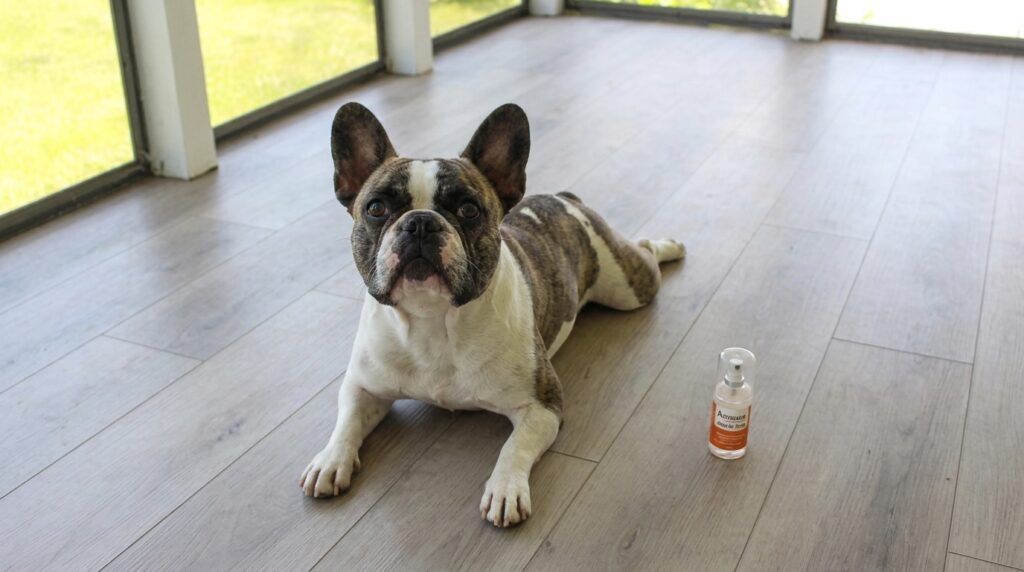
Dog-appeasing pheromones, sold as diffusers, collars, and sprays under brands like Adaptil, work on an entirely different principle: they mimic the reassuring pheromone a nursing mother produces, and there’s peer-reviewed evidence for their use, including with separation-related distress. A plug-in diffuser is a sensible, low-effort option for chronic, baseline anxiety in the home.
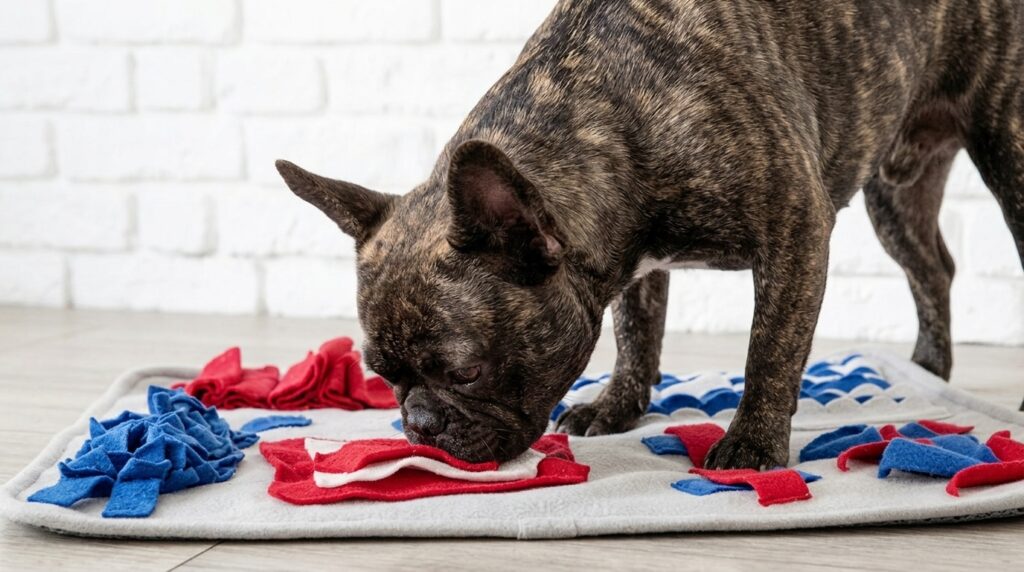
Melatonin can help with mild to moderate situational anxiety and noise phobias, though you should get a weight-appropriate dose from your vet, and check the label carefully, because some formulations contain xylitol, which is toxic to dogs. A pressure wrap like the ThunderShirt has more mixed evidence, but genuinely helps some dogs by applying gentle, constant pressure, and the key is to put it on before the stressful event begins rather than once your dog is already panicking. And don’t underestimate enrichment: a puzzle feeder or a stuffed, frozen toy can distract an anxious dog and build positive associations, and a long-lasting enrichment puzzle toy is a genuinely useful, drug-free part of any calming plan, especially for the tense first minutes after you leave.
What’s Mostly Marketing
In the interest of saving you money, a few popular calming aids and their ingredients don’t have the evidence to back the claims. Valerian root and chamomile are traditional calming herbs that appear in many products, but the canine research behind them is weak, so while they’re unlikely to harm your dog, don’t expect much. L-tryptophan has mixed results and seems to work best combined with other ingredients rather than alone.
And the biggest money-waster of all isn’t a specific ingredient, it’s the trace-dose problem. A treat can proudly list L-theanine and still contain far too little to do anything. Cheap, vaguely “calming” chews with long ingredient lists and no meaningful doses are where a lot of money quietly disappears. When a product hides its amounts in a proprietary blend or lists ten soothing-sounding botanicals, treat it with suspicion rather than hope.
How to Choose and Use a Calming Aid
A few principles turn choosing calming aids from a gamble into something more reliable. First, choose for the ingredient and the dose, not the packaging: look for a product built around L-theanine, alpha-casozepine, or a pheromone, at a dose that’s actually stated. Match the type to the problem, too, a fast-acting L-theanine chew for a specific event, a build-up supplement or a pheromone diffuser for ongoing background anxiety.
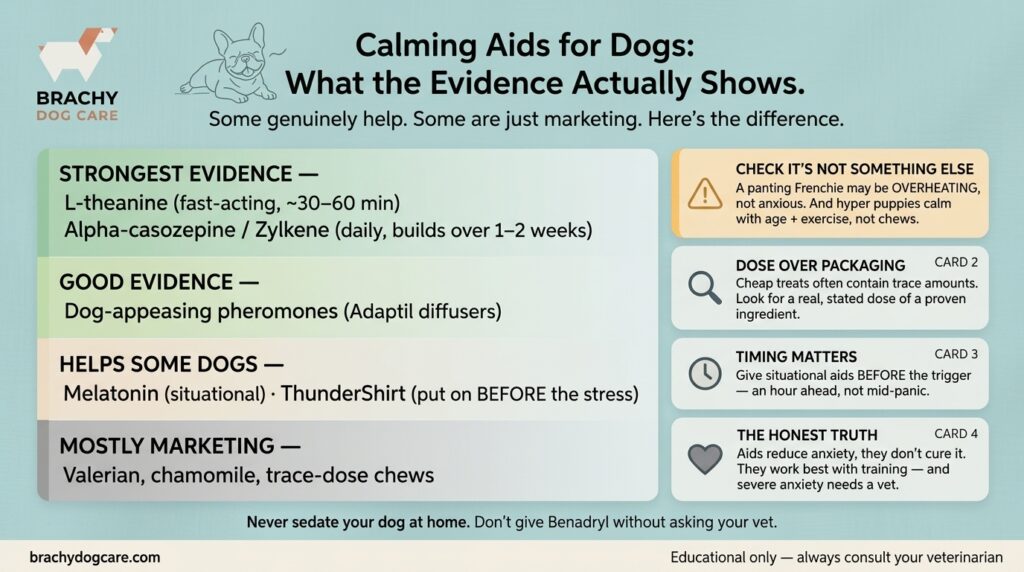
Timing matters more than people realise. Situational aids need to be on board before the stress hits, an hour ahead for a fast-acting chew, or well in advance for a build-up product, because nothing works well if you’re scrambling for it once your dog is already over threshold. And always talk to your vet before starting something new, because some ingredients can interact with medications your dog is already taking, and an underlying health condition can change what’s safe. This is doubly true if your Frenchie has any liver, kidney, or neurological issue, or is on behavioural medication already.
“What Can I Give My Dog Right Now?” and the Benadryl Question
This is one of the most common things owners search for in a panic, so let me be clear and careful about it, because it’s exactly the area where bad internet advice does harm.
There is no safe way to sedate your dog at home on your own initiative, and you shouldn’t try. The calming aids above are not sedatives, they’re mild anxiety-reducers, and for genuine, immediate calm the honest answer is preparation rather than an emergency fix: use an evidence-based situational aid ahead of a trigger you can see coming. As for Benadryl and other human medications, this is a decision only your vet should make. People often assume an antihistamine will reliably calm a dog, but it isn’t a dependable anxiety treatment, the dosing and safety depend entirely on your individual dog, and giving human medication without veterinary guidance can be genuinely dangerous. If you feel you need to medicate your dog to get through something, that’s a conversation to have with your vet, not a guess to make from a search result.
For a dog in real, severe panic, over-the-counter chews aren’t the answer at all. That dog needs a veterinarian, who can prescribe proper anti-anxiety medication that works alongside behavioural treatment. There’s no failure in that, it’s simply the right level of care for a real problem.
When Calming Aids Aren’t Enough
This is the most important section, because it’s the truth the whole industry is built to distract you from. Calming aids work best as one part of a broader plan, not as the plan itself, and no calming aids on the market change that. Every credible source agrees on this: the aids do their best work alongside behaviour modification and training, not instead of it.
For a Frenchie whose anxiety centres on being left alone, which is extremely common in this intensely bonded breed, the real work is the gradual desensitisation covered in our guide to French Bulldog separation anxiety, with a calming aid as a supporting tool at most. Building a secure routine, teaching your dog to settle, and using tools like crate training done kindly all address the cause rather than just the symptom. A calming chew given to a dog that’s never been taught to cope alone is a sticking plaster over a problem that needs real attention.
And here’s the honest rule to remember when you’re tempted to keep buying: if you’ve tried a few products and nothing is working, the answer is almost never a fifth supplement. It’s a conversation with your vet or a certified behaviourist. Anxiety is a genuine medical condition, and modern veterinary medicine treats it as one. A dog that’s truly suffering deserves that level of help, exactly as it would for a physical illness, and reaching for it sooner is a kindness, not a last resort.
Frequently Asked Questions
The Bottom Line
Calming aids for French Bulldogs are worth trying for milder, situational anxiety, as long as you go in with clear eyes: choose products with real, well-dosed ingredients like L-theanine, alpha-casozepine, or pheromones, use them ahead of the triggers you can see coming, and treat them as one part of a plan that also includes training and, for the tough cases, your vet. Skip the trace-dose chews and the marketing-only botanicals, treat calming aids as support rather than a cure, and never try to sedate your dog at home.
Having lost a Frenchie myself, I know how hard it is to watch a dog you love struggle with fear, and how tempting it is to hope a product will fix it. Some calming aids genuinely help, and they’re worth having in the toolkit. But the real, lasting calm comes from understanding what’s frightening your dog and patiently helping them feel safe, with the right aid as support and your vet as backup. That’s the honest path, and it’s the one that actually works.
This article is educational and is not a substitute for veterinary care. Always consult your veterinarian before giving your dog any calming aid or medication, especially if your dog has a health condition or takes other medicines.


French Bulldog Cost in 2026: Price, Vet Bills, and the True Lifetime Cost
French Bulldog Temperament: Personality, and Are They Good Family Dogs?

Best Dog Toothpaste for French Bulldogs: A Vet-Guided Guide

Do French Bulldogs Shed? Coat, Grooming, and When to Worry

Why Your French Bulldog Chews Everything (and How to Stop It)