Written by Jinna CAMERON, veterinary medical student and dog health researcher. Reviewed for factual accuracy against trusted veterinary sources by DVM Carla DONTESK
Coming home to a shredded cushion, a gnawed table leg, or the sad remains of a favourite shoe is a rite of passage for French Bulldog owners, and it’s genuinely frustrating. But before you despair, here’s the single most useful thing to understand: your Frenchie isn’t doing it to spite you, and destructive chewing is never about revenge. It’s a symptom of something else, and once you work out what that something is, you can actually fix it. Chewing itself is normal and healthy. Destroying your house is the part we solve.
I run this site after losing my own French Bulldog, Pearly, and I’d rather help you understand your dog than just hand you a list of commands. I’m a veterinary medical student and dog-health researcher, not a certified trainer, so for a severe or anxiety-driven case a professional is worth every penny. But most chewing problems come down to a cause you can identify and address, and this guide will walk you through exactly that.
Why Do French Bulldogs Chew Everything?
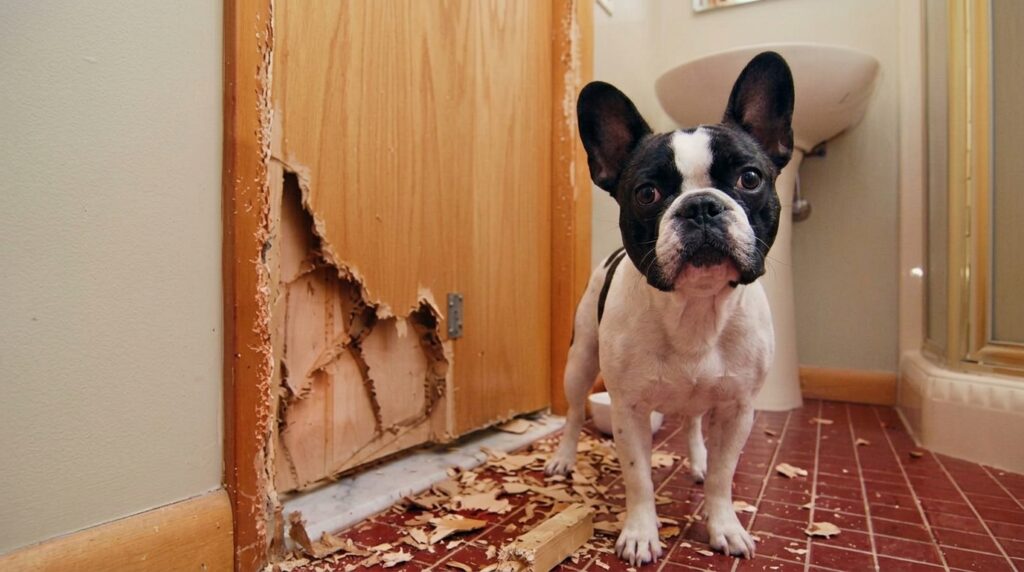
Chewing is deeply wired into every dog. As animal-welfare experts explain, it releases feel-good endorphins, exercises the jaw, helps keep teeth clean, and relieves stress, which is why the goal is never to stop your dog chewing altogether, only to redirect it onto the right things. When chewing turns into destructive chewing, aimed at your furniture and belongings rather than their toys, it’s telling you something, and there are a handful of usual culprits.

Teething is the obvious one in puppies, where sore gums drive an intense need to gnaw on anything that offers relief. Boredom and under-stimulation are the most common cause in adult dogs, a Frenchie left without enough physical or mental activity will happily invent its own entertainment, and your sofa is right there. Anxiety and stress, especially separation anxiety, can trigger destructive chewing as a form of self-soothing. Simple exploration accounts for a lot of puppy and adolescent chewing, since young dogs investigate the world with their mouths the way toddlers grab everything in reach. A lack of clear boundaries plays a role too, because a dog that was never taught what’s acceptable to chew will make its own choices. Occasionally hunger drives it, in a dog on a restricted diet, and rarely there’s an underlying medical cause. Working out which of these applies to your dog is the whole game, because destructive chewing driven by boredom needs a completely different response from destructive chewing driven by anxiety, and “just buy more toys” is exactly why so many owners stay stuck.
Is It Just Teething? The Age Question
One of the most common questions owners ask is when the destructive chewing will end, and the honest answer depends on what’s driving it. If you’ve got a puppy, teething is very likely the main culprit, and the good news is that the most intense teething-driven chewing usually eases by around six months of age, once the adult teeth are fully in.
The catch is that chewing doesn’t simply switch off at six months. Adolescent destructive chewing, the exploratory, boredom-fuelled kind, often peaks somewhere between six and eighteen months, which is exactly when many owners feel blindsided that their “teething phase” never really ended. Most dogs’ destructive chewing genuinely settles down by one to two years of age as they mature and, crucially, as they learn what’s appropriate. So if your Frenchie is still shredding things well past two, that’s a sign the underlying cause, usually boredom, anxiety, or plain habit from never having been redirected, hasn’t been addressed rather than a teething problem that’s dragging on. Age alone won’t fix it; the cause has to be dealt with.
When Chewing Means Anxiety, Not Naughtiness
This is the distinction that changes how you should respond, because destructive chewing born of anxiety needs kindness and a different strategy, not correction. The clearest sign that anxiety is behind the destruction is timing: a dog chewing to relieve separation-related stress typically chews only when left alone, or chews most intensely when alone, and usually shows other signs of distress alongside it, things like whining, barking, pacing, restlessness, or accidents indoors.
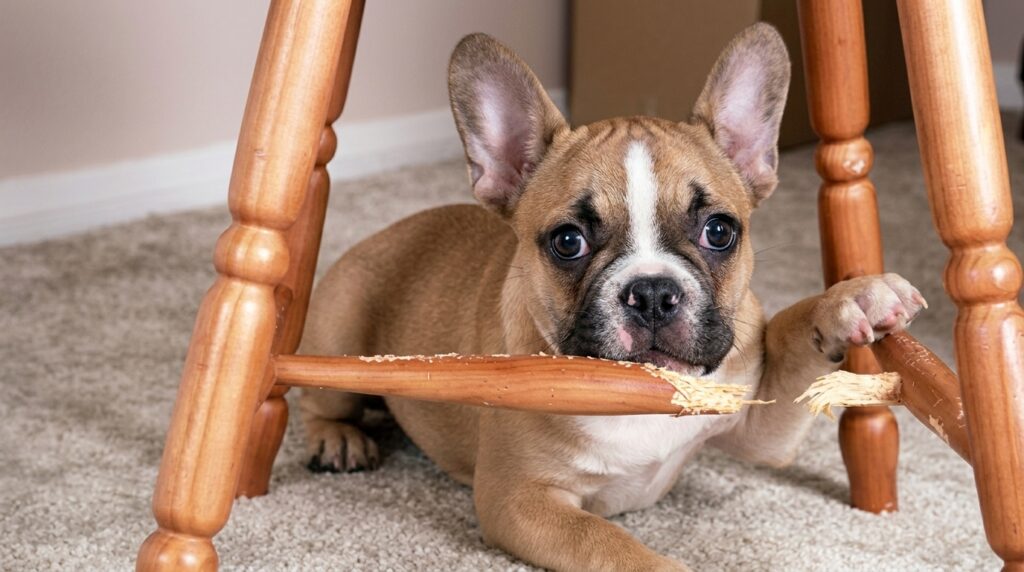
If that pattern sounds familiar, the chewing isn’t the real problem, it’s a symptom of the anxiety, and no number of chew toys will resolve it on its own. The fix is to address the underlying distress, which is exactly what our guide to French Bulldog separation anxiety walks through, using gradual desensitisation to teach your dog that being alone is safe. There’s also an important safety warning here that catches well-meaning owners out: do not crate a dog with genuine separation anxiety in an attempt to contain the chewing, because a truly panicked dog can injure itself trying to escape confinement. Crating helps many dogs, but only when they’ve been properly and positively introduced to it, as our guide to crate training a French Bulldog explains, and never as a way to trap an anxious dog with its panic.
Wait, Is Your Frenchie Chewing Its Own Paws?
Here’s a distinction that trips a lot of owners up, and it matters. If your French Bulldog is chewing or licking its own paws rather than your possessions, that usually isn’t destructive chewing at all, and treating it as a behaviour problem will get you nowhere. Genuine destructive chewing is aimed outward, at objects, not at the dog’s own body.
Persistent paw chewing and licking is far more often a sign of an itch, an allergy, or a skin irritation, and this breed is genuinely prone to all three. It can also be a self-soothing response to anxiety. Either way, the answer isn’t redirection to a chew toy, it’s finding out why the paws are bothering your dog, which often means checking for allergies, irritation between the toes, or a skin condition, and involving your vet if it persists. French Bulldogs are notorious for skin sensitivities, so paw chewing deserves to be treated as a potential health issue rather than a training one. If this describes your dog more than the shredded-sofa scenario, that’s a different path entirely, and worth pursuing properly rather than filing under naughty behaviour.
How to Stop Destructive Chewing
Once you’ve identified the likely cause, the actual method for curbing destructive chewing comes down to a few things done consistently, and they work best in combination rather than alone. No single trick stops destructive chewing on its own.
The foundation is redirection rather than punishment. When you catch your dog chewing something they shouldn’t, calmly take it away and immediately offer an appropriate chew toy in its place, then praise and reward them warmly the moment they take it. What you must not do is scold or punish after the fact, because dogs simply don’t connect a telling-off with something they did earlier, so all it achieves is fear and confusion. A chewed shoe you find on returning home is, as trainers put it, a puppy-proofing failure rather than a puppy failure, so the lesson is on you to manage the environment better next time.
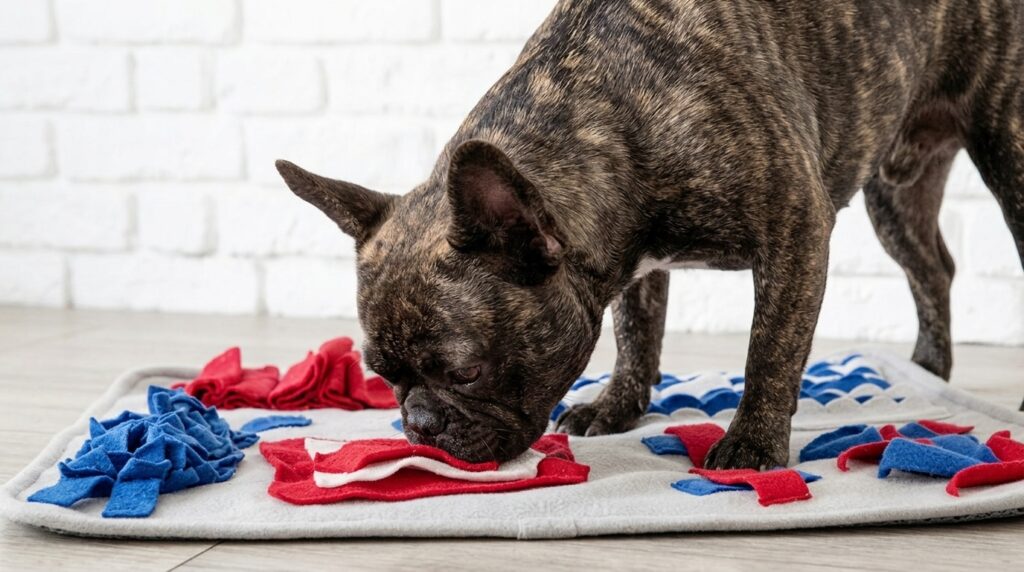
Providing the right outlets is the other half of it. Give your dog plenty of their own appropriate chew toys, and pay attention to which ones actually hold their interest, then rotate them every couple of days so novelty keeps them engaging. A durable chew toy built for strong chewers gives your Frenchie a satisfying, safe target for the urge, which is exactly what you’re trying to channel. Beyond chew toys, enrichment does enormous work against the boredom that drives so much destructive chewing: food puzzles, snuffle mats, frozen stuffed toys, lick mats, and short training sessions all tire the mind. A tired dog chews far less, and a ten-minute training game plus a frozen stuffed toy before you leave the house dramatically reduces the odds your dog goes hunting through your belongings.
Finally, manage the environment while the new habits form. Get down on the floor at your dog’s level and puppy-proof properly, putting shoes away, securing electrical cords, and moving remotes and other tempting objects out of reach, and block off rooms where your dog tends to get into trouble. Used correctly and kindly, a crate, playpen, or closed-off dog-safe room gives your Frenchie a secure space when you can’t supervise, protecting both your home and your dog from destructive chewing while good habits take root. None of this happens in a weekend, it’s a behaviour you manage over weeks and months, but consistency genuinely wins.
Do Deterrent Sprays and Smells Actually Work?
A lot of owners ask what smell will repel a dog from chewing, or whether vinegar stops destructive chewing, so it’s worth an honest answer. Taste deterrents like bitter apple spray can genuinely help, and they work by making a target object taste unpleasant, so you apply the spray to the furniture leg or skirting board your dog favours, then redirect them to an appropriate toy and reward the switch.
The important caveat is that deterrents are a supplement, not a solution. Spraying something bitter on the sofa does nothing to address why your dog is chewing in the first place, so on its own it often just sends a bored or anxious dog to find the next unsprayed target. Used alongside redirection, enrichment, and proper management, a deterrent can be a useful extra tool for a specific problem object, but treat it as one part of the plan rather than the fix. And test any spray on a small hidden area first, since some can stain.
Safe Versus Dangerous Things to Chew
Since the whole strategy rests on giving your dog good things to chew, it’s essential to know that some popular chew objects are genuinely risky, particularly for a brachycephalic breed.
The firmest rule is to never give cooked bones of any kind, because they splinter and can cause serious internal injury or choking. Be genuinely cautious, too, with very hard chews like antlers, hooves, and hard natural bones, because intense chewers regularly chip or fracture teeth on them, which is a painful and expensive irony for something meant to be good for the teeth, as we discuss in our guide to the best dental chews for French Bulldogs. A good test is that if a chew doesn’t give at all when you press it hard with your thumbnail, it’s probably too hard for your dog’s teeth. Only ever offer chews sold specifically for the purpose, and supervise, especially with a strong chewer who might break off and swallow chunks.
One more practical point that surprises people: plush, stuffed toys aren’t a good redirection tool for a determined chewer. They’re fine for supervised play, but they don’t offer enough resistance to satisfy the chewing urge, and a dog that shreds one can swallow stuffing or a squeaker, which is an ingestion risk. For genuine chewing, reach for the durable, purpose-made options instead.
A Quick Word: This Isn’t “Rage Syndrome”
Because worried owners sometimes stumble across the term, it’s worth being clear: destructive chewing is not a sign of aggression, and it has nothing to do with the rare neurological condition known as rage syndrome. Destructive chewing is normal, healthy chewing behaviour that’s simply been misdirected, and a dog that chews your furniture is bored, anxious, teething, or under-exercised, not dangerous or “broken.” Please don’t let a scary search result convince you otherwise. The behaviour in front of you is ordinary, common, and entirely manageable with the approach above.
Frequently Asked Questions
The Bottom Line
Destructive chewing in a French Bulldog looks like a discipline problem, but destructive chewing is really a puzzle to solve: find the cause, whether that’s teething, boredom, or anxiety, and match your response to it. Redirect rather than punish, give your dog genuinely satisfying and safe things to chew, tire out their body and mind, manage the environment while good habits form, and address any underlying anxiety at its root rather than papering over it with more toys.
Having lost a Frenchie myself, I’ve learned that the behaviours that frustrate us most are usually our dogs telling us something they can’t say out loud. A chewing Frenchie isn’t a bad dog, it’s a bored, anxious, or under-stimulated one, and meeting that need is both kinder and far more effective than any amount of scolding. Do that patiently, and the shredded cushions become a memory rather than a daily event.
This article is educational and is not a substitute for professional training or veterinary care. If chewing is severe, anxiety-driven, or your dog is chewing its own body, consult your veterinarian or a certified behaviourist.
French Bulldog Cost in 2026: Price, Vet Bills, and the True Lifetime Cost
French Bulldog Temperament: Personality, and Are They Good Family Dogs?

Best Dog Toothpaste for French Bulldogs: A Vet-Guided Guide
Do French Bulldogs Shed? Coat, Grooming, and When to Worry
Why Your French Bulldog Chews Everything (and How to Stop It)