Written by Jinna CAMERON, veterinary medical student and dog health researcher. Reviewed for factual accuracy against trusted veterinary sources by DVM Carla DONTESK
Here’s something most owners don’t realise until it’s pointed out: the tube of toothpaste in your bathroom could genuinely poison your dog, while the right dog toothpaste is one of the most powerful, cheapest things you can do to protect their health for life. That gap, between a product that harms and one that helps, is what this guide is about, and it starts with knowing exactly what to reach for and what to keep well away from your Frenchie’s mouth.
I run this site after losing my own French Bulldog, Pearly, and I care about getting the practical, safety-critical details right rather than just handing you a list of links. Choosing a dog toothpaste isn’t complicated once you know the two or three things that actually matter, and for a breed as prone to dental trouble as this one, it’s genuinely worth getting right. I’m a veterinary medical student and dog-health researcher, not a licensed vet, so run anything new past your own vet, especially if your dog has health issues.
Can You Use Human Toothpaste on a Dog?
Let’s answer the most important question first, because it’s the one that can hurt your dog: no, you must never use human toothpaste on a dog. This isn’t a minor preference, it’s a genuine safety issue, and it’s the single most important thing in this article.
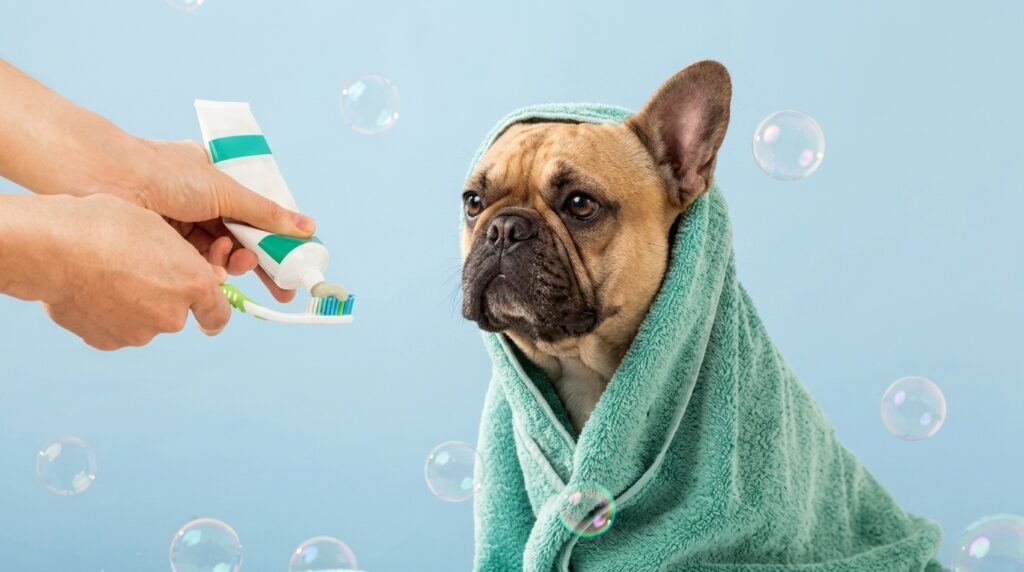
Human toothpaste contains ingredients that are toxic to dogs, chiefly xylitol and fluoride. Xylitol, an artificial sweetener, is dangerous to dogs even in small amounts and can cause serious harm within minutes of being swallowed, which is exactly what happens here, because your dog can’t rinse and spit the way you do. Whatever you put in their mouth, they swallow. Fluoride is harmful when ingested too, and the foaming agents in human paste, like sodium lauryl sulfate, aren’t meant to go down either. A proper dog toothpaste, by contrast, is specifically formulated to be swallowed safely and needs no rinsing at all. Xylitol is on the list of everyday toxic foods and products French Bulldogs must avoid, and it hides in more than just toothpaste, so it’s worth knowing well. The bottom line is simple: only ever use toothpaste made for dogs, and the rest of this guide is about choosing a good one.
What Makes a Good Dog Toothpaste?
Once you’re safely in dog-specific territory, a few features separate a genuinely effective dog toothpaste from a mediocre one, and knowing them turns the overwhelming shelf into an easy decision.
The most important is an enzymatic formula, which is widely considered the gold standard. Enzymatic toothpastes contain enzymes, such as glucose oxidase and lactoperoxidase, that target the bacteria responsible for plaque and break down bacterial buildup at a chemical level, and crucially they keep working even after you’ve put the brush away. That ongoing action is a real advantage over a paste that only cleans while you’re actively scrubbing. Beyond the enzymes, look for gentle abrasives like silica or calcium carbonate that polish the teeth without damaging the enamel, and soothing ingredients like aloe can be a nice bonus for the gums.
Then there’s what to avoid, which mirrors the human-toothpaste problem: steer clear of any dog toothpaste containing xylitol, fluoride, alcohol, or heavy foaming agents. Reading the ingredient list genuinely matters here, because “for dogs” on the front doesn’t guarantee a clean formula inside. Finally, don’t underestimate flavour. Dog toothpaste comes in flavours like poultry, beef, seafood, malt, peanut butter, and vanilla, and picking one your dog actually likes is not a trivial detail, it’s what turns brushing from a wrestling match into something your Frenchie tolerates or even enjoys, which is the difference between a routine you keep up and one you abandon in a week.
The VOHC Seal: The Proof That Cuts Through Marketing
Just as with dental chews, there’s one independent standard that separates products with real clinical evidence from those with good packaging, and it’s the seal of the Veterinary Oral Health Council. The VOHC awards its seal only to products shown to genuinely reduce plaque or tartar, so it’s the most reliable filter you have when a shelf of tubes all promise the same things.
Here’s a useful fact to know while shopping: Petsmile Professional is currently the first and only dog toothpaste to carry the VOHC seal, earned for plaque inhibition through its patented cleaning formula. That doesn’t mean it’s the only good dog toothpaste, plenty of excellent enzymatic options don’t carry the seal, but it does make Petsmile uniquely evidence-backed among toothpastes specifically. If you want the toothpaste with the strongest independent proof behind it, that’s the one, and you can always check the current VOHC accepted products list directly, since it’s updated as products earn or lose acceptance. The seal is the same standard we lean on in our guide to the best dental chews for French Bulldogs, and it’s just as useful here.
Are “Natural” Dog Toothpastes Better?
A lot of owners specifically want a natural dog toothpaste, and search for what breaks down plaque naturally, so this deserves an honest answer rather than a marketing one. Natural and organic dog toothpastes can absolutely work, and there are good ones built around ingredients like aloe, neem oil, and enzymes rather than synthetic additives. But there’s a nuance worth understanding.
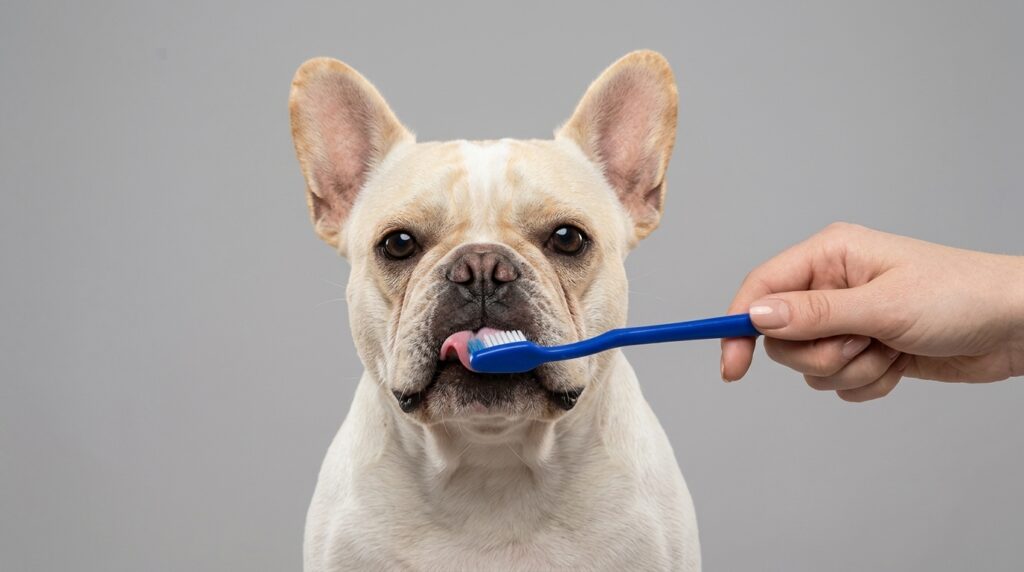
Part of the reason natural toothpastes work is simply the friction of brushing itself, the mechanical action of the brush scrubbing plaque off the teeth, which happens regardless of what’s on the bristles. As one veterinarian put it, natural or organic toothpastes may work partly due to that friction, and they should be part of a comprehensive oral routine rather than treated as a complete replacement for a proven dog toothpaste. So “natural” isn’t automatically better or more effective, and not all natural toothpastes are created equal. If you prefer a natural formula, choose a good enzymatic one with a clean ingredient list, and know that the brushing itself is doing a lot of the work. Don’t pay a premium for “natural” assuming it outperforms a well-formulated conventional paste, because often it doesn’t.
Why This Matters Extra for a French Bulldog
Toothpaste choice is worth a little more care for a Frenchie than for the average dog, and it comes back to the breed’s mouth. French Bulldogs pack a full set of teeth into a dramatically shortened jaw, which crowds and overlaps those teeth and creates countless little traps where plaque and food debris collect and are hard to clean out. On top of that, this breed’s tendency to breathe through the mouth dries out the saliva that would normally help wash bacteria away.
The practical result is that Frenchies accumulate plaque faster and are more prone to dental disease than many breeds, which our guide to French Bulldog dental care covers in full. That makes daily brushing with a good enzymatic dog toothpaste genuinely high-value preventive care for this breed specifically, not just a nice-to-have. Given that over eighty percent of dogs show signs of dental disease by the age of three, and that a professional cleaning is far more expensive and invasive than a tube of toothpaste, this is one of the best returns on effort in all of Frenchie care.
The Best Dog Toothpastes for French Bulldogs
Here are the options genuinely worth considering, each with an honest note on where it fits. I’m describing these from their formulas and reputations rather than claiming a personal lab test.
The strongest evidence-backed choice is Petsmile Professional, because it’s the only dog toothpaste carrying the VOHC seal for plaque control. Its cleaning formula is designed to dissolve plaque, and helpfully it also works as a no-brush option, meaning you can simply rub it onto the teeth and gums for dogs who won’t sit still for a brush, which is a real advantage for a wriggly Frenchie. A VOHC-accepted dog toothpaste like Petsmile is the pick if you want maximum proof behind your choice, with the honest caveat that it sits at the premium end on price.
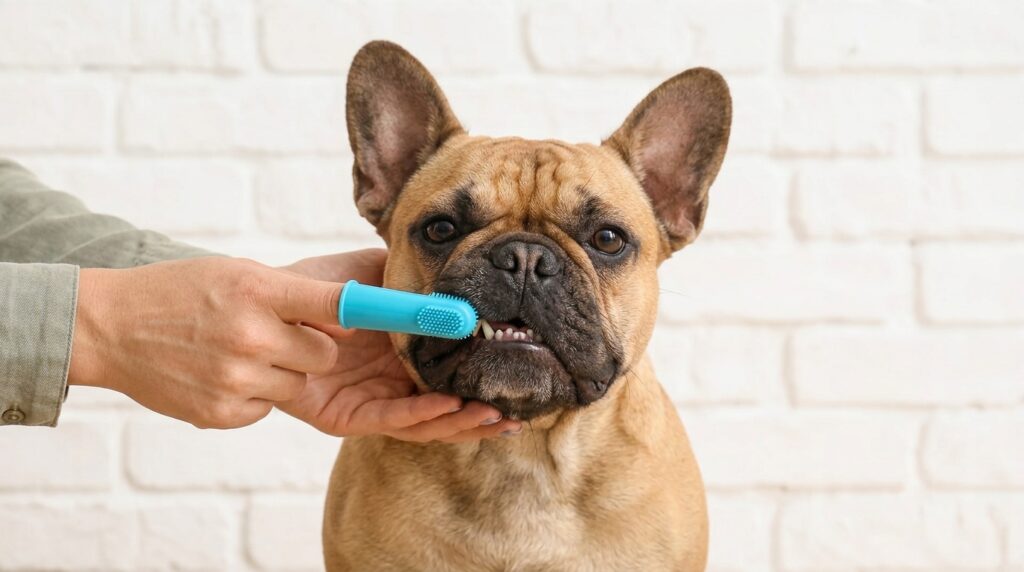
For a trusted, affordable workhorse, Virbac C.E.T. Enzymatic is the classic veterinary-clinic recommendation. It uses a dual-enzyme system, it’s widely used and recommended by vets, and it comes in flavours like poultry that most dogs take to easily. A Virbac C.E.T. enzymatic toothpaste is the sensible default for most owners who want something proven and reasonably priced. If you’d prefer a more natural-leaning formula, Vet’s Best Enzymatic is a good middle ground, combining an enzymatic action with natural ingredients like aloe, neem oil, and grapefruit seed extract for owners who want fewer artificial additives. And if budget is the deciding factor, Arm & Hammer’s enzymatic dog toothpaste uses baking soda for gentle whitening and odour control at a wallet-friendly price. Any of these is a genuinely reasonable choice, so let your dog’s flavour preference and your budget guide the final pick, since the best toothpaste is ultimately the one you’ll actually use every day.
What If My Frenchie Hates the Toothbrush?
Plenty of dogs resist a toothbrush, especially at first, so if yours does, you have good options rather than a lost cause. The simplest is a no-brush enzymatic gel, like the Petsmile formula mentioned above, which you rub directly onto the teeth and gums with a finger, letting the enzymes do the work without any scrubbing. A rubber finger brush is also far less intimidating to many dogs than a full toothbrush and lets you start gently.
And if brushing in any form is genuinely a battle you’re losing, don’t give up on dental care altogether, just lean harder on the alternatives. VOHC-accepted dental chews, water additives, and dental gels all meaningfully reduce plaque when used consistently, and our guide to the best dental chews for French Bulldogs covers how to choose ones that actually work. The ideal is brushing plus these extras, but a dog who gets consistent chews and a water additive is far better off than one whose owner gave up entirely because the brush didn’t go well. Something is always better than nothing when it comes to your Frenchie’s teeth.
How to Brush Your French Bulldog’s Teeth
Getting your dog comfortable with brushing is mostly about going slowly. Start by letting your Frenchie simply lick a little of the dog toothpaste off your finger for a few days, so they associate the taste with something pleasant, which is easy given how palatable these flavours are designed to be. Then progress to gently rubbing a finger or a soft dog toothbrush along the outer surfaces of the teeth, focusing on the gumline where plaque gathers, and keep the sessions short and full of praise.
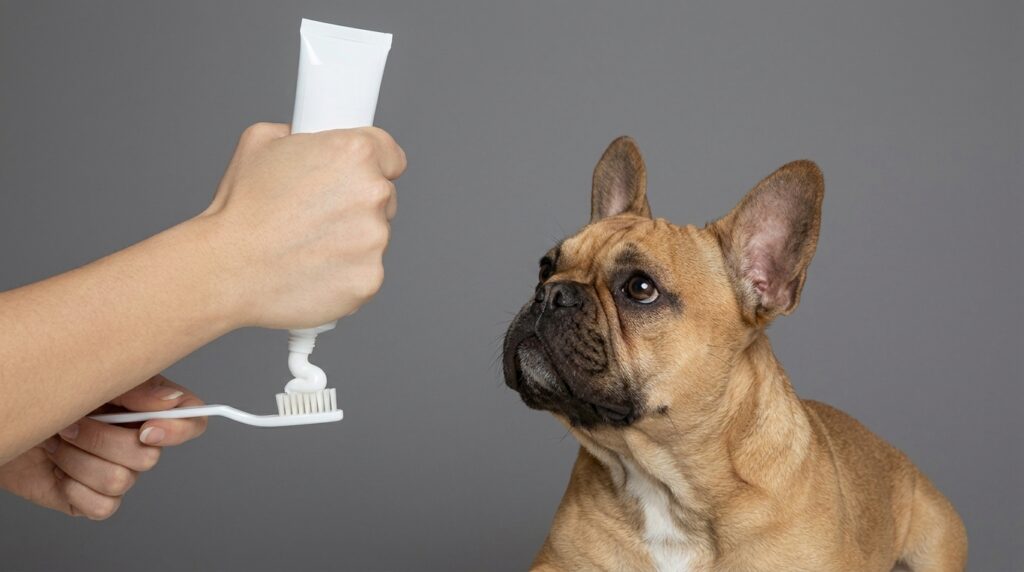
You don’t need to scrub the inner surfaces much, since the tongue handles those reasonably well, and you don’t need to rinse afterward, because dog toothpaste is made to be swallowed. Aim for daily brushing if you can, since plaque begins hardening into tartar within a couple of days, but be reassured that any regular brushing is far better than none. Build the habit patiently and it becomes a normal, quick part of your routine rather than a fight.
Frequently Asked Questions
The Bottom Line
Choosing the best dog toothpaste for your French Bulldog comes down to a few honest rules: never use human toothpaste, since xylitol and fluoride are genuinely dangerous; pick a dog-specific enzymatic formula with a clean ingredient list; consider the VOHC-accepted option if you want the strongest proof; and above all choose a flavour your dog will accept, because the best toothpaste is the one you’ll actually use. For a breed whose crowded mouth makes dental disease more likely, that daily habit is one of the highest-value things you can do.
Having lost a Frenchie myself, I’ve come to appreciate how much the small, consistent acts of care add up over a dog’s life. Two minutes with a good dog toothpaste, most days, protects your Frenchie from pain, expensive procedures, and the whole-body effects of dental disease down the line. Choose a safe, proven paste, make it pleasant, and let it become one of those quiet routines that quietly pays off for years.
This article is educational and is not a substitute for veterinary care. If your dog has existing dental disease, sore gums, or difficulty eating, have your veterinarian examine their mouth.
French Bulldog Cost in 2026: Price, Vet Bills, and the True Lifetime Cost
French Bulldog Temperament: Personality, and Are They Good Family Dogs?
Best Dog Toothpaste for French Bulldogs: A Vet-Guided Guide
Do French Bulldogs Shed? Coat, Grooming, and When to Worry

Why Your French Bulldog Chews Everything (and How to Stop It)