Written by Jinna CAMERON, veterinary medical student and dog health researcher. Reviewed for factual accuracy against trusted veterinary sources by DVM Carla DONTESK
Most of us have handed our dog a scrap from the plate without a second thought. With a French Bulldog, that small habit carries more risk than people realize, because some everyday foods are genuinely dangerous, and a Frenchie’s small body means a smaller amount can do real harm. I run this site because I lost my own French Bulldog, Pearly, and I take this breed’s vulnerabilities seriously. Knowing the French Bulldog toxic foods, and what to do if your dog gets into one, is one of the simplest ways to protect a life.
This guide walks through which foods are truly toxic, which ones harm in other ways, what the warning signs look like, and exactly what to do in an emergency. I’m a veterinary medical student and dog-health researcher, not a licensed veterinarian, and this is educational, not a substitute for your vet. But on a topic where minutes can matter, knowing the basics in advance is worth a great deal.

If Your Frenchie Just Ate Something — Do This Now
Because some people land here in a panic, let’s put the most important part first. If you think your French Bulldog has eaten one of the French Bulldog toxic foods, act immediately and call a professional before doing anything at home.
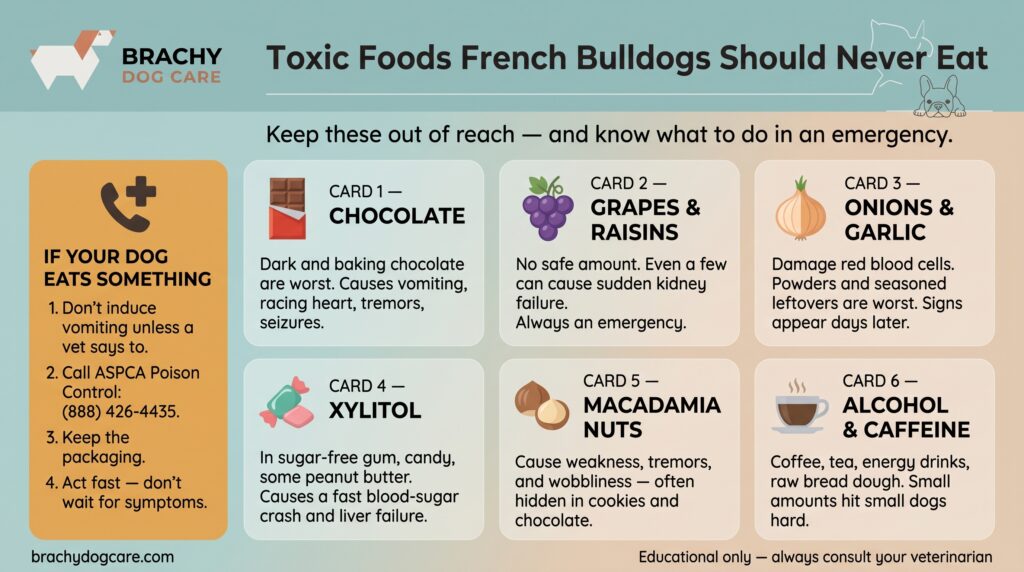
Do not try to make your dog vomit on your own unless a vet or poison line specifically tells you to. Home-induced vomiting is the wrong move for several substances and once symptoms have started, and it carries a real choking and aspiration risk that is even higher in flat-faced breeds like Frenchies. Instead, call right away: the ASPCA Animal Poison Control Center at (888) 426-4435, or the Pet Poison Helpline at (855) 764-7661, and your own vet. Keep any packaging, because the ingredient list matters enormously, especially for products that might contain xylitol. Have your dog’s weight, what they ate, roughly how much, and when, ready to relay. That information shapes the advice you’ll get.
With that covered, here’s everything you need to understand the French Bulldog toxic foods and why they’re dangerous.
Why French Bulldogs Are Especially Vulnerable
Plenty of dog-food-safety lists exist, but a few things make this breed worth its own honest discussion, and it’s important to separate what’s genuinely breed-specific from what’s just common sense for a small dog.
The clearest factor is size. Most toxic doses are weight-based, so a 9-to-13-kilogram Frenchie reaches a dangerous amount from far less food than a large dog would. That’s general small-breed logic rather than something unique to the breed, but it matters: the same square of chocolate is a much bigger problem for a Frenchie than for a Labrador, which is part of why portion and access matter so much with French Bulldog toxic foods. The same is true of alcohol, where smaller dogs are affected more strongly.
Behavior plays a part too. French Bulldogs are famously enthusiastic, floor-scavenging eaters who will hoover up a dropped grape or a fallen piece of gum before you’ve registered it hit the ground. That raises the odds of accidental ingestion, and while it’s an observation rather than a lab finding, any Frenchie owner knows it’s true.

This breed is also commonly described as having a sensitive stomach and a tendency toward pancreatitis, which makes fatty scraps a heightened concern rather than just a mild one. And their brachycephalic airway adds a specific emergency risk: vomiting, including the induced kind, is riskier for these dogs because of their aspiration potential, which is exactly why you should never make a Frenchie vomit without professional guidance. I’ll be honest about the limits here, though. There’s no good evidence that French Bulldogs process toxins differently from other dogs of the same weight, so the breed angle really comes down to size, behavior, and that airway, not altered biology. Understanding the French Bulldog toxic foods is mostly about respecting those three things.
The Most Dangerous Toxic Foods
These are the genuine poisons, the French Bulldog toxic foods that cause harm through their chemistry rather than through choking or upset. For each, the rule is the same: any meaningful ingestion is a reason to call, not to wait.
Chocolate
Chocolate is probably the most famous of the French Bulldog toxic foods, and for good reason. It contains methylxanthines, theobromine and caffeine, which dogs break down very slowly, leading to overstimulation of the heart and nervous system. Danger rises sharply with the type: baker’s chocolate and cocoa powder are far more potent than milk chocolate, so a small amount of the dark, bitter kind is much worse than the same weight of a candy bar. Early signs, often within twelve hours, include restlessness, agitation, increased thirst, and vomiting, and severe cases can progress to tremors, a racing or irregular heartbeat, high body temperature, and seizures. For a small dog, it doesn’t take much.
Chocolate deserves a closer look, because unlike some toxins it has a real dose-response, the type matters as much as the amount. Dark and baking chocolate are far more dangerous than milk chocolate, and a small Frenchie is affected by less than a big dog. If your dog has ever gotten into it, our detailed guide on whether French Bulldogs can eat chocolate breaks down how much is dangerous by type and exactly what to do.
Grapes and Raisins
This is the one that frightens veterinarians most, because there is no known safe amount. Some dogs eat several grapes with no apparent effect; others suffer acute kidney failure from just a few. Researchers now suspect tartaric acid, which dogs can’t process, as the culprit, but the dose-response is genuinely unpredictable, which is why any ingestion is treated as an emergency. Signs include vomiting within hours, then lethargy, excessive thirst, belly pain, and eventually reduced or absent urination as the kidneys fail. Raisins, currants, and sultanas are simply concentrated grapes and just as dangerous. Because no threshold exists, do not try to judge whether the amount was “enough.” Assume it was and call; grapes sit near the very top of the French Bulldog toxic foods for exactly this reason.
Onions, Garlic, and Other Alliums
Onions, garlic, chives, and leeks all contain organosulfur compounds that damage a dog’s red blood cells, leading to a form of anemia. Garlic is several times more toxic than onion, and concentrated forms, powders, dehydrated flakes, and soup or gravy mixes, are the most dangerous of all, which is why seasoned leftovers are a bigger hazard than people expect. The cruel feature of allium poisoning is its delay: the damage builds over days, with the worst effects often appearing three to five days after the meal. You might notice weakness, pale gums, lethargy, fast breathing, or reddish-brown urine well after the food is gone, which makes these some of the most deceptive French Bulldog toxic foods of all.
Xylitol
Xylitol is the quiet killer on this list, a sugar substitute found in sugar-free gum, candy, some peanut butters, baked goods, mouthwash, and toothpaste. In dogs it triggers a sudden, massive release of insulin, causing a dangerous crash in blood sugar, and at higher doses it can cause liver failure. The hypoglycemia can begin within ten to thirty minutes, while liver problems may surface a day or two later. What makes xylitol so insidious among French Bulldog toxic foods is that its content varies wildly between products and even between flavors of the same gum, so even a single piece can be harmful depending on your dog’s size. This is exactly why keeping the packaging matters so much. Signs include vomiting, weakness, wobbliness, tremors, seizures, and collapse.
Not every common food is off-limits, and one of the most useful safe treats comes with a single important catch. Peanut butter is fine for Frenchies, but some jars contain xylitol, a sweetener that’s deadly to dogs and easy to miss on a label. Our guide on whether French Bulldogs can eat peanut butter explains exactly what to check for and how to serve it safely.
Macadamia Nuts
Macadamia nuts cause a strange, usually non-fatal syndrome seen only in dogs. Even small amounts can bring on weakness, especially in the hind legs, along with depression, vomiting, unsteadiness, tremors, and a raised temperature, typically within twelve hours. The good news is that most dogs recover within a day or two, often without specific treatment. The catch is that macadamias frequently come in chocolate-covered or cookie form, which combines two toxins at once, so the nut is rarely the only concern among the French Bulldog toxic foods.
Alcohol and Caffeine
Alcohol, from drinks and from fermenting raw bread dough, depresses the nervous system and harms the liver and brain at much smaller quantities than in people, and the smaller the dog, the bigger the effect. Signs include vomiting, disorientation, loss of coordination, labored breathing, and in severe cases coma. Caffeine, in coffee, tea, soda, energy drinks, and some medications, works through the same mechanism as chocolate, producing restlessness, a racing heart, rapid breathing, and tremors. Both belong firmly on any list of French Bulldog toxic foods to keep well out of reach.
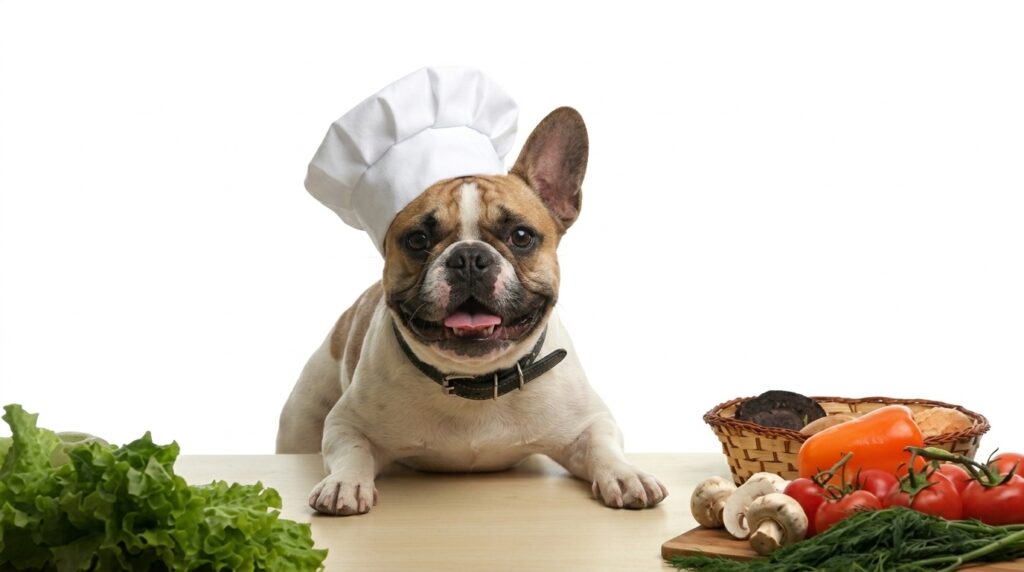
Foods That Harm Without Being “Toxic”
Not every dangerous food is a poison. Several common items injure through other mechanisms, and they belong in any honest conversation about French Bulldog toxic foods even though they’re not toxic in the chemical sense.
Fatty scraps like bacon, sausage, and fried food can trigger pancreatitis, a painful and potentially life-threatening inflammation of the pancreas, and given this breed’s reputation for a sensitive gut, that’s a risk worth taking seriously. If your Frenchie is prone to digestive upset, our guide to French Bulldog vomiting explains why this breed reacts so readily and when a reaction crosses into emergency territory.
Corn cobs are a classic cause of intestinal obstruction, because they don’t break down and can lodge in the bowel, sometimes requiring surgery. Cooked bones are dangerous in a different way: they splinter and can cause choking, mouth injuries, or internal damage. Too much salt, from chips, pretzels, or homemade play dough, can cause salt poisoning with excessive thirst, vomiting, and in severe cases neurological signs. Raw yeast dough is a double threat, expanding painfully in the warm stomach while fermenting into alcohol. And dairy, while not toxic, causes diarrhea and gas in the many dogs who can’t digest lactose well, and in a breed already prone to loose stools our guide to French Bulldog diarrhea is a useful companion when food upsets the gut. The avocado flesh is only mildly problematic, but its large pit is a genuine choking and obstruction hazard, which is why avocado earns a place on any careful list of French Bulldog toxic foods to avoid.
Not every sweet treat is off the table. Bananas, for instance, are perfectly safe for Frenchies in small amounts, the catch is the sugar and the peel, not toxicity. If you’re building a picture of what’s safe versus dangerous, our guide on whether French Bulldogs can eat bananas covers how much is sensible and which banana forms (like banana bread) to avoid.
What About “Safe” Foods?
It’s worth saying that plenty of human foods are fine in moderation, and the goal here isn’t to make you afraid of your own kitchen. Many fruits and vegetables, plain cooked meats, and simple snacks are perfectly reasonable occasional treats. The trouble is that “safe” always depends on preparation, since a plain piece of chicken is fine while the same chicken cooked in onion and garlic is not. We’re building out individual guides on specific foods owners ask about most, so when you’re unsure whether a particular item is among the French Bulldog toxic foods or one of the safe ones, it’s always better to check before sharing than to guess.
Prevention is mostly about access. Store gum, chocolate, raisins, and baking ingredients well out of counter-surfing range, keep handbags and coat pockets off the floor since they so often hide gum and mints, and brief any guests or children who might slip your dog a “treat.” Most poisonings aren’t deliberate; they’re a moment of opportunity, and removing the opportunity removes most of the risk from French Bulldog toxic foods entirely.
Not every sweet treat is off the table. Bananas, for instance, are perfectly safe for Frenchies in small amounts, the catch is the sugar and the peel, not toxicity. If you’re building a picture of what’s safe versus dangerous, our guide on whether French Bulldogs can eat bananas covers how much is sensible and which banana forms (like banana bread) to avoid.
What to Do If Your Frenchie Eats Something Toxic
If the worst happens, a calm, fast response makes a real difference. The single most important rule bears repeating: don’t induce vomiting at home unless a professional directs you to, because for some substances it makes things worse, and for a brachycephalic dog the aspiration risk is serious. A vet may decide to induce vomiting in the clinic if the ingestion was very recent and your dog still seems well, but that’s their call to make with the right safeguards.
Call a poison line or your vet immediately rather than searching for answers while time passes. Gather what you can: the food or product itself and its packaging, an estimate of how much was eaten, the time it happened, and your dog’s weight and any symptoms. For something like grape ingestion, standard veterinary care often involves early decontamination, activated charcoal, and intravenous fluids with kidney monitoring over several days, so getting in early genuinely changes outcomes. The instinct to “watch and wait” is understandable, but with the most dangerous French Bulldog toxic foods, waiting is exactly the wrong move.
One more thing that catches owners out: the delayed-onset poisons. A dog that ate onion or grapes can look completely normal for a day or more before becoming seriously ill, so an absence of immediate symptoms is not reassurance. If you know your dog ate one of the French Bulldog toxic foods, act on that knowledge, not on how they look in the moment.
How Fast Do Symptoms Appear?
One of the most confusing parts of dealing with French Bulldog toxic foods is that the timeline is wildly different depending on what was eaten, and that unpredictability is exactly why “wait and see” is so dangerous.
Some poisons act almost immediately. Xylitol can crash a dog’s blood sugar within ten to thirty minutes, which is frighteningly fast. Chocolate and caffeine usually show their early signs, restlessness, vomiting, a racing heart, within the first twelve hours. Macadamia weakness and grape-related vomiting also tend to appear within hours rather than days.
Others are deceptively slow. Allium poisoning from onion or garlic builds quietly, with the red-blood-cell damage often peaking three to five days after the meal. Xylitol’s liver effects can surface a day or two later, and the kidney damage from grapes is typically monitored over about three days. This delay is the trap: with several of the most serious French Bulldog toxic foods, your dog can look perfectly fine for a day or more before becoming gravely ill. Never let an absence of immediate symptoms talk you out of making the call.
Grapes deserve a closer look, because they’re one of the few foods with no known safe amount at all. Even a single grape or raisin can, in some dogs, trigger sudden kidney failure, and there’s no reliable way to predict which dog will react. If your Frenchie has ever gotten into them, our detailed guide on whether French Bulldogs can eat grapes explains the warning signs and exactly what to do.
Frequently Asked Questions
A Final Word
Most cases of poisoning are accidents of opportunity, a dropped square of chocolate, a handbag with gum in it, a plate of leftovers left within reach. That’s actually good news, because it means awareness and a little prevention go a long way. Knowing the French Bulldog toxic foods, keeping them genuinely out of reach, and resisting the urge to share seasoned human food is most of the battle.
I write all of this as someone who learned the hard way how quickly things can go wrong with this fragile, wonderful breed. Poisoning is one of the avoidable tragedies that sits alongside the airway and heat risks we cover in our French Bulldog lifespan guide, a preventable cause of acute illness in a breed that already faces enough. You don’t need to live in fear of your kitchen, but you do need to respect it. Keep the poison-line number somewhere you can find it fast, act early rather than waiting to see, and when in doubt, make the call. A few minutes of caution is a small price for the years it can protect, and steering clear of the French Bulldog toxic foods on this list is among the easiest protective habits you can build.
This article is educational and is not a substitute for veterinary care. If you suspect your dog has eaten something toxic, contact your veterinarian or an animal poison control center immediately.
French Bulldog Cost in 2026: Price, Vet Bills, and the True Lifetime Cost
French Bulldog Temperament: Personality, and Are They Good Family Dogs?

Best Dog Toothpaste for French Bulldogs: A Vet-Guided Guide
Do French Bulldogs Shed? Coat, Grooming, and When to Worry

Why Your French Bulldog Chews Everything (and How to Stop It)