Written by Jinna CAMERON, veterinary medical student and dog health researcher. Reviewed for factual accuracy against trusted veterinary sources by DVM Carla DONTESK
Yes, French Bulldogs can eat bananas, and most of them love the sweet, soft treat. The catch is the same one that applies to a lot of good things: amount. Bananas are safe and even mildly nutritious for this breed, but they’re also high in sugar, so a couple of small slices is a treat while half a banana every day is a problem. If you get the portion right, banana is one of the more wholesome things you can share with your Frenchie.
I run this site after losing my own French Bulldog, Pearly, so I try to give the honest version of every “can my dog eat this” question, caveats included. This is educational, not a substitute for your vet, but bananas are refreshingly simple once you understand the sugar and the serving size.
Are Bananas Good for French Bulldogs?
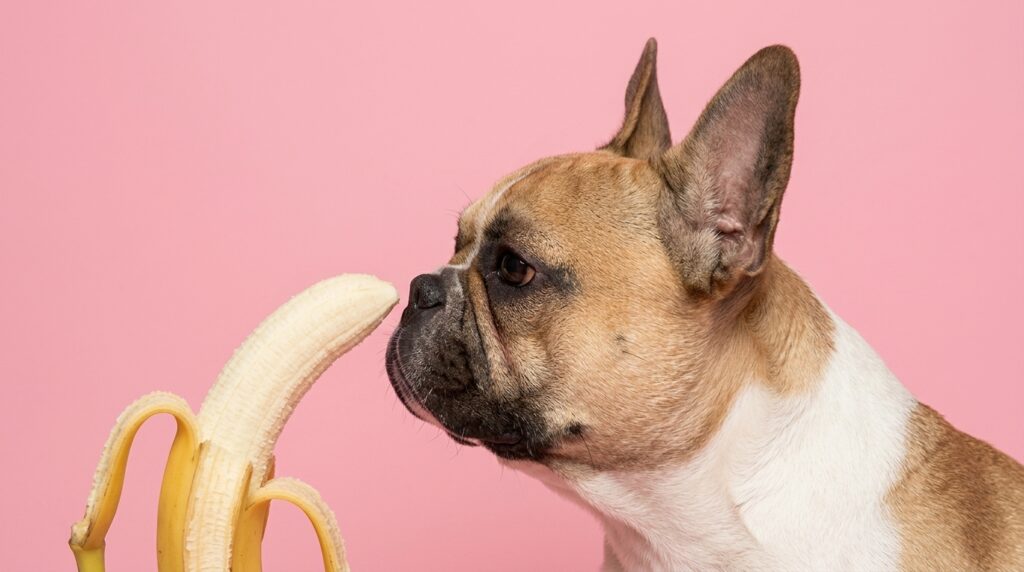
In moderation, yes. Bananas carry a decent little package of nutrients, potassium, vitamin B6, vitamin C, fiber, and magnesium, and vets sometimes suggest them as a healthier stand-in for fatty or salty commercial treats. The fiber can help settle a mildly upset stomach in small amounts, though it’s not a cure for diarrhea and shouldn’t be treated as one.
I’ll be honest about the upside, though, because that’s what this site is for. A dog eating a complete, balanced food doesn’t actually need the nutrients in a banana, and the portions you’ll be feeding are small enough that the vitamin content barely moves the needle. So the right way to think about banana isn’t as a health supplement, it’s as a naturally sweet, relatively guilt-free treat your Frenchie will genuinely enjoy. That’s a perfectly good reason to offer one, as long as you keep the amount sensible.
How Much Banana Can a French Bulldog Eat?
This is the part that actually matters, because banana’s one real drawback is sugar, and a French Bulldog is small enough that it adds up fast. A medium banana holds roughly fourteen grams of sugar, which is a lot for a compact dog.
The guideline vets use for all treats is the 90/10 rule: at least ninety percent of your dog’s daily calories should come from complete, balanced dog food, and no more than ten percent from treats, bananas included. Translated into actual slices, a dog your Frenchie’s size, generally under about twenty pounds, should have only one or two quarter-inch slices at a time. That’s it. For comparison, even a large dog shouldn’t get more than about half a banana, and a whole banana at once is too much for almost any dog. So to answer the question owners ask most directly: two whole bananas is far, far too much for a Frenchie, and even one whole banana in a sitting is overdoing it.

Keeping portions small isn’t fussiness, it’s breed-specific care. French Bulldogs are prone to weight gain and to pancreatitis, and a steady drip of sugary extras works against both. Too much banana can also backfire in the moment, causing constipation from the fiber or, just as often, gas and loose stools from the sugar. A couple of slices sidesteps all of that while still giving your dog the treat they’re begging for.
Can French Bulldogs Eat Bananas Every Day?
Technically a small amount daily won’t poison your dog, but it isn’t the habit I’d build. Because bananas are sugary, they’re better as an occasional treat than a daily fixture, and rotating them with lower-sugar options keeps the routine healthier. If you do give banana regularly, keep each portion tiny and count it toward that ten percent treat allowance rather than adding it on top of everything else. For a weight-prone breed, “a little, sometimes” beats “a little, every single day.”
Dried Bananas, Banana Peels, and Banana Bread: The Cautions
The fresh fruit is the easy part. It’s the other forms of banana that catch owners out, and a couple of them genuinely matter.
Banana peel first, because it’s the one people ask about most. The peel isn’t toxic, but it’s tough, fibrous, and hard for a dog to digest, and it can cause stomach upset or, in a small dog especially, an intestinal blockage. Peels may also carry pesticide residue. So always peel a banana before sharing, and keep peels out of reach of a bin-raiding Frenchie. If your dog does swallow a peel, watch for vomiting, loss of appetite, or a dog that stops passing stool, and call your vet if any of that shows up.
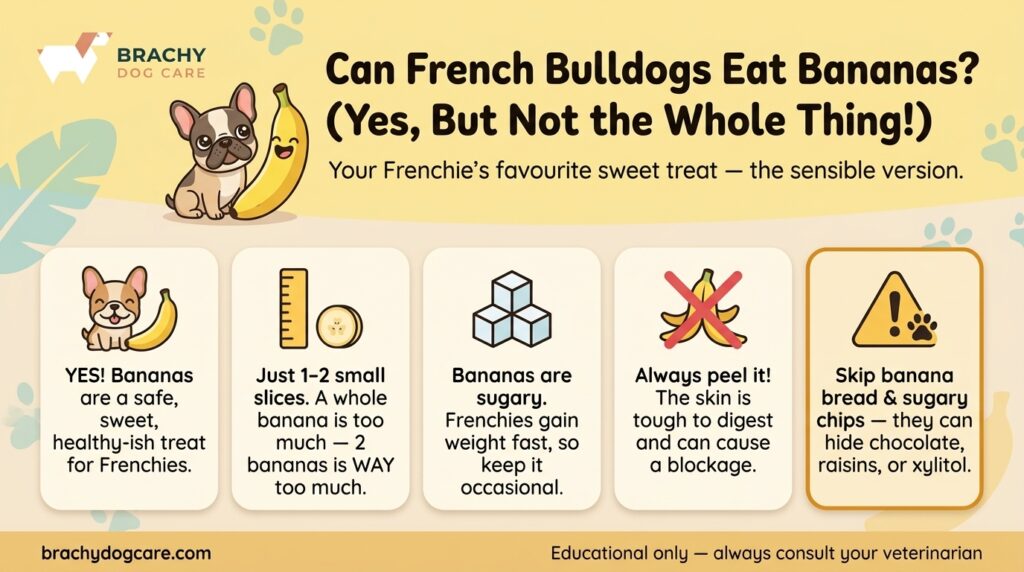
Dried banana and banana chips are a mixed bag. Plain, unsweetened dried banana is fine in tiny amounts, but the sugar is concentrated, so a little goes a long way. Many packaged banana chips are worse than that, fried in oil, coated in sugar, or sweetened artificially, and anything containing xylitol is dangerous, since xylitol is toxic to dogs. Read the label, and when in doubt, just use fresh banana.
Banana bread and banana-flavored treats are the ones to simply skip. Banana bread is loaded with sugar and butter and often hides ingredients that are genuinely harmful, chocolate chips, raisins, and sometimes xylitol among them. Both chocolate and grapes sit high on the list of toxic foods French Bulldogs can’t eat, so a “banana” treat that contains either is no treat at all. Stick to the plain fruit and you avoid the whole problem.
Fun, Safe Ways to Serve Banana
Once you’ve peeled it and portioned it sensibly, there are some genuinely nice ways to serve banana. The simplest is a couple of small, bite-sized slices offered by hand, cut small enough that a fast eater can’t choke. You can also mash a little into your dog’s regular food, or smear a thin layer of mashed banana into a lick mat or stuff it into a rubber toy for a slow, absorbing treat.
My favorite for this breed is frozen. Freeze a few small slices, or mash and freeze banana in a toy, for a cool summer snack that doubles as a way to help a heat-sensitive Frenchie chill out on a warm day, which pairs well with the rest of your hot-weather care routine. Freezing also tends to make banana more appealing to dogs who find the soft, mushy texture a bit odd at first. Just keep the frozen pieces small enough to eat safely, since a whole frozen banana is both too big a portion and a choking risk.
Whatever the method, introduce banana slowly the first time. Offer a single small slice, then wait a day or two to be sure it agrees with your dog before making it a regular treat, since any new food can occasionally cause a bit of digestive upset.
When to Limit or Avoid Bananas
For most healthy Frenchies, a couple of slices now and then is completely fine. But some dogs should have less, or none. A dog that’s overweight, diabetic, or prone to pancreatitis should generally skip sugary fruits like banana unless your vet specifically approves them, since the sugar works directly against those conditions. Dogs with kidney disease are another exception, because the potassium bananas are known for can be a concern when kidneys aren’t working well. And any dog with a sensitive stomach or a known food sensitivity should be introduced to banana cautiously, in even smaller amounts.
If your Frenchie has any ongoing health condition, it’s worth a quick word with your vet before adding banana to the mix. For a healthy adult dog, though, a small slice or two is an easy, wholesome yes.
Frequently Asked Questions
The Bottom Line
Bananas are a genuine yes for French Bulldogs, one of the simpler, more wholesome treats you can share, as long as you respect the sugar. Peel it, keep it to a slice or two, skip the peel, the banana bread, and the sugary chips, and treat it as an occasional pleasure rather than a daily staple. Do that and you’ve got a sweet, cheap, healthy-ish reward your Frenchie will adore.
Having lost a dog myself, I’ve come to appreciate how much these small, everyday choices add up over a lifetime. Bananas are an easy one to get right: a little goes a long way, moderation keeps it safe, and your Frenchie gets a treat that’s actually good for the odd occasion.
This article is educational and is not a substitute for veterinary care. If your dog has an ongoing health condition or reacts badly to a new food, consult your veterinarian.

French Bulldog Luxating Patella: Signs, Grades, and Surgery Costs
French Bulldog Hip Dysplasia: Signs, Causes, and What It Really Means
Can French Bulldogs Eat Onions or Garlic? Why Both Are Dangerous
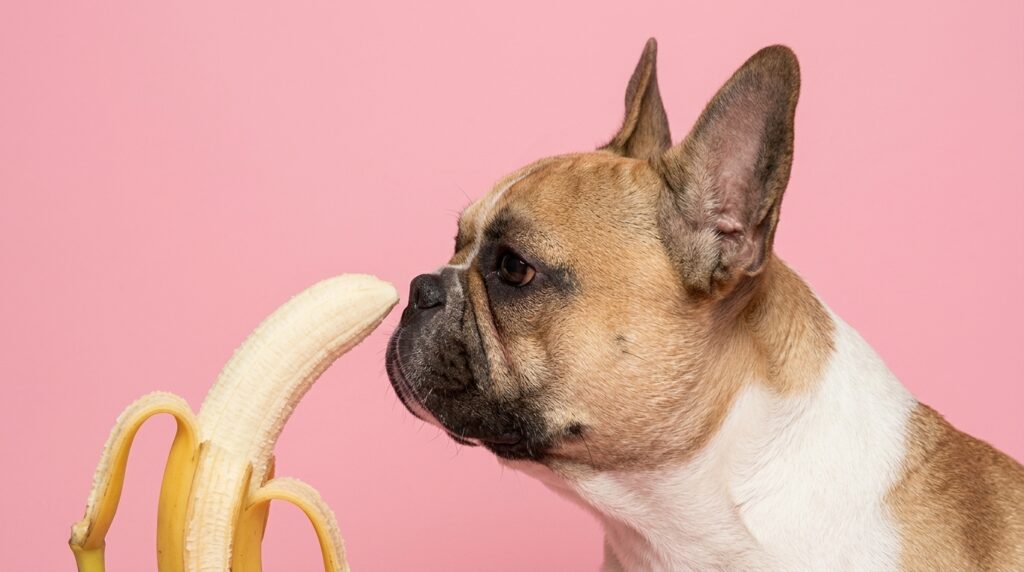
Can French Bulldogs Eat Bananas? How Much Is Safe and How Often
Can French Bulldogs Eat Peanut Butter? Safety, Amounts, and the Xylitol Warning