Written by Jinna CAMERON, veterinary medical student and dog health researcher. Reviewed for factual accuracy against trusted veterinary sources by DVM Carla DONTESK
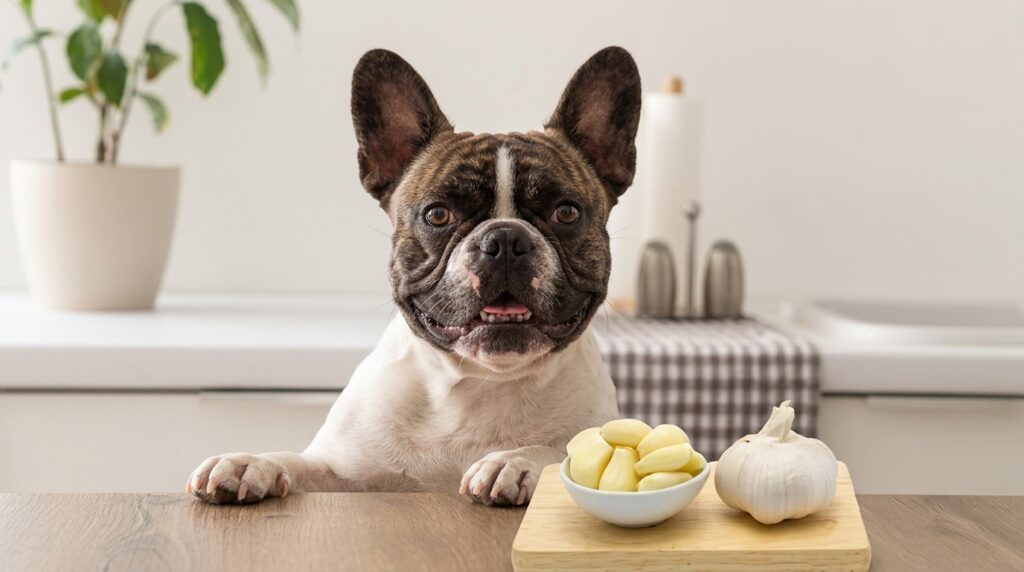
So, can French Bulldogs eat onions or garlic? No. French Bulldogs cannot eat onions or garlic, and neither can any other dog. Both belong to the allium family, both are toxic, and garlic is actually the more dangerous of the two. What makes them especially frightening is that the harm is often invisible at first: a dog can seem completely fine for days after eating onion or garlic and still be seriously poisoned. If your Frenchie has gotten into either, don’t wait to see how they do, act on it now.
I run this site after losing my own French Bulldog, Pearly, and I don’t soften warnings that matter. This is educational, not a substitute for your vet, but onions and garlic are one of the most commonly, and accidentally, fed poisons, so understanding them is genuinely worth your time.
If Your Frenchie Ate Onion or Garlic, Do This Now
Because the danger builds quietly, the worst thing you can do is wait for symptoms. Call a professional straight away rather than watching and hoping: the ASPCA Animal Poison Control Center at (888) 426-4435, or the Pet Poison Helpline at (855) 764-7661, and your own vet or nearest emergency clinic.
Do not try to make your dog vomit at home unless a vet or poison line specifically tells you to, because home-induced vomiting carries a real aspiration risk that’s higher in flat-faced breeds like Frenchies. Gather what you can before you call: what your dog ate (a raw onion, garlic bread, seasoned leftovers), roughly how much, whether it was cooked, powdered, or fresh, and your dog’s weight. That detail genuinely changes the advice, because concentration matters enormously with these foods.
Why Onions and Garlic Are Toxic to Dogs
The problem is a group of compounds called organosulfur compounds, N-propyl disulfide chief among them, which give alliums their pungent smell. Humans have the enzyme to break these down safely; dogs don’t. Instead, the compounds attack a dog’s red blood cells, causing oxidative damage that forms clumps called Heinz bodies. Those damaged cells become fragile and get destroyed faster than the body can replace them, and the result is hemolytic anemia, a shortage of the red blood cells that carry oxygen around the body.
An important detail sets garlic apart: it’s roughly three to five times more toxic than onion by weight. So while a chunk of onion is dangerous, a much smaller amount of garlic can do the same damage, which is why garlic-heavy foods deserve extra caution. Both belong on the list of toxic foods French Bulldogs can’t eat, right alongside grapes and chocolate, and for a small breed the margin for error is thin.
The Hidden Danger: Your Dog Looks Fine at First
This is the part that catches owners out, and it’s the single most important thing to understand about onion and garlic poisoning. The damage is delayed. While the red-blood-cell injury begins within about a day, the visible signs of anemia often don’t appear for several days, sometimes up to a week, especially when the amount eaten was small.

That delay is dangerous precisely because it’s reassuring. A dog eats seasoned leftovers on Monday, seems perfectly normal, and the owner assumes all is well, only for weakness and pale gums to appear on Thursday when the anemia has quietly set in. This is why veterinarians recommend follow-up blood work a couple of days after any significant exposure, even when the dog looks completely healthy. With onions and garlic, “he seems fine” is not evidence that he’s safe. If you know your Frenchie ate either, that knowledge, not the absence of symptoms, is what you act on.
Where Onions and Garlic Hide
Most dogs aren’t poisoned by eating a raw onion off the counter. They’re poisoned by the countless everyday foods that contain onion or garlic without it being obvious, and this is where the real risk lives for most owners.
Garlic bread, gravy, and soups are common culprits, as are seasoned or marinated meats, stir-fries, and pizza. Baby food is a sneaky one, since many varieties contain onion powder, and it’s often given to dogs as a treat or to hide medication. Table scraps in general are a frequent source, because so much of what we cook is seasoned with one or both. And here’s the crucial, counterintuitive point: cooking does not make onion or garlic safe. Cooking, drying, and powdering actually concentrate the toxin, so onion powder is far more potent per gram than a fresh onion, roughly five to six times stronger. A pinch of onion or garlic powder in a seasoning mix can carry more danger than it looks.
There’s also a cumulative angle worth knowing. Repeated small exposures add up, so a dog regularly fed scraps with a little garlic or onion in them can build toward toxicity over time, not just from one big meal. The safest approach is simply to keep all seasoned human food away from your Frenchie and to read labels on anything you’re tempted to share.
How Much Onion or Garlic Is Toxic?
Owners always want a number, and there are cited figures, but they come with a serious honesty caveat. Studies suggest toxicity can begin around 15 to 30 grams of garlic per kilogram of body weight, or roughly half a percent of a dog’s body weight in onion. But some veterinary sources report serious effects from far less, as little as a few grams of onion per kilogram, and susceptibility varies from dog to dog.
So please don’t treat those numbers as a safe line to feed up to. They indicate how urgent a situation is, not how much is harmless. Two things make the risk worse for your dog specifically: a French Bulldog is small, so a given amount delivers a proportionally bigger dose than it would to a large dog, and the effect is cumulative, so repeated little bits are their own hazard. This is also the honest place to address a persistent myth, that a little garlic is good for dogs, often repeated around flea prevention or “immune support.” Mainstream veterinary toxicology treats garlic as a toxin with no established safe dose, so it isn’t something to rely on, and there are proper vet-approved flea and parasite preventives that carry none of this risk. When it comes to onions and garlic, the safest amount to offer on purpose is none.
Signs of Onion and Garlic Poisoning
Symptoms come in two waves. Early on, often within a day, you may see the gastrointestinal effects: vomiting, diarrhea, drooling, poor appetite, belly discomfort, and sometimes a telltale onion or garlic smell on the breath.
The more serious signs arrive later, as the anemia develops over the following days. Watch for weakness and lethargy, pale or yellow-tinged gums, rapid breathing or an elevated heart rate, reduced appetite, and reddish or brown-colored urine, which is a hallmark of red blood cells breaking down. In severe cases a dog may collapse. Because these later signs are the dangerous ones and they’re delayed, the takeaway bears repeating: don’t wait for them. If your dog eats onion or garlic, the time to call is straight away, not once symptoms appear.
What to Do, and What the Vet Will Do
The first rule is the one that saves dogs here: act on the knowledge that your dog ate it, rather than waiting for signs. Call your vet or a poison line and be honest about the amount and form.
If your Frenchie is seen soon after eating and is still well, the vet may safely induce vomiting in the clinic and give activated charcoal to limit absorption. Beyond that, there’s no antidote for the toxin once it’s in the bloodstream, so care centers on monitoring, usually repeated blood tests over the following days to catch developing anemia early, along with supportive treatment. Severe cases can need oxygen support or even a blood transfusion if the red blood cell count drops dangerously. The encouraging news is that with prompt veterinary care, most dogs recover well, which is the whole reason early action matters so much. If your dog is also vomiting, our guide to French Bulldog vomiting explains why bringing food up is riskier for this breed than most.
Frequently Asked Questions
The Bottom Line
Onions and garlic are among the most common accidental poisonings in dogs precisely because they hide in so much of what we eat. The good news is that prevention is entirely within your control: keep seasoned human food, garlic bread, gravies, and baby food away from your Frenchie, remember that cooked and powdered forms are more dangerous rather than less, and don’t fall for the idea that a little garlic is healthy.
Having lost a dog myself, I’d always rather you make a call that turns out to be unnecessary than sit and wait while a quiet poison does its work. Keep the poison-control number somewhere findable, act on what your dog ate rather than how they look, and when onion or garlic is involved, treat it as the emergency it can genuinely become.
This article is educational and is not a substitute for veterinary care. If you suspect your dog has eaten onion, garlic, or another allium, contact your veterinarian or an animal poison control center immediately.
Joint Supplements for French Bulldogs: What Actually Works

French Bulldog Luxating Patella: Signs, Grades, and Surgery Costs
French Bulldog Hip Dysplasia: Signs, Causes, and What It Really Means
Can French Bulldogs Eat Onions or Garlic? Why Both Are Dangerous
Can French Bulldogs Eat Bananas? How Much Is Safe and How Often