Written by Jinna CAMERON, veterinary medical student and dog health researcher. Reviewed for factual accuracy against trusted veterinary sources by DVM ,Carla DONTESK
French Bulldog soft stool can be unsettling because it often looks small at first, but it can still tell you something useful about your dog’s digestion. Sometimes it happens after a food change or a rich treat, and sometimes it is the first sign that your Frenchie’s stomach is not handling something well.
If your French Bulldog has soft stool but still seems normal, that does not automatically mean something serious is happening. It does mean you should pay attention to the pattern, the diet, and any other symptoms that appear along with it.
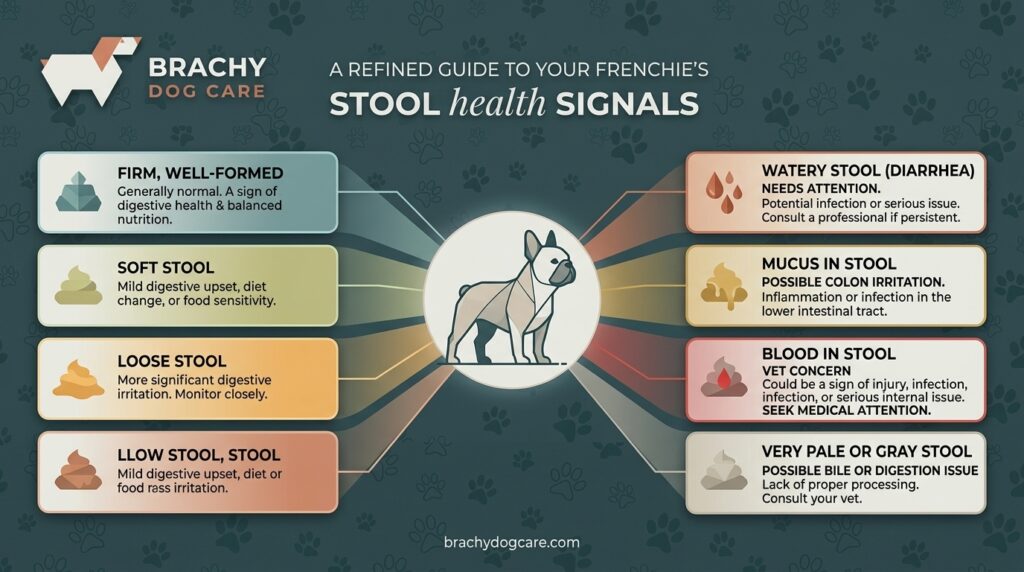
What soft stool looks like
Soft stool is not quite diarrhea, but it is also not a fully firm, healthy poop. It usually still has some shape, but it may be mushy, loose, or soft enough to flatten when picked up.
The difference between soft stool and diarrhea matters because soft stool often points to a milder digestive upset, while diarrhea usually means the gut is moving too quickly for the stool to form properly. In everyday life, though, the line is not always obvious, and both can happen for similar reasons.
A simple way to think about it is:
- normal stool is firm and easy to pick up.
- soft stool has shape, but not full firmness.
- diarrhea is loose, watery, or unformed.
If your Frenchie keeps having soft stool, it is worth looking at the diet before assuming it is random. That is especially true if the stool change started after a new food, a different treat, or a recent switch in protein source.
Why French Bulldogs get soft stool
French Bulldog soft stool can happen for many of the same reasons it happens in other dogs, but this breed shows up often in digestive discussions because owners notice stomach sensitivity early. Some French Bulldogs seem to do better on highly digestible diets, and some react poorly to abrupt food changes or certain ingredients.
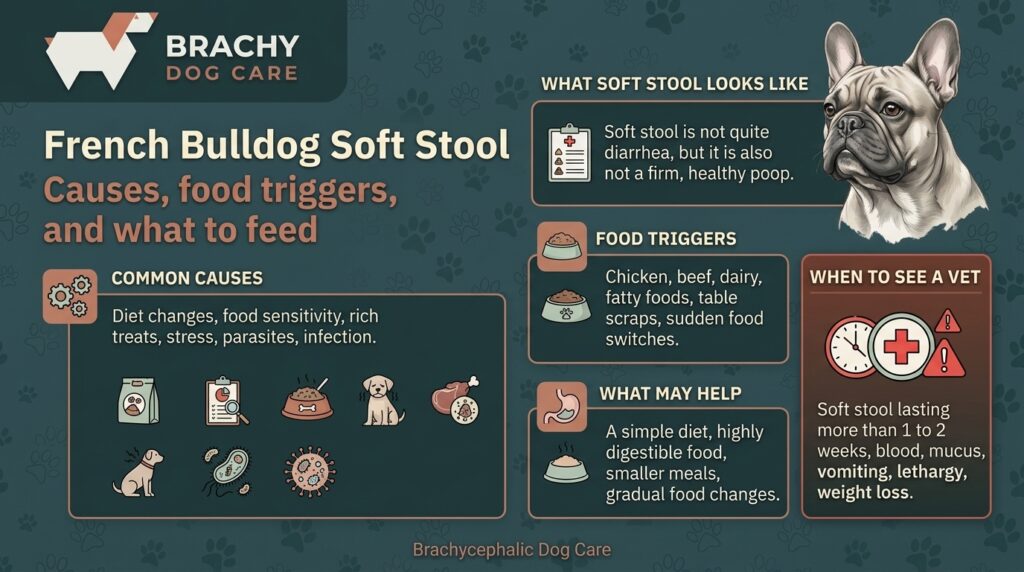
Common causes include:
- sudden diet changes.
- too many treats.
- table scraps or rich foods.
- food sensitivity or intolerance.
- parasites or infections.
- stress or excitement.
- a digestive upset that has not fully settled yet.
Soft stool that happens once is not unusual. Soft stool that keeps coming back is more meaningful, especially if your dog also has gas, vomiting, appetite changes, or itchy skin. In those cases, the gut and skin symptoms may be part of the same food-related pattern.
If the stool issue is part of a wider digestive picture, it can overlap with French Bulldog Diarrhea and with food sensitivity problems like French Bulldog Food Allergies.
Food triggers that can cause soft stool
Food is one of the first places to look when a French Bulldog has soft stool. That does not mean food is always the problem, but it is common enough that it deserves careful attention.
Some French Bulldogs get soft stool after:
- a sudden switch to a new kibble.
- too many snacks in one day.
- fatty foods or rich table scraps.
- dairy.
- unfamiliar proteins.
- a diet that is harder to digest.
Chicken and beef are both common proteins in dog food, and either one can be a problem for some dogs. The point is not that one ingredient is always bad; it is that individual dogs can react differently. Some French Bulldogs do better on fish-based or other highly digestible diets, while others tolerate chicken just fine.
The safest approach is not to guess wildly. If you keep changing foods every few days, it becomes almost impossible to tell what is helping and what is making things worse. A more careful approach is usually much more useful than trying several random fixes.
Soft stool vs diarrhea
This distinction matters because owners often use the two terms interchangeably, even though they are not exactly the same. Soft stool usually still has some form, while diarrhea is looser, more urgent, and less formed.
Soft stool may mean:
- mild food intolerance.
- a recent diet transition.
- a temporary upset stomach.
Diarrhea may mean:
- more serious gut irritation.
- infection.
- parasites.
- persistent digestive disease.
That said, the line between the two is not always important from an owner’s perspective if the problem keeps recurring. If your French Bulldog repeatedly has soft stool, even when it is not watery, it still deserves a closer look. Repeated soft stool is often a sign that something in the diet or digestion is not quite working well.
What to feed a French Bulldog with soft stool
If the soft stool is mild and your dog is otherwise bright, drinking normally, and not vomiting, a simple feeding approach is usually better than experimenting with many new foods. Highly digestible foods are often easier on the gut because they are less likely to leave behind excess material that irritates digestion.
A practical feeding plan may include:
- a bland, simple diet for a short period if your vet has recommended that approach.
- a highly digestible food.
- small meals rather than one large meal.
- keeping the diet consistent while you monitor the stool.
Some owners ask whether pumpkin helps. It can be useful for some dogs because it adds fiber, but it is not a cure-all. The real goal is not to find one magic ingredient; it is to choose something the dog can digest more comfortably and then watch whether the stool improves.
For dogs with repeated GI sensitivity, a veterinary-sensitive diet may be more appropriate than a regular food rotation. That is where a page like Best Food for French Bulldogs with Sensitive Stomachs can fit naturally as a supporting resource.
What foods may help firm up stool
Foods that help firm stool are usually the ones that are easy to digest and not overloaded with fat, additives, or unnecessary extras. In general, a simpler food is easier for a sensitive gut to handle than a very rich or complex one.
What often works better:
- highly digestible protein.
- moderate fat.
- simple carbohydrate sources.
- a consistent formula the dog already tolerates.
- a diet that avoids obvious trigger ingredients.
What usually does not help:
- frequent food changes.
- rich table scraps.
- greasy leftovers.
- too many treats.
- jumping between multiple “fixes” before giving one plan enough time.
Some French Bulldogs do better with a more digestible protein source, especially when the stool stays soft after repeated food trials. Others may need a more structured elimination-style diet if food sensitivity is suspected. That is why stool quality alone does not tell the full story.
If your French Bulldog’s tummy never seems quite right, even on “good” food, it may be time to look at diet through an allergy and sensitivity lens instead of just switching brands at random. In my guide to the best dog food for French Bulldogs with allergies, I explain which ingredients commonly cause trouble, how to tell allergy from simple sensitivity, and which types of formulas are usually gentler on Frenchie guts
What to avoid feeding
If your French Bulldog has soft stool, the simplest first step is often to stop making the gut work harder. That means pausing the rich extras and keeping the diet steady for a while.
Avoid:
- table scraps.
- fatty foods.
- sudden diet switches.
- new treats.
- dairy if it seems to trigger symptoms.
- unknown chews or snacks that upset the stomach.
Raw diets also deserve caution. They can be harder to evaluate when stool changes happen, and they carry contamination risk if handled poorly. For a dog with a sensitive stomach, the goal is usually to reduce variables, not add more of them.
How to firm up your French Bulldog’s poop
The best way to firm up French Bulldog poop is usually to work methodically rather than react quickly. A lot of owners make the mistake of changing several things at once, but that makes it harder to know what is actually helping.
The most useful steps are:
- Keep the current diet steady unless it is clearly causing the problem.
- Avoid rich treats and scraps.
- Feed smaller, more regular meals.
- Consider a more digestible formula if the current food seems too heavy.
- Watch for pattern changes over several days instead of expecting a one-meal fix.
Some dogs also benefit from fiber or probiotic support, but that should be approached carefully and never used as a substitute for finding the underlying cause. If the stool improves only briefly and then gets soft again, that often suggests the trigger has not really been addressed.
A few owners notice that a more digestible, carefully chosen diet improves stool consistency over time. That is one reason a page like Best Dog Food for French Bulldogs can be useful as a broader nutrition guide.
When soft stool becomes a vet concern
Soft stool is not always an emergency, but it should not be ignored if it keeps going. The longer it lasts, the more important it becomes to rule out parasites, infection, or a digestive problem that needs treatment.
You should contact a vet sooner if:
- soft stool lasts more than one to two weeks.
- your Frenchie loses weight.
- there is blood or mucus in the stool.
- vomiting appears.
- your dog seems tired or weak.
- appetite drops.
- the stool keeps getting worse instead of better.
It is also worth paying attention if soft stool keeps returning after each food change. That pattern often suggests a digestive sensitivity rather than a one-time upset. A French Bulldog that seems “mostly fine” but keeps having soft stool may still need a more deliberate diet plan.
For owners trying to judge whether stool changes are still mild or becoming more concerning, Cornell University College of Veterinary Medicine notes that loose stool lasting more than two days is a reason to call the vet.
Are French Bulldogs more prone to digestive issues?
Some French Bulldogs do seem more prone to digestive sensitivity than many owners expect. That does not mean the breed is destined for stomach problems, and it does not mean every loose stool is breed-related. It does mean digestive signs are common enough in French Bulldogs that owners should take them seriously when they become recurrent.
Digestive sensitivity may show up as:
- soft stool.
- loose stool.
- gas.
- vomiting.
- food pickiness.
- stool changes after diet transitions.
French Bulldogs can also have different responses to different protein sources and digestibility levels. In practical terms, that means one dog may do very well on one formula and poorly on another, even if both are marketed as high quality. The individual dog matters more than the marketing.Many owners feel stuck between “not quite diarrhea” and “never fully firm” when they look at their Frenchie’s poop. To make that easier, we’ve put together a French Bulldog poop chart that shows healthy vs soft vs runny stools, explains what different colors can mean, and helps you see where your dog fits on the spectrum.
Can changing dog food cause soft stool?
Yes, and this is one of the most common reasons a dog suddenly has soft stool. Even a good food can cause a problem if the change is too abrupt or if the new formula does not suit the dog’s digestive system.
Food change can cause soft stool when:
- The switch happens too fast.
- The new food is richer.
- The protein source is less tolerated.
- the dog is already sensitive.
- too many other changes happen at the same time.
That is why gradual transitions matter. A slow switch gives the gut time to adjust, and it also helps you see whether the new formula is working or not. If the stool stays soft even with a careful transition, the food itself may still not be the best match.
Many owners reach for probiotics when their Frenchie’s stool hovers in that “pudding but not full‑blown diarrhea” zone. Before you add anything new, it can help to understand what probiotics can and can’t do in this situation. This French Bulldog probiotics guide walks through evidence‑based uses, how to trial them safely, and the red‑flag signs that need more than a supplement.
What a simple feeding trial can tell you
When soft stool keeps happening, a more structured diet trial may be useful. The idea is not to guess based on one meal or one day, but to give the dog a consistent food pattern long enough to see whether the stool improves.
A useful feeding trial usually means:
- no extra treats.
- no table scraps.
- no random snack changes.
- one consistent food plan.
- careful observation of stool quality.
If the stool improves and stays better, that gives you useful information. If it does not, then the problem may be more than simple food tolerance. In that case, a vet-guided discussion about elimination diets or more specific testing becomes more relevant.
FAQs
Closing note
French Bulldog soft stool is often a diet and digestion question before it is anything else. The most useful approach is usually calm, consistent, and simple: avoid unnecessary food changes, watch the stool pattern, and pay attention to any other signs that show up with it.
If the soft stool keeps coming back, it is worth treating it as a clue rather than brushing it off. In a breed like the French Bulldog, that extra attention can make it much easier to spot food sensitivity or digestive trouble early.
French Bulldog Cost in 2026: Price, Vet Bills, and the True Lifetime Cost
French Bulldog Temperament: Personality, and Are They Good Family Dogs?

Best Dog Toothpaste for French Bulldogs: A Vet-Guided Guide
Do French Bulldogs Shed? Coat, Grooming, and When to Worry
Why Your French Bulldog Chews Everything (and How to Stop It)