Written by Jinna CAMERON, veterinary medical student and dog health researcher. Reviewed for factual accuracy against trusted veterinary sources by DVM ,Carla DONTESK
French Bulldogs are beloved for their personality and compact build, but their unique physiology means their nutrition needs careful attention. If you’re searching for the best dog food for French Bulldogs, you need to understand their specific requirements: high-quality protein, appropriate fat levels, and digestible carbohydrates that support gut health while preventing obesity. A well-planned diet supports energy, digestion, skin health, and vital organ function. This guide walks you through breed-specific nutrition basics, life-stage needs, digestive solutions, label-reading tips, and practical feeding strategies that help you choose the best dog food for French Bulldogs in 2026.

Why French Bulldogs Have Special Nutrition Needs
French Bulldogs are brachycephalic, which means their short faces can affect breathing and exercise tolerance. Extra weight worsens breathing difficulties, so weight management is a core part of their health plan. Many Frenchies also have sensitive stomachs and are prone to food allergies, which can trigger skin issues and digestive upset. Because of these factors, protein quality, fat levels, and carbohydrate sources matter more than in many other breeds.
The American Kennel Club notes that adult French Bulldogs should remain below 28 pounds to maintain optimal health and reduce breathing stress. According to veterinary nutritionist Dr. Jennifer Coates, DVM, breed-specific nutrition is critical for brachycephalic dogs because their unique anatomy creates distinct metabolic and digestive challenges that generic formulas cannot address effectively.
- Obesity risk is higher in brachycephalic breeds, so portion control and activity planning are essential.
- Digestive comfort matters: easily digestible proteins and gradual food transitions help prevent upset.
- Protein quality supports lean mass and satiety, which aids weight control and overall vitality.
Macronutrient Guidelines for French Bulldogs
Protein: Aim for Quality and Consistency
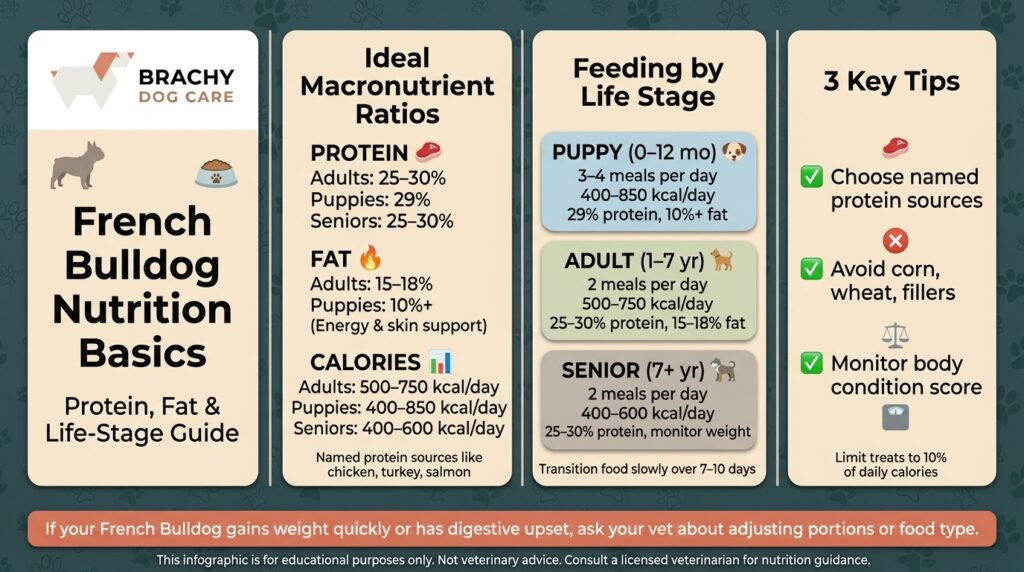
Protein should be a primary focus in most French Bulldog diets. For healthy adults, target around 25 to 30 percent protein on a dry matter basis, with a practical minimum near 28 percent to support lean mass and metabolic needs. Puppies typically require higher protein, around 29 percent, to support rapid growth. Seniors benefit from continued emphasis on quality protein to help preserve muscle as activity declines.

When evaluating dog foods, look for named animal proteins like chicken, turkey, lamb, or salmon at the top of the ingredient list. Avoid vague terms like “meat meal” or “animal derivatives,” which do not clearly indicate the protein source. High-quality protein supports muscle health, healthy skin, and steady energy. The Waltham Centre for Pet Nutrition confirms that named protein sources provide more consistent amino acid profiles than unspecified meat meals.
Fat: Energy and Skin Health in Balance
Fat is a dense energy source and supports skin and coat health. For adult French Bulldogs, a fat content around 15 to 18 percent on a dry matter basis is common. Puppies need slightly more fat to support growth and activity. Fat also influences palatability and energy density, which can help with overweight-prone dogs when portion sizes are controlled.
Choosing sources of fat rich in essential fatty acids, especially omega-3s, supports joint comfort and skin health. If your Frenchie has sensitive skin or a dull coat, consider a diet that includes fish oil or other omega-3-rich ingredients. Excess fat, however, should be avoided since French Bulldogs are prone to weight gain and pancreatitis if fed high-fat diets consistently.
Choosing the right food matters, but stool changes can still happen when a French Bulldog has a sensitive digestive system. If your dog suddenly develops runny stool, explosive diarrhea, or diarrhea with vomiting, our article on French Bulldog diarrhea walks through the common causes, safe first steps, and warning signs that should not be ignored.
Carbohydrates and Fiber: Digestion and Satiety
Carbohydrates provide readily available energy and influence stool quality. Prioritize digestible carbohydrate sources such as sweet potatoes, pumpkin, peas, and carrots. Fiber supports gut motility and satiety, which can help with weight management. Avoid low-digestibility fillers like excessive corn, wheat, or certain by-products if they trigger sensitivities.
For French Bulldogs with sensitive digestion, moderate fiber content between 3 and 5 percent supports regular bowel movements without causing loose stools. Pumpkin puree and psyllium husk are gentle fiber sources that many owners use to regulate stool consistency.
Life-Stage Nutrition for French Bulldogs
Puppy Nutrition (0–12 Months)
Puppies require more calories per pound and higher protein to support rapid growth. Feed three or four small meals per day to accommodate their small stomachs. A balanced puppy diet typically includes around 29 percent protein and at least 10 percent fat. Transition to adult food around 9 to 12 months, depending on development and vet advice.
Aim for steady growth without excess weight gain. Monitor body condition and adjust portions as needed. If your puppy shows signs of digestive upset, consider a limited-ingredient diet and transition slowly. Royal Canin French Bulldog Puppy kibble is specifically formulated with L.I.P. (high-digestibility protein) and prebiotics to support sensitive puppy digestion.
Puppy caloric needs vary significantly by age and weight. At 8 weeks, a French Bulldog puppy typically needs 400 to 500 calories per day. By 6 months, this increases to approximately 700 to 850 calories per day. Feeding frequency should remain at three meals until 6 months, then transition to two meals as the puppy approaches adulthood.
Adult Diet (1–7 Years)
For adults, the goal is stable weight, good energy, and digestive comfort. Most French Bulldogs do well with two meals per day. Protein should remain in the 25–30 percent range, with fat around 15–18 percent. Use portion guidelines based on weight, activity level, and body condition score. Consistency in feeding times helps with digestion and reduces the risk of bloating.
If your adult Frenchie is prone to weight gain, consider a diet with moderate fat and higher fiber to support satiety. Monitor body condition regularly to avoid obesity, which can worsen breathing and joint stress. Adult French Bulldogs typically require between 500 and 750 calories per day, depending on weight and activity level.
By weight, a sedentary adult French Bulldog needs approximately 20 to 25 calories per pound, while an active dog may need 30 calories per pound. This means a 20-pound adult would need roughly 400 to 600 calories daily if sedentary, or 600 calories if highly active.
Senior Nutrition (7+ Years)
Older Frenchies may benefit from continued high-quality protein to preserve muscle mass, with slightly adjusted calories to reflect lower activity. Joint-support nutrients like EPA/DHA, glucosamine, and chondroitin become more important. Monitor body condition closely and adjust portions to maintain ideal weight. Some seniors benefit from diets formulated for joint health and easier digestion.
According to a landmark study published in the Journal of Veterinary Internal Medicine, dogs maintained at ideal body condition lived nearly two years longer than those allowed to become overweight. This is especially critical for French Bulldogs, whose breathing and joint health deteriorate rapidly with excess weight. Senior French Bulldogs typically require between 400 and 600 calories per day, depending on activity level and health status.
Protein for seniors should remain at 25 to 30 percent, contrary to older beliefs that seniors need less protein. Muscle wasting becomes more common with age, and adequate protein helps maintain functional muscle mass and overall vitality.
How to Choose the Best Dog Food for French Bulldogs
Label reading is essential to ensure you select foods that support your dog’s health goals and find the best dog food for French Bulldogs in your budget. Look for foods that list high-quality protein as the primary ingredient, with a transparent list of ingredients and feeding guidelines. Avoid vague terms like “animal derivatives” and consider whether the product provides clear AAFCO-style nutrient profiles.
Key factors to compare:
- Named protein sources in the first few ingredients
- Transparent fat content and omega-3 sources
- Digestible carbohydrate sources and fiber levels
- Whether the product is formulated for your dog’s life stage
- Grain-inclusive versus grain-free formulations, depending on tolerance
When choosing the best dog food for French Bulldogs, consider breed-specific formulations that support digestion and skin health. Some brands offer kibble shapes designed for short-muzzled breeds, which can make eating easier and reduce choking risk. Royal Canin French Bulldog Adult features a unique kibble shape that encourages chewing and supports jaw muscle development.
Compare top-rated options using protein and fat percentages, AAFCO compliance, and whether the product has been tested for digestibility. Some highly-rated options include Nulo Freestyle Grain-Free (33% protein, 18% fat), The Farmer’s Dog Turkey recipe (fresh, 33% protein), and Wellness Complete Health Puppy (32% protein, 20% fat).
If your Frenchie is already dealing with itching, ear problems, or a finicky stomach, it can help to go beyond general “best food” lists and look specifically at allergy‑friendly options. I’ve put together a separate guide that walks through the diet types and ingredients most likely to help, which you can read here: best dog food for French Bulldogs with allergies.
Common Digestive Issues and Solutions
Digestive sensitivity is common in French Bulldogs. Signs include irregular stools, gas, and occasional vomiting. A plan that emphasizes gradual diet changes, limited-ingredient options if allergies are suspected, and probiotic support can help. Probiotics and prebiotics support a balanced gut microbiome, potentially reducing episodes of upset and improving stool quality.
The most common allergens for French Bulldogs include beef, chicken, dairy, wheat, corn, and soy. If your Frenchie shows signs of food allergy like itchy skin, ear infections, or chronic diarrhea, consider a limited-ingredient diet with a novel protein source like salmon, duck, or rabbit.
Practical tips:
- Introduce new foods slowly over 7–10 days to minimize stomach upset.
- Consider limited-ingredient diets using novel protein sources like salmon or duck if allergies are suspected.
- Probiotics with 1–10 billion CFUs per day can support gut health; discuss the right strain with a veterinarian.
- If stool quality remains poor or vomiting persists, consult a vet to rule out underlying gastrointestinal conditions.
For French Bulldogs with persistent digestive issues, a low-fat, highly digestible diet often brings relief. Natural Balance Limited Ingredient Diet Salmon and Brown Rice is a popular choice, providing 26.7% protein and easily digestible ingredients.
If your Frenchie tends to get soft stools, gas, or vomits after meals, it’s worth looking specifically at sensitive digestion rather than just general nutrition. I’ve put together a focused guide on best food for French Bulldogs with sensitive stomachs that goes deeper into common GI triggers, safer diet types, and when to talk to your vet about prescription or allergy diets.
Food allergies in French Bulldogs do not always appear only as itching or ear problems. Some dogs also develop softer stool when their food does not agree with them, which is why our article on French Bulldog Soft Stool can be a useful next step if digestive signs are part of the picture.
Weight Management for French Bulldogs
Weight management is critical due to obesity-related health risks and breathing challenges. Use a vet-approved Body Condition Score (BCS) to assess whether your dog is underweight, at a healthy weight, overweight, or obese. For overweight French Bulldogs, gradual weight loss plans under veterinary guidance are typically safer and more sustainable than rapid changes.
- Monitor daily caloric intake and adjust portions based on activity and body condition.
- Choose foods with moderate fat and higher digestible fiber to promote satiety.
- Encourage regular low-impact activity such as short walks and indoor play.
- Avoid high-calorie treats and table scraps that can quickly add up.
For overweight French Bulldogs, calorie restriction should be gradual and supervised. A typical weight-loss plan reduces daily calories by 10 to 20 percent from maintenance levels. Never drop below 300 calories per day for an adult French Bulldog, as this can cause nutritional deficiencies and metabolic slowdown.
Safe and Unsafe Ingredients for French Bulldogs
Safe ingredients often include clearly named proteins such as chicken, turkey, lamb, or salmon, along with vegetables and whole grains that suit your dog’s tolerance. Ingredients that support skin and joint health include omega-3 fatty acids, glucosamine, and chondroitin.
Potentially problematic ingredients include certain artificial additives, excessive corn or wheat if allergies are present, and low-quality by-products. If your dog has known allergies, a vet-guided elimination diet can help identify offending ingredients. Avoid foods with unspecified “meat meals” or vague ingredient descriptions.
Unsafe ingredients to avoid entirely include onions, garlic, chocolate, grapes, raisins, xylitol, and alcohol. These are toxic to all dogs but can be especially dangerous for smaller breeds like French Bulldogs due to their lower body weight.
French Bulldogs are prone to food allergies that can cause skin irritation, ear infections, and digestive upset. Common allergens include beef, chicken, dairy, wheat, corn, and soy. If your Frenchie shows persistent itching or chronic stomach issues, learn how to identify triggers and choose hypoallergenic diets in our complete guide on French Bulldog food allergies.
Supplements That Can Support French Bulldog Health
Some French Bulldogs benefit from supplements such as omega-3 fatty acids for coat and joint health, probiotics for digestion, and joint support ingredients like glucosamine and chondroitin. Always consult with a veterinarian before starting any supplement, especially if your dog has pre-existing health conditions or is taking medications.
Probiotics and omega-3s have broad support in veterinary nutrition, but the best choices depend on the individual dog’s needs. Joint supplements can be helpful for seniors or active adults, but dosing should be guided by a vet.
Omega-3 supplementation with EPA and DHA at 100 to 200 mg per day supports skin health and reduces inflammation. Probiotics with Bifidobacterium and Lactobacillus strains support digestive balance. Glucosamine and chondroitin at 500 mg and 400 mg daily respectively support joint health in senior French Bulldogs.
One of the earliest clues that a food isn’t ideal for your Frenchie is often what you smell rather than what you see—persistent flatulence after meals. If you’re evaluating a new diet and wondering whether your dog’s gas is acceptable or a sign to rethink the plan, this dedicated article on French Bulldog gas and safe ways to reduce it offers a clear, vet‑aware framework.
Practical Meal Planning and Feeding Schedule
- Puppies: feed three to four small meals per day and transition to two meals as they approach adulthood.
- Adults: feed two meals per day, with portion sizes aligned to weight and activity.
- Seniors: feed two meals per day, with attention to calorie needs and joint support.
A sample daily plan for an adult French Bulldog might include:
- Breakfast: measured portion of high-quality kibble or fresh food
- Lunch: small can or fresh protein portion, depending on your diet plan
- Dinner: consistent dry or wet food balance, adjusted for body condition
Adjust portions based on body condition and energy needs. If your Frenchie gains weight, reduce portions slightly and increase activity. If weight loss is needed, follow a gradual plan under veterinary guidance. Use a digital kitchen scale to measure food accurately, as volume measurements with cups can lead to significant overfeeding.
French Bulldog Feeding Tips for Real Life
- Stick to consistent feeding times to support digestion and reduce anxiety around meals.
- Use a slow-feeder bowl if your Frenchie eats too quickly, which can reduce gas and bloating.
- Limit treats to no more than 10 percent of daily calories to avoid weight gain.
- Monitor stool quality and adjust fiber or protein sources if needed.
- Keep fresh water available at all times, especially after activity.
For more practical advice, see our older article on French Bulldog feeding tips, which covers portion sizes, treat guidelines, and meal timing strategies for busy owners.
Reading Dog Food Labels and Ingredient Quality
Understanding dog food labels is critical for choosing the best dog food for French Bulldogs. The ingredient list is ranked by weight, with the heaviest ingredients listed first. Protein should appear in the first three ingredients, and the calorie content per cup or per kilogram should be clearly stated.
For more detailed guidance on label interpretation, read our older article on reading dog food labels and ingredient quality. It explains how to spot high-quality proteins, avoid fillers, and choose foods that match your dog’s life stage.
Bone Health and Mineral Balance for Small Breeds
If you’re interested in bone health and mineral balance for small breeds, check our older article on small-breed bone health and calcium considerations. It covers how to support skeletal health without over-supplementing, which is particularly relevant for French Bulldogs who are prone to hip dysplasia and other joint issues.
External Authority and Veterinary Guidance
For evidence-based guidance on canine nutrition, consult the Association of American Feed Control Officials (AAFCO) dog food nutrient profiles. You can find the official nutrient requirements and feeding statement guidelines on the AAFCO website at https://www.aafco.org/consumers/. AAFCO sets the standards for pet food nutrition in the United States, and all commercial dog foods should meet AAFCO nutrient profiles for the appropriate life stage.
Product Mention
If you’re looking for a probiotic supplement that supports digestion in sensitive stomachs, a well-reviewed probiotic powder can be a convenient addition. Many French Bulldog owners report significant improvement in stool quality and reduced gas after starting a daily probiotic.
If your French Bulldog is not just picky or gassy but also looking a little rounder than they should, food choices and portion control go hand in hand. Our dedicated overweight French Bulldog guide covers ideal weight ranges, body condition scoring, and how to build a safe weight-loss plan around the kind of diets we’ve talked about here.
Frequently Asked Questions About French Bulldog Nutrition
Final Thoughts on French Bulldog Nutrition
A well-planned French Bulldog nutrition strategy combines high-quality protein, appropriate fat, and digestible carbohydrates with attention to life stage, activity, and potential food sensitivities. Regular vet check-ins, body condition monitoring, and a careful approach to supplements help support long-term health and happiness for your French Bulldog. By focusing on practical feeding strategies and consistent nutrition, you can help your Frenchie thrive for years to come.
For brand-specific guidance, see our older article on common Frenchie digestive issues and how to choose the right food for sensitive stomachs. It includes product examples and vet-backed recommendations for managing digestive sensitivity.
The best dog food for French Bulldogs meets your dog’s individual needs while fitting your budget and lifestyle. Whether you choose a premium breed-specific formula, a limited-ingredient diet, or a fresh food service, the key is consistency, quality ingredients, and regular monitoring of your dog’s body condition and overall health. With the right nutrition plan, your French Bulldog can enjoy a long, healthy, and energetic life.
French Bulldog Cost in 2026: Price, Vet Bills, and the True Lifetime Cost
French Bulldog Temperament: Personality, and Are They Good Family Dogs?

Best Dog Toothpaste for French Bulldogs: A Vet-Guided Guide

Do French Bulldogs Shed? Coat, Grooming, and When to Worry

Why Your French Bulldog Chews Everything (and How to Stop It)