French Bulldog dry eye is one of those eye problems that can start quietly and still become serious over time. Many owners first notice a little extra discharge, some redness, or an eye that seems mildly irritated, and it is easy to assume that it is only a temporary issue. In some Frenchies, though, these early changes can point to a much bigger problem involving poor tear production and ongoing inflammation.
Because French Bulldogs already have prominent eyes and a flat-faced skull shape, they are more vulnerable to eye surface irritation than many other breeds. That means French Bulldog dry eye is not just an issue of comfort. If it is missed or left untreated, it can contribute to pain, infection, corneal damage, and long-term changes that may affect vision.
Dry eye in dogs is medically known as keratoconjunctivitis sicca, often shortened to KCS. This condition develops when the eye does not produce enough healthy tears or when the tear film is unstable and does not protect the surface of the eye properly. Tears do far more than simply keep the eye moist. They help protect the cornea, wash away debris, support healing, and keep blinking comfortable. Without enough tears, the eye becomes inflamed, irritated, and much more vulnerable to damage.
In this guide, I’ll explain what French Bulldog dry eye is, why French Bulldogs may be more prone to it, the symptoms owners should watch for, common causes, how veterinarians diagnose it, treatment options, and when it is time to see a vet. This article is written for educational purposes by a veterinary student and dog health researcher and is not a substitute for professional veterinary advice.
What Is French Bulldog Dry Eye?
French Bulldog dry eye refers to a condition where the eye does not have enough healthy tears to stay properly lubricated and protected. The medical term for this is keratoconjunctivitis sicca. While the name sounds technical, the problem itself is easy to understand: the eye is too dry to stay healthy.
A normal tear film is essential for eye health. It helps lubricate the eye, protect the cornea, flush away dust and debris, support healing, reduce friction during blinking, and help nourish the outer surface of the eye. When tear production drops, or when the tear film does not work the way it should, the eye surface becomes dry, irritated, and inflamed.
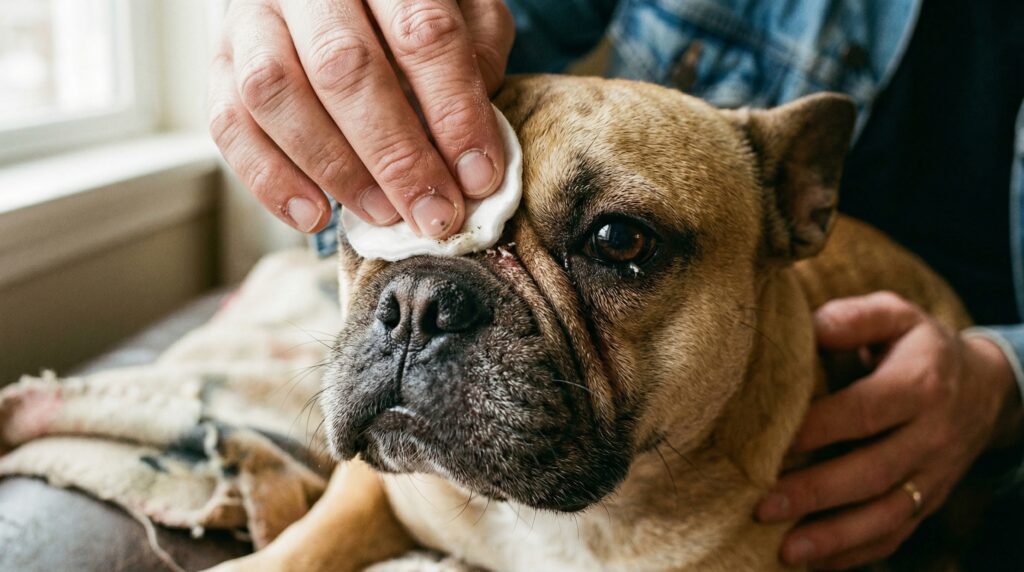
In practical terms, French Bulldog dry eye may show up as sticky discharge, redness, squinting, rubbing at the eye, or an eye that just never seems fully comfortable. Some dogs develop dry eye in one eye first, while others are affected in both eyes.
Why Tears Matter for Eye Health
A lot of owners understandably think of tears as something simple, but tears are one of the eye’s most important protective tools.
Without enough tears:
- the eye surface becomes inflamed
- blinking becomes less comfortable
- mucus and discharge can build up
- the cornea becomes more vulnerable to scratches and ulcers
- healing slows down
- infections become more likely
That is why French Bulldog dry eye should never be treated as just a cosmetic issue. It is a real eye disease, and it can become painful if it is not managed properly.
Are French Bulldogs More Prone to Dry Eye?
French Bulldogs are already known for having more eye-related problems than many other breeds, and their anatomy is a big reason why. Their brachycephalic skull shape gives them prominent, exposed eyes that are less naturally protected than the eyes of longer-muzzled dogs.
French Bulldogs often have shallow eye sockets, larger eyelid openings, more exposed corneas, and facial folds close to the eyes. Some also do not blink as fully or as effectively as they should. These traits make it harder for the tear film to stay stable and evenly distributed across the cornea.
That does not mean every Frenchie will develop French Bulldog dry eye, but it does mean the breed is more vulnerable to eye surface disease and irritation. For owners, that makes early attention especially important.
Research from the Royal Veterinary College has shown that brachycephalic breeds face increased risks for several eye disorders, which helps explain why French Bulldogs may be more vulnerable to eye surface problems such as dry eye.
How Brachycephalic Anatomy Affects the Eyes
Because the eyes of a French Bulldog are more exposed, they are more vulnerable to wind, dust, dryness, and general irritation. That exposed anatomy may also allow tears to evaporate more quickly or make blinking less effective at spreading tears across the eye.
This matters because French Bulldog dry eye may not only involve reduced tear production. In some cases, poor tear-film stability and faster evaporation can make the eye surface less protected.
Why Incomplete Blinking Can Make Things Worse
Some French Bulldogs do not fully close their eyelids during every blink. If the blink is incomplete, the tear film may not coat the surface of the eye properly. Over time, areas of the cornea may remain more exposed and less protected. This can increase irritation and make French Bulldog dry eye more likely or more difficult to manage.
For Frenchie owners, this is one reason mild-looking eye symptoms should not be ignored. A little redness or discharge can reflect a larger problem with tear protection.
Symptoms of French Bulldog Dry Eye
The symptoms of French Bulldog dry eye are not always obvious at first. In many dogs, the condition begins with signs that look mild or easy to dismiss.
Common symptoms include:
- thick, sticky, or ropey discharge
- redness in or around the eye
- squinting
- frequent blinking
- rubbing at the face
- a dull or irritated-looking eye surface
- sensitivity to light
- cloudiness
- ongoing discomfort
- darker pigment developing across the cornea in more chronic cases
What Owners Often Notice First
Many owners first notice French Bulldog dry eye when discharge keeps returning. They may also see redness that never fully settles, one eye looking worse than the other, squinting in bright light, or repeated face rubbing. Sometimes the eye simply looks “off” without any one dramatic sign.
One confusing part of French Bulldog dry eye is that an affected eye can still produce a lot of discharge. Owners may assume that more discharge means the eye is not dry, but this is not always true. When the normal tear film is not doing its job, the eye may produce more thick mucus instead.
Signs That French Bulldog Dry Eye May Be Getting Worse
As French Bulldog dry eye becomes more severe, owners may start to notice:
- thicker yellow-green discharge
- more obvious squinting
- increasing pain
- greater cloudiness
- visible blood vessels across the cornea
- dark pigment changes
- a dog that keeps the eye partly closed
These signs should not be ignored, especially in a breed that already has exposed and vulnerable eyes.
What Causes French Bulldog Dry Eye?
The most common cause of dry eye in dogs is immune-mediated damage to the tear glands. In simple terms, the body’s immune system attacks the tissues responsible for making tears, and over time the eye no longer produces enough tear fluid.
But French Bulldog dry eye does not always come from a single cause.
Immune-Mediated Tear Gland Damage
This is the classic cause of keratoconjunctivitis sicca. As the tear-producing glands become damaged, normal tear production decreases. These cases often require long-term management rather than short-term treatment.
Injury, Surgery, or Chronic Inflammation
French Bulldog dry eye may also develop after trauma, previous severe inflammation, surgery involving tear-related tissues, or earlier eye disease that disrupts normal function. In some dogs, one problem sets the stage for another.
Breed Anatomy and Evaporative Dry Eye
French Bulldog anatomy may also contribute to dry eye by allowing the tear film to break up or evaporate too quickly. That means some French Bulldogs may have a combination of reduced tear production and poor tear-film stability due to exposed eyes and incomplete blinking.
Other Less Common Causes
Other possible contributors include neurological problems affecting tear production, medication-related effects, or idiopathic cases where the exact cause is not clear.
Because there are multiple possible causes, proper diagnosis matters. Not every red, irritated eye is caused by the same process.
How Vets Diagnose French Bulldog Dry Eye
A veterinarian does not diagnose French Bulldog dry eye based only on appearance. Many eye problems can cause redness, discharge, or squinting, so proper testing is important.
The Schirmer Tear Test
The most common test used to diagnose dry eye in dogs is the Schirmer Tear Test. During this test, a small paper strip is placed inside the lower eyelid for about 60 seconds. The strip measures how much tear fluid is produced during that time.
Low tear production strongly supports a diagnosis of French Bulldog dry eye. This test is simple, quick, and widely used in veterinary practice.
Full Eye Exam and Corneal Checks
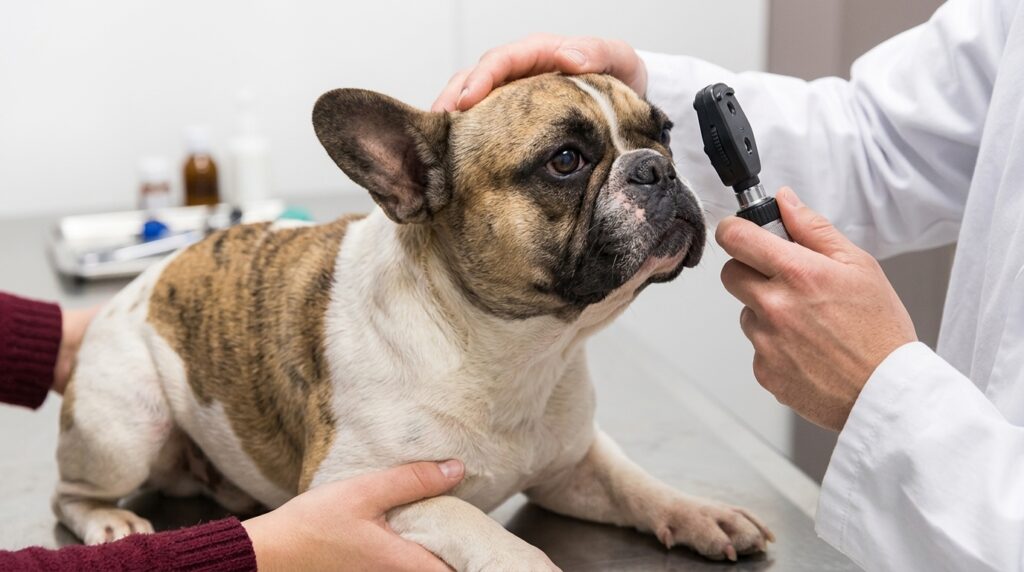
A veterinarian may also perform a full eye exam, check the cornea for ulcers using fluorescein stain, assess the type of discharge present, evaluate redness and pain, and compare both eyes.
This matters because French Bulldog dry eye can look similar to several other eye problems.

Dry eye can sometimes look like watery eyes because the eye becomes irritated and produces reflex tears. That’s why not every wet-looking eye is actually “too many tears.” If you want to understand the full range of possible causes, including drainage problems, eyelid issues, and infection, check out French Bulldog Watery Eyes.
Why French Bulldog Dry Eye Can Be Confused With Other Eye Conditions
French Bulldog dry eye can overlap with other conditions such as conjunctivitis, corneal ulcers, irritation from debris, eyelid abnormalities, and broader French Bulldog eye problems. That is why owners should be careful about assuming they know the cause of eye symptoms based only on appearance.
If the same redness, discharge, or irritation keeps returning, it is safer to have the eye properly evaluated than to continue guessing at home.
Dry Eye vs Other Eye Problems in French Bulldogs
One reason French Bulldog dry eye can be difficult for owners to recognise is that its symptoms are not unique. Redness, discharge, squinting, and irritation can happen with several eye disorders.
At home, French Bulldog dry eye may resemble:
- cherry eye
- conjunctivitis
- corneal ulcers
- irritation from dust or debris
- more general French Bulldog eye problems
For owners, one of the biggest takeaways is that persistent or recurring eye symptoms should not simply be treated as routine. If the same problem keeps returning, it deserves closer evaluation.
Treatment for French Bulldog Dry Eye
Treatment for French Bulldog dry eye usually focuses on three main goals. First, the veterinarian will try to support or improve tear production. Second, treatment aims to reduce inflammation. Third, it is important to protect the cornea from further damage.
Prescription Medications
Veterinarians often prescribe medications such as cyclosporine or tacrolimus. These are commonly used because they may help reduce immune-mediated damage and support tear production over time.
Exactly which medication is used will depend on the individual dog, the severity of the dry eye, and how well the eye responds to treatment.
Lubricating Drops and Gels
Many dogs with French Bulldog dry eye also need lubricating eye drops or gels to help protect the cornea and improve comfort. These products can help reduce friction during blinking and support the eye surface, but they usually do not solve the whole problem on their own.
Long-Term Management
One of the most important things owners should understand is that French Bulldog dry eye is often a chronic condition. Many dogs need long-term treatment and regular veterinary monitoring rather than a short course of medication.
Long-term management may include repeat Schirmer tear tests, medication adjustments, regular eye exams, and ongoing monitoring for ulcers, scarring, or pigment changes.
Why Self-Treatment Is Risky
French Bulldog dry eye should be treated under veterinary guidance. A red or irritated eye may not always be dry eye alone. Some dogs may also have an ulcer, infection, or another eye condition at the same time.
Owners should not use random human eye drops or over-the-counter eye products without veterinary approval. Some products may irritate the eye more, delay the right diagnosis, contain inappropriate ingredients, or even worsen an existing ulcer.
If you suspect French Bulldog dry eye, a veterinary exam is much safer than trying home treatment without guidance.
What Happens If French Bulldog Dry Eye Is Left Untreated?
Untreated French Bulldog dry eye can become painful and serious. Without enough tears, the cornea remains inflamed and poorly protected. Over time, this can lead to chronic pain, repeated infections, corneal ulcers, scarring, blood vessel ingrowth into the cornea, pigmentary keratitis, reduced vision, and blindness in severe cases.
French Bulldogs may be especially vulnerable because their eyes are already more exposed than those of many other breeds. What begins as mild irritation or discharge can develop into a more significant and potentially vision-threatening problem if ignored.
When Should You See a Vet?
Owners should not wait too long to see whether French Bulldog dry eye improves on its own.
A veterinary visit is a good idea if your Frenchie has persistent discharge, redness, squinting, rubbing at the eye, cloudiness, a dull or irritated-looking eye surface, or symptoms that keep returning.
Urgent veterinary care is especially important if you notice severe squinting, obvious pain, thick yellow-green discharge, rapid worsening, visible corneal haze, the dog holding the eye shut, or signs of an ulcer or injury.
With eye problems, earlier attention is usually the safer choice.
What Owners Can Monitor at Home
Owners cannot diagnose French Bulldog dry eye at home, but they can pay attention to patterns that help catch problems earlier.
It helps to notice whether discharge is becoming thicker or more frequent, whether one eye looks worse than the other, whether your dog is rubbing at the face more often, whether squinting is becoming more noticeable, whether the eye looks cloudy or dull, and whether symptoms keep coming back.
You do not need to identify the exact cause yourself. You only need to recognise when the pattern is no longer normal.
How to Help Protect Your French Bulldog’s Eyes
You cannot prevent every case of French Bulldog dry eye, but you can reduce the chance of missing eye trouble early.
Helpful habits include checking your dog’s eyes regularly, paying attention to changes in discharge, noticing whether squinting or face rubbing is becoming more common, avoiding unapproved eye products, following veterinary instructions carefully, and getting recurring irritation checked sooner rather than later.
For French Bulldogs, small eye changes are often worth more attention than they may seem at first.
FAQ
Final Thoughts
French Bulldog dry eye is easy to underestimate in the early stages. Mild discharge, a little redness, or occasional squinting may not seem dramatic, but in this breed those signs can matter. Because French Bulldogs are already prone to eye surface problems, recurring irritation should not be ignored.
The most important points to remember are that French Bulldog dry eye is a real medical condition, French Bulldogs may be more vulnerable because of their anatomy, early signs are often subtle, other eye problems can look similar, veterinary diagnosis matters, treatment is often long-term, and delaying care raises the risk of ulcers, scarring, and vision loss.
For French Bulldog owners, one of the most important things to understand is that dry eye can look mild in the beginning. A little extra discharge or mild redness may not seem alarming, but early warning signs are often easy to miss in this breed. Because Frenchies are already prone to a wide range of French Bulldog eye problems, recurring irritation should never be brushed off too quickly. In some dogs, symptoms may even overlap with conditions such as French Bulldog cherry eye, which is why catching the problem sooner can make a real difference in protecting long-term eye health and also what eye discharge in French Bulldogs can mean
If you are worried about your dog’s eyes, it is safer to be cautious. Recognising French Bulldog dry eye early increases the likelihood of safeguarding your dog’s comfort and long-term eye health.
A veterinary student and dog health researcher wrote this article for educational purposes. It is not a substitute for professional veterinary diagnosis or treatment. Always contact your veterinarian with questions about your dog’s eyes or overall health.
French Bulldog Cost in 2026: Price, Vet Bills, and the True Lifetime Cost
French Bulldog Temperament: Personality, and Are They Good Family Dogs?
Best Dog Toothpaste for French Bulldogs: A Vet-Guided Guide
Do French Bulldogs Shed? Coat, Grooming, and When to Worry

Why Your French Bulldog Chews Everything (and How to Stop It)
Calming Aids for French Bulldogs: What Actually Works
House Training a French Bulldog: Why It’s Hard and How to Succeed
How to Crate Train a French Bulldog: A Calm, Kind Guide

French Bulldog Separation Anxiety: Signs and How to Help
Best Dental Chews for French Bulldogs: What Actually Works
French Bulldog Dental Care: Teeth, Cleaning, and Prevention
Joint Supplements for French Bulldogs: What Actually Works
French Bulldog Luxating Patella: Signs, Grades, and Surgery Costs
French Bulldog Hip Dysplasia: Signs, Causes, and What It Really Means
Can French Bulldogs Eat Onions or Garlic? Why Both Are Dangerous
Can French Bulldogs Eat Bananas? How Much Is Safe and How Often
Can French Bulldogs Eat Peanut Butter? Safety, Amounts, and the Xylitol Warning
Can French Bulldogs Eat Chocolate? How Much Is Toxic and What to Do

Can French Bulldogs Eat Grapes? What to Do Right Now

French Bulldog Toxic Foods: What They Can’t Eat and Why
French Bulldog Lifespan: How Long Do They Really Live?
Best Life Jacket for French Bulldogs: Safe Picks and How to Choose
Can French Bulldogs Swim? Water Safety, Risks, and Life Jackets
French Bulldog Vomiting: Causes, Colors, and When to Worry
French Bulldog BOAS Surgery: When It’s Needed, What It Costs, and What Recovery Really Looks Like

French Bulldog Probiotics: Do They Really Help Gas, Soft Stool, and Sensitive Stomachs?
French Bulldog Poop Chart: What Healthy, Soft, and Runny Stools Really Mean
French Bulldog Gas: Normal Farts, Food Triggers, and When to Worry
French Bulldog IVDD: Early Signs, Emergency Red Flags, and Treatment Options
Overweight French Bulldog: Healthy Weight, Fat Frenchie Risks, and Safe Weight Loss Guide
Best Dog Food for French Bulldogs with Allergies
French Bulldog Soft Stool: Causes, Food Triggers, and What to Feed
French Bulldog Diarrhea: Causes, Treatment, What to Give, and When to Worry
Best Food for French Bulldogs with Sensitive Stomachs: Safe Diets, Common Triggers, and When to See a Vet
Best Dog Food for French Bulldogs: Complete Nutrition Guide 2026
French Bulldog Ear Infection vs Allergies: How to Spot the Difference
French Bulldog Ear Cleaning: How to Do It Safely, How Often, and What Not to Use
French Bulldog Yeast Skin Infection (Malassezia dermatitis): Signs, Causes, and What to Do Now
French Bulldog Skin Infection: Signs, Causes, and When to See a Vet
French Bulldog Hot Spots: Common Causes, Early Signs, and Safe Ways to Help Them Heal
French Bulldog Allergies vs Skin Infection: How to Tell the Difference
French Bulldog Skin Rash: Common Causes, Safe Relief, and When to Worry
French Bulldog Paw Licking: Common Causes and When to Worry
French Bulldog Itchy Skin: Common Causes and Safe Relief
French Bulldog Food Allergies: Signs, Common Triggers, and How to Confirm It
French Bulldog Allergies: Signs, Causes, and What Owners Should Know.
Ear Infection in French Bulldog: Signs, Causes, and When to Worry
French Bulldog Exercise Intolerance: Warning Signs, Causes, and When to Worry
How to Spot French Bulldog Breathing Issues Early: Early Warning Signs You Shouldn’t Ignore
French Bulldog Heat Exhaustion: Early Signs, Causes, and What to Do
French Bulldog Overheating Signs: Early Warning Signs Before Heat Stroke
French Bulldog Panting: Normal, Excessive, or a Warning Sign?
French Bulldog Breathing at Night: What’s Normal and What Isn’t
French Bulldog Watery Eyes: Warning Signs, Common Causes, and Safe Care
French Bulldog Skin Fold Dermatitis: Signs, Causes, and Safe Treatment
Best Temperature for French Bulldogs: When It’s Too Hot or Too Cold
How to Clean French Bulldog Wrinkles Safely: Step-by-Step Daily Care Guide
French Bulldog Breathing Hard: Causes, When to Worry, and What to Do
French Bulldog Wrinkle Care: How to Clean Facial Folds Safely and Prevent Infection