Written by Jinna CAMERON, veterinary medical student and dog health researcher. Reviewed for factual accuracy against trusted veterinary sources by DVM Carla DONTESK
A French Bulldog skin rash can look mild at first, but it is worth paying attention to because this breed is especially prone to skin irritation, allergy flares, and secondary infections. In many dogs, the rash is not the real diagnosis. It is a sign that something else is going on underneath it.
With French Bulldogs, that “something else” is often one of a few patterns: allergy-related inflammation, moisture trapped in skin folds, yeast overgrowth, bacterial infection, or a mix of these. A French Bulldog skin rash on the belly or under the armpits may mean irritation from grass, cleaning products, or food/environmental allergy. A rash in the face folds may point more toward moisture and friction. A rash that smells bad, looks greasy, or develops crusts is more concerning for infection.
This guide is meant to help you look at a French Bulldog skin rash calmly and logically. It will not diagnose your dog. It will help you understand what you are seeing, what may be safe to do at home, what to avoid, and when a vet visit is the right next step.
If you already know your Frenchie has a tendency toward itchiness or allergy flare-ups, it may help to read French Bulldog Allergies: Signs, Causes, and What Owners Should Know and French Bulldog Itchy Skin: Common Causes and Safe Relief alongside this article.
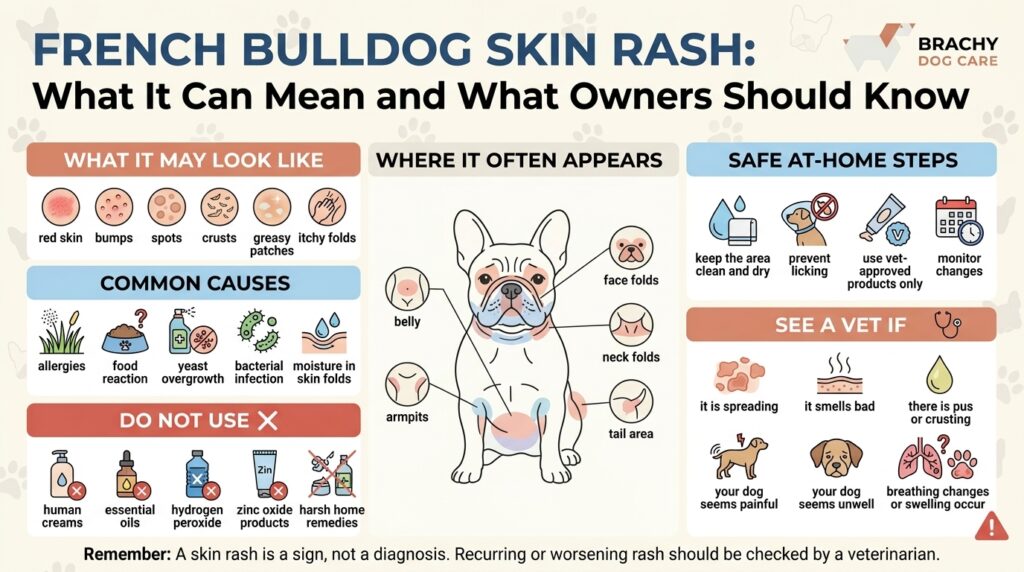
What a French Bulldog skin rash can look like
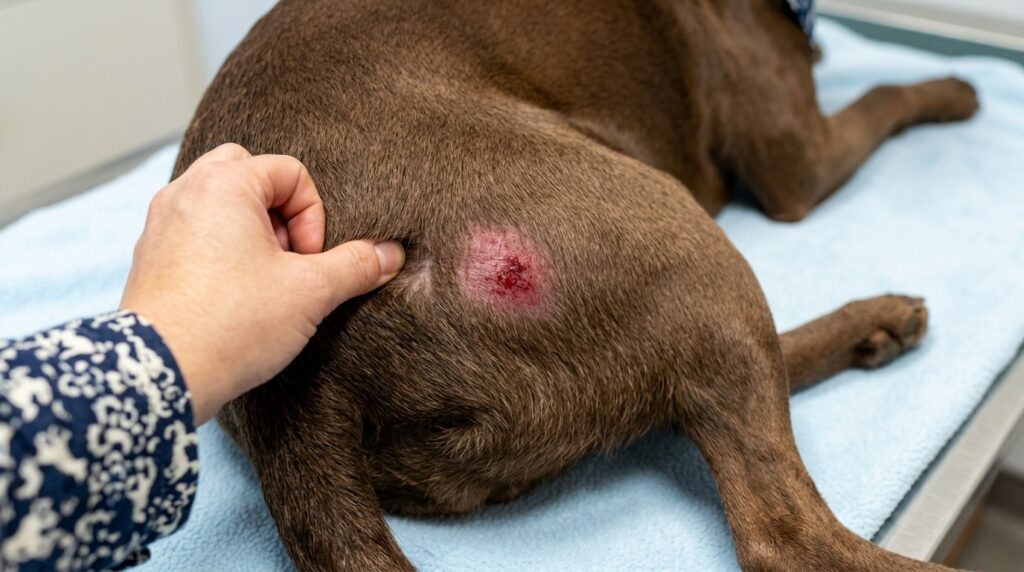
A French Bulldog skin rash does not always look dramatic. Sometimes it is just a patch of redness. Other times it shows up as small red bumps, spots, scabs, or a moist area that keeps coming back.
Common things owners notice include:
- red or pink patches on the belly
- red bumps on the skin
- spots that look irritated or inflamed
- flaky skin or crusts
- greasy skin with a bad smell
- hair thinning in the area
- skin that feels warm, damp, or sticky
- repeated licking, scratching, or rubbing
- rash around the folds of the face, neck, or tail area
A French Bulldog skin rash may be itchy, but not always. Some dogs seem bothered immediately. Others are only mildly uncomfortable until the skin becomes infected. If the rash is paired with paw licking, ear problems, or constant scratching, allergies move higher on the list. If the skin is smelly, greasy, or crusted, infection becomes more likely.
It is also useful to think about location. A French Bulldog skin rash on the belly often has a different set of causes than one inside the face folds or under the armpits.
Why French Bulldogs get rashes
French Bulldogs are not the only breed that gets skin problems, but their anatomy and skin sensitivity make them more likely to develop a French Bulldog skin rash and keep having repeat episodes.
Allergies
Allergies are one of the most common underlying reasons for a French Bulldog skin rash. This can include environmental allergies, flea allergy dermatitis, contact dermatitis, or adverse food reactions. Allergy-related skin disease often causes itchiness first, then redness, then secondary infection if the skin barrier stays inflamed.
If you want the broader allergy picture in this breed, French Bulldog Allergies: Signs, Causes, and What Owners Should Know is the best background article.
Common clues that point toward allergy include:
- repeated itching over time
- redness in several different body areas
- paws, ears, groin, belly, or face folds being involved
- flare-ups after grass, cleaning products, new food, or seasonal changes
- a history of ear infections or paw licking
Allergies do not always produce a single neat lesion. They can make the skin more fragile and easier for yeast or bacteria to overgrow.
A skin rash in a French Bulldog is not always easy to interpret at home. Redness, bumps, and itchiness can point toward allergies, while odor, crusting, or discharge may suggest infection. To compare the common signs side by side, see French Bulldog allergies vs skin infection.
Food allergy or adverse food reaction
A food allergy can also lead to a French Bulldog skin rash, although the pattern is often more chronic than sudden. Some dogs have skin signs without obvious digestive signs. Others also get soft stool, vomiting, or frequent gassiness.
Typical clues include:
- long-term itching
- recurring red skin
- paw licking
- ear inflammation
- no clear seasonal pattern
- symptoms that do not improve much with routine bathing
A food reaction can look a lot like environmental allergy, which is why it is not something owners can reliably sort out at home. This is one reason a vet may recommend an elimination diet trial if the rash keeps returning.
you might want to check this guide, french bulldog food allergies.
Contact irritation
Sometimes a French Bulldog skin rash is caused by direct contact with something irritating. That might be lawn chemicals, cleaning sprays, floor cleaners, shampoos, carpet treatments, or even a new fabric on a bed or harness.
Contact irritation often shows up where the skin touches the trigger. For example:
- belly and inner thighs after walking on treated grass
- underarms from a harness
- face folds if a cleanser or wipe stays wet in the skin
- paws after walking on an irritating surface
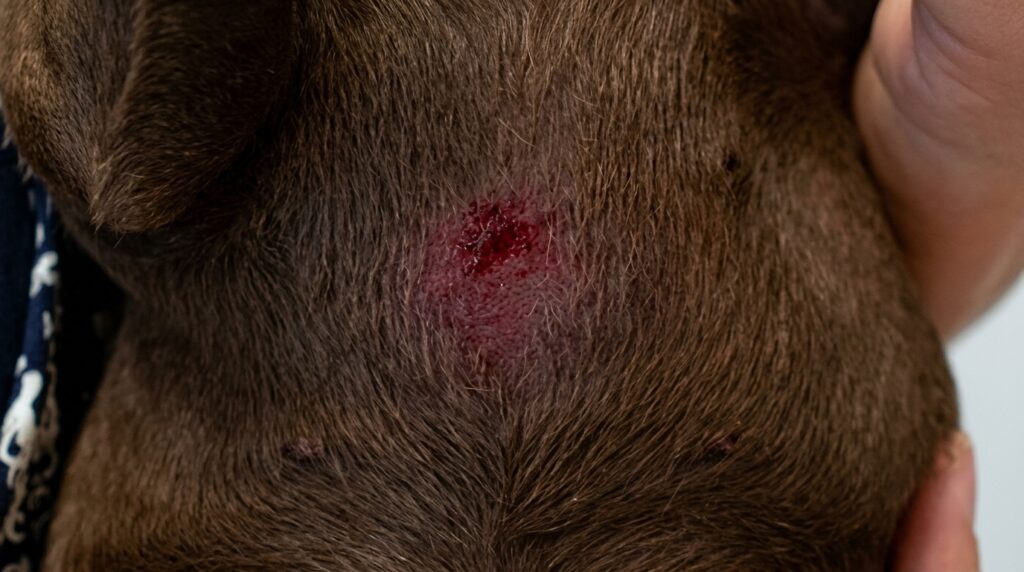
This tends to be more localized than allergy, although it can still become widespread if the skin barrier is already weak.
Yeast overgrowth
Yeast overgrowth, especially Malassezia, is very common in dogs with inflamed skin. It often appears when the skin is already irritated by allergies or moisture. In French Bulldogs, this can show up as a French Bulldog skin rash in folds, around the neck, on the belly, or between the toes.
Typical signs of yeast involvement include:
- greasy or waxy skin
- a musty or sour smell
- redness
- itchiness
- brownish discoloration
- recurrent flare-ups in the same area
Yeast is not the root cause in every case. Often it is part of the larger problem. That is why a rash that improves briefly and then returns again can be frustrating for owners if the underlying cause is never addressed.
Bacterial skin infection
A bacterial infection can also create a French Bulldog skin rash, especially if the skin is already inflamed, moist, or damaged from scratching. Surface infections may cause bumps, pustules, crusts, and collarettes. Deeper infections can be more painful and more serious.
Common clues include:
- pimples or pustules
- yellow crusting
- scabs
- patchy hair loss
- skin that feels sore
- odor
- oozing or discharge
A helpful veterinary overview of pyoderma is available from VCA Hospitals. That is a useful reference if you want a general explanation of bacterial skin infection in dogs.
Moisture and friction in skin folds
This is especially important in French Bulldogs. Their facial folds, lip folds, and other creases can trap moisture, oil, saliva, dirt, and heat. That makes a French Bulldog skin rash more likely in the folds even when the rest of the skin is not very inflamed.
If you want a deeper breakdown of fold-related care,French Bulldog Skin Fold Dermatitis: Signs, Causes, and Safe Treatment is the most relevant companion article.
What often happens is simple: moisture stays in the fold, the skin becomes irritated, yeast or bacteria take advantage of the environment, and a small rash becomes a recurring problem.
Hives or parasites, less commonly
Sometimes a French Bulldog skin rash is caused by hives, fleas, mites, or another parasite-related issue. This is less likely than allergy or fold irritation in many French Bulldogs, but it still matters.
Consider this possibility if the rash:
- appeared suddenly
- changes quickly
- comes and goes in raised bumps or welts
- is accompanied by intense itching
- follows outdoor exposure
- shows up with other pets in the home itching too
Why the rash location matters
The location of a French Bulldog skin rash gives useful clues. It does not prove the diagnosis, but it helps narrow the possibilities.
Belly
A French Bulldog skin rash on the belly is often related to contact irritation, grass, allergens, or moisture. The belly touches many surfaces, so it is a common place for red skin to show up first.
You may see:
- flat redness
- red spots
- small bumps
- irritation after walks
- licking when your dog lies down
If the belly rash is itchy and recurring, it may fit the allergy pattern. If it is damp, smelly, or crusted, think about infection as well.
Underarms
A French Bulldog rash under armpit is often associated with friction, harness rubbing, moisture, or allergy-related skin inflammation. The underarm area is warm and easy to overlook, so problems can build up before an owner notices.
Look for:
- redness in both armpits
- damp skin
- hair thinning
- irritation after harness use
- licking or flinching when touched
A rash under the arms can be simple irritation, but if it keeps coming back, the skin barrier may already be compromised.
Face and muzzle
The face is one of the classic locations for a French Bulldog skin rash because folds trap moisture and create friction. A rash around the muzzle, lips, or nose folds may look small on the outside but still be uncomfortable.
Common signs include:
- redness in the folds
- odor
- wetness
- scabs
- darkened skin over time
- frequent rubbing with the paws
This area can become infected quickly if it stays damp. Small changes matter here.
Skin folds
Skin folds are where a French Bulldog skin rash most often becomes chronic. The problem is not just redness. It is the repeated cycle of moisture, friction, irritation, and microbial overgrowth.
The rash in folds may look like:
- pink or red skin
- sticky or damp skin
- mild crusting
- a bad smell
- soreness when the area is cleaned
- darkening or thickening over time
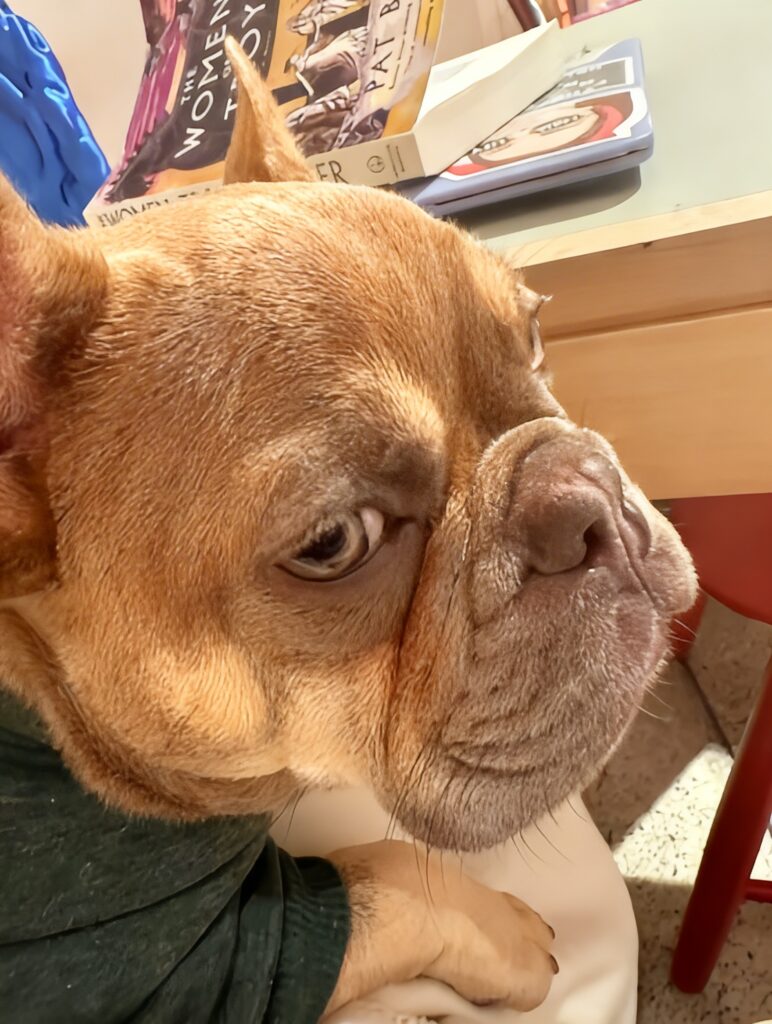
Owners sometimes miss fold problems because the dog may still seem active and bright. That is one reason fold checks should become part of routine care.
What a skin infection may look like
A French Bulldog skin rash becomes more concerning when it starts to look infected. Infection does not always mean the dog is in crisis, but it does mean the skin needs more careful attention.
Bacterial infection may look like:
- pustules or pimples
- yellow crusts
- collarettes, which are circular scaly lesions
- hair loss in patches
- soreness
- weeping or oozing skin
Yeast infection often looks like:
- greasy skin
- flaky skin
- odor
- redness
- repeated itching
- thicker skin in chronic cases
Sometimes both are present at the same time. That is common in dogs with underlying allergies. A rash that looks small can still be more complicated underneath, which is why a vet may use skin cytology to check for yeast or bacteria.
A practical rule: if the rash smells bad, is getting crusty, or is not improving, infection becomes more likely.
Safe at-home steps for a French Bulldog skin rash
If the rash is mild and your dog is otherwise acting normal, there are a few careful steps that are usually reasonable while you arrange veterinary guidance if needed.
Keep the area clean and dry
This is one of the simplest and most useful things you can do. Use lukewarm water and a mild, dog-safe cleanser if your veterinarian has approved it. Do not scrub hard. In folds, gentle cleaning works better than aggressive cleaning.
Then dry the skin well. Pat, do not rub. Moisture left in folds can make a French Bulldog skin rash worse.
Prevent licking and scratching
If your dog keeps licking the area, the skin will stay inflamed longer. A cone or soft protective collar may be useful in some cases. This is especially true when the rash is on the belly, armpits, or paws.
Watch the pattern
Take a photo of the rash and note:
- where it is
- when it started
- whether it is getting larger
- whether it smells
- whether your dog is itchy, painful, or otherwise normal
That history helps a vet a lot more than people realize.
Use only dog-safe products
If your vet has recommended a routine fold-care product, this is where a fragrance-free, dog-safe skin wipe can be useful. and do not use it on open wounds unless a vet says it is okay.
The key is to choose a product made for dogs and skin folds, not a random human wipe or an aggressive antiseptic.
What not to put on the rash
This part matters. Many human products can make a French Bulldog skin rash worse.
Do not use:
- human creams unless your vet specifically says to
- essential oils
- hydrogen peroxide
- zinc oxide creams
- rubbing alcohol
- strong antiseptic solutions
- acidic home remedies like vinegar on irritated skin
- anything that stings or seems drying
A lot of these products are irritating on already inflamed skin. Some are dangerous if your dog licks them. If a product is made for human diaper rash, athlete’s foot, or acne, it is usually not the right thing to reach for on a dog.
When to see a vet
Not every French Bulldog skin rash is an emergency, but some signs should move you toward a veterinary exam sooner rather than later.
See a vet if:
- the rash is spreading
- the skin is painful
- there is odor, discharge, or pus
- the skin is crusting heavily
- your dog is very itchy or cannot settle
- the rash keeps coming back
- the area looks swollen or hot
- your dog seems tired, off food, or unwell
- the rash does not improve after a short period of gentle care
- your dog develops hives, facial swelling, vomiting, or breathing changes
That last point matters especially in brachycephalic dogs. If swelling or breathing trouble happens, do not wait.
If the rash is recurring, a vet may want to check for allergy disease, parasites, yeast, bacterial infection, or a skin-fold problem rather than trying to treat every flare as a separate event.
How vets usually approach a French Bulldog skin rash
When a French Bulldog skin rash comes into the clinic, the vet usually starts with history and pattern, not guesses. The questions are often simple:
- when did it start
- where is it located
- is it itchy or painful
- has anything changed in the home
- is there a new food, shampoo, cleaner, harness, or flea issue
- does the dog have ear or paw problems too
They may then use skin cytology, which helps identify yeast or bacteria. If parasites are suspected, they may look for those as well. If the rash is chronic and allergy seems likely, the vet may discuss diet trials, flea control, or longer-term allergy management.
That is another reason a French Bulldog skin rash should not always be treated as a one-step problem. Sometimes the skin itself is only the surface clue.
How to reduce repeat rashes
Once the immediate rash is under control, the next goal is to reduce repeat flare-ups. For French Bulldogs, that usually means paying attention to fold care, allergen exposure, and moisture management.
Useful habits include:
- routine fold checks
- gentle drying after cleaning or bathing
- consistent flea prevention
- avoiding known irritants
- keeping the skin barrier as healthy as possible
- not letting minor redness sit for weeks before it is addressed
FAQ
Final thoughts
A French Bulldog skin rash is common, but it should not be ignored if it keeps coming back or starts to look infected. In this breed, skin problems often come from a mix of allergy, friction, moisture, and secondary yeast or bacterial overgrowth. The goal is not to guess at one magic cause. It is to look at the pattern, keep the skin clean and dry, avoid unsafe products, and get veterinary help when the rash is persistent, painful, or worsening.
If your Frenchie also has itching, paw licking, or ear problems, those clues are important. They often point to a bigger skin issue rather than a one-off rash.

French Bulldog Cost in 2026: Price, Vet Bills, and the True Lifetime Cost
French Bulldog Temperament: Personality, and Are They Good Family Dogs?

Best Dog Toothpaste for French Bulldogs: A Vet-Guided Guide
Do French Bulldogs Shed? Coat, Grooming, and When to Worry

Why Your French Bulldog Chews Everything (and How to Stop It)