Written by Jinna CAMERON, veterinary medical student and dog health researcher. Reviewed for factual accuracy against trusted veterinary sources by DVM Carla DONTESK
French bulldog hot spots can seem to appear almost overnight, which is part of why they worry so many owners. One day the skin looks normal, and the next you may notice a red, wet, irritated patch that your dog keeps licking or scratching. French Bulldog hot spots are also called ‘acute moist dermatitis’ or ‘pyotraumatic dermatitis’, and in this breed they often show up as a secondary skin problem rather than a condition with just one single cause.
As a veterinary medical student who has spent time reviewing brachycephalic health research, I’ve found that French Bulldog hot spots make more sense once you look at the breed’s anatomy, skin sensitivity, and tendency toward itching. This article walks through what these lesions are, why French Bulldogs are prone to them, what early signs to watch for, what veterinary care usually involves, and how to support healing safely at home. It is educational only and not a substitute for a veterinarian’s exam. If your Frenchie has a painful, moist, or rapidly spreading skin lesion, the safest first step is to contact your vet.
What French Bulldog hot spots actually are
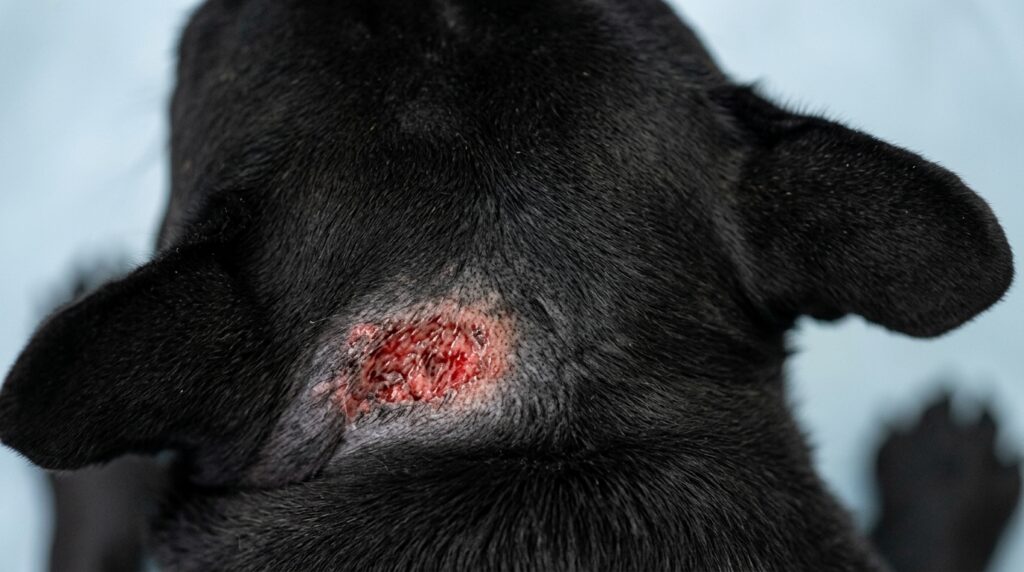
French Bulldog hot spots are areas of inflamed skin that become wet, red, painful, and often infected after repeated self-trauma. Usually the dog starts by licking, scratching, or chewing one spot because it is itchy, uncomfortable, or irritated. That repeated trauma damages the skin barrier and creates an environment where normal skin bacteria can multiply more easily.
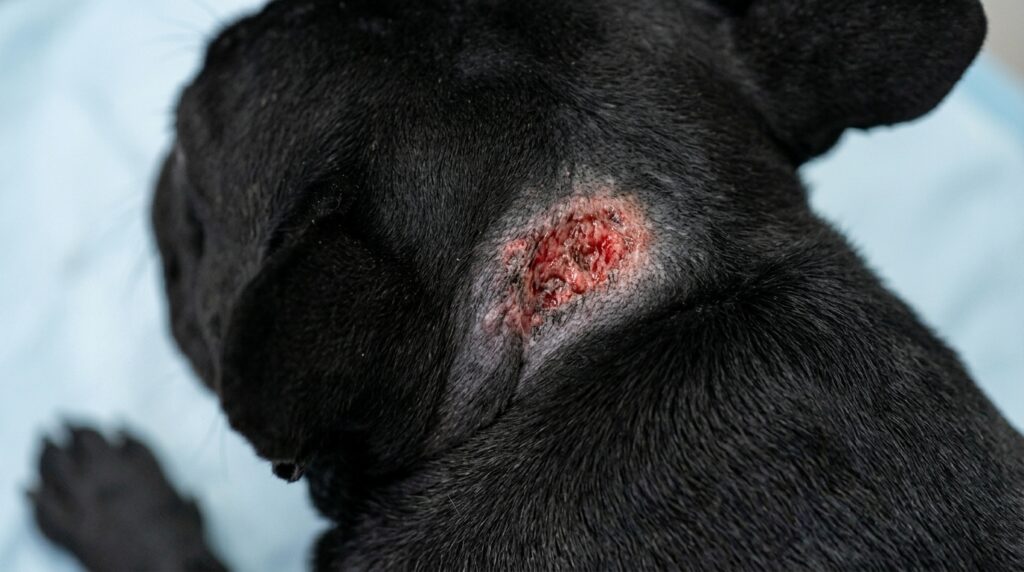
The bacteria most often involved is Staphylococcus pseudintermedius, a common organism on dog skin that usually causes no trouble until the barrier is broken. Once the skin is irritated, the lesion can become glossy, warm, sticky, and very uncomfortable. Hair may clump around the area, and there may be crusting or yellowish discharge. French Bulldog hot spots are often easier to notice than they are in long-coated breeds because French Bulldogs have shorter coats and the skin changes are more visible.
It is also worth remembering that French Bulldog hot spots are usually not the root problem. They are often the visible result of something underneath, such as allergies, ear disease, moisture trapped in skin folds, or another source of itching. That is why treating the surface lesion alone sometimes helps only temporarily.
In veterinary pathology, French Bulldog hot spots have been shown to be more complex than they first appear. Studies have described multiple histopathologic patterns, including changes with and without eosinophils and folliculitis. Eosinophils are cells often associated with allergic inflammation, which suggests that some cases may have a hypersensitivity component rather than being purely bacterial. That detail matters because it helps explain why the same dog may keep developing new lesions if the underlying trigger is never identified.
Why French Bulldogs are especially prone to this problem
French Bulldogs have a combination of structural and biological factors that make skin problems more likely than in many other breeds. One major factor is the breed’s conformation. The face, neck, and sometimes tail area often have folds or close skin contact, which creates warm, moist pockets that are ideal for irritation. When skin stays damp and rubs against itself, the barrier weakens and inflammation becomes more likely.
Moisture is a big part of the story. Tear overflow, saliva, panting, water left behind after drinking, and dampness after bathing can all collect in folds. Even if the moisture seems minor, repeated exposure can gradually soften the skin and make it easier for bacteria and yeast to overgrow. That is one reason French Bulldog hot spots often show up in areas that are hard to dry completely.
The breed also has a strong tendency toward allergic skin disease. Atopic dermatitis and food hypersensitivity can cause persistent itching, and an itch is often the starting point for a hot spot. Once a dog begins the itch-scratch-lick cycle, skin damage can happen quickly. French Bulldogs are frequently reported by owners as having skin sensitivity early in life, which fits with the clinical pattern many veterinarians see.
Large UK primary care database studies have also shown how strongly French bulldogs are predisposed to skin fold disease. In those studies, the odds of skin fold dermatitis were much higher in French bulldogs than in non-French bulldogs and also much higher than in crossbreeds. That does not mean every Frenchie will develop French Bulldog hot spots, but it does explain why the breed needs consistent daily skin care.
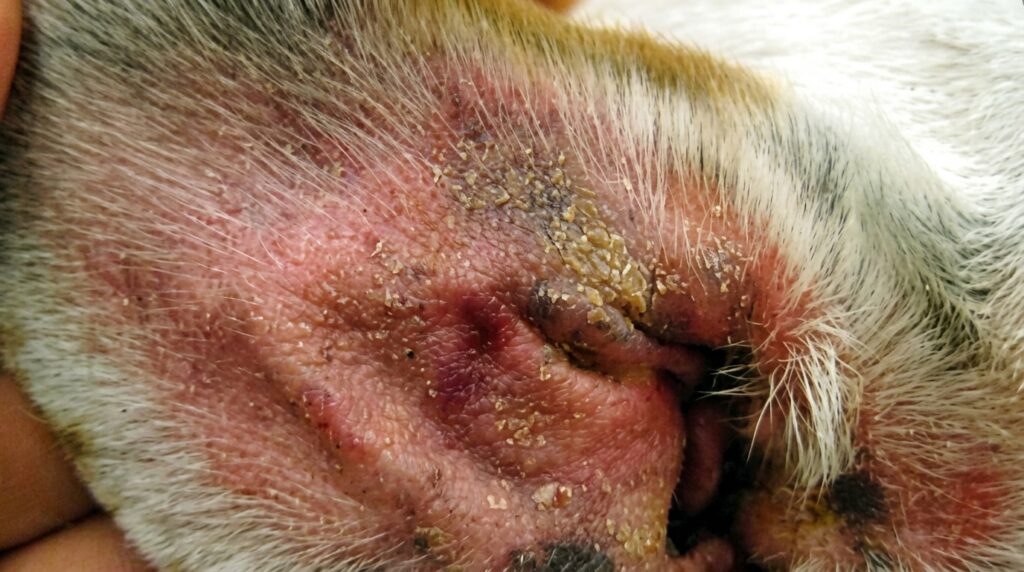
Another factor is ear disease. Otitis externa is common in French bulldogs, affecting about 14% in some reports. A dog that scratches at the ears or side of the face can create a periauricular lesion that looks very much like French Bulldog hot spots. In some cases, what seems to be a skin problem is actually the downstream result of a painful ear infection.
There may also be genetic or immune contributors. Some French Bulldogs appear to have broader skin barriers or immune differences that make them more reactive. This does not mean the breed is doomed to skin issues. It simply means owners should take early changes seriously instead of waiting until a problem becomes large.
If you are already seeing a lot of itching in your dog, our guide on French Bulldog allergies gives useful background on the underlying patterns that often lead to secondary skin lesions.
Common triggers and underlying causes
French bulldog hot spots rarely happen for no reason. The visible lesion is usually the end result of something that made the dog focus on one area again and again.
Common triggers include:
- allergic skin disease, including environmental allergies or food sensitivity
- skin fold irritation and chronic moisture
- otitis externa, which often leads to scratching around the head and neck
- flea bites or flea bite hypersensitivity
- poor grooming or debris trapped in the coat
- foreign material such as burrs or plant matter
- discomfort from another issue that makes the dog lick one specific area
A prospective study of French Bulldog hot spots found that a possible underlying cause was identified or suspected in 31 out of 44 cases. That is a helpful reminder that the lesion itself is often only a symptom. If the trigger is still present, the problem can return after the skin heals.
Allergies are one of the most important patterns to consider because a persistent itch is such a common pathway to self-trauma. If you want a deeper look at that part of the cycle, our article on French Bulldog itchy skin explains why itching so often turns into secondary skin damage.
Early signs owners usually notice:
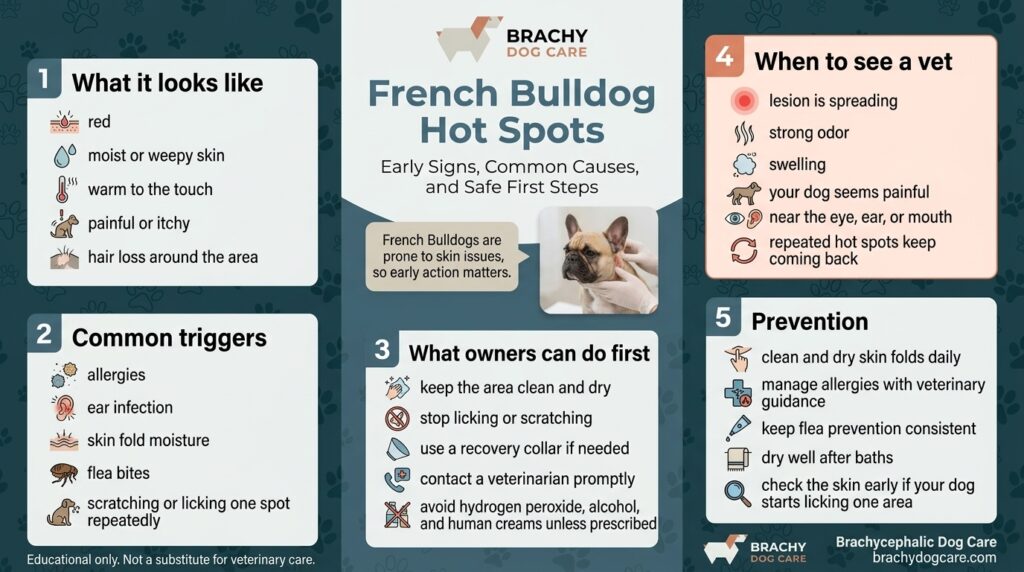
French bulldog hot spots often begin with subtle signs before the skin becomes obviously wet or raw. The earliest clue may be repeated licking in one spot, a damp patch of fur that does not dry normally, or a small red area that seems to come on quickly. Some dogs become restless or keep turning toward the same area because it feels uncomfortable.
Once the lesion becomes established, the signs are more obvious. The skin often looks sharply bordered, red, moist, and inflamed. It may feel warm and painful to the touch. Fur around the area may stick together or fall away, and the lesion can have a weepy or crusted surface. In many dogs, the change is so quick that owners say it looked like it appeared overnight.
French bulldog hot spots can sometimes be confused with other skin problems, especially skin-fold dermatitis, superficial bacterial infections, or allergy flares. A skin fold problem is often more chronic and centred where skin touches skin. A hot spot tends to be more acute, more irritated, and more obviously moist. In practice, though, these issues can overlap, so it is usually better not to spend too long trying to self-diagnose.
If the lesion is near the ear or jaw, it is also worth thinking about an ear problem. French Bulldogs with ear discomfort may scratch at the side of the face and create a lesion that looks like a hot spot. Our article on French Bulldog Allergies vs Skin Infection: How to Tell the Difference can help with the broader differential.
When to see a veterinarian:
Any new moist, red, painful lesion in a French bulldog deserves prompt veterinary attention. That is especially true if the area is spreading, your dog keeps returning to it, or the skin looks angry enough that it could worsen quickly. French Bulldog hot spots are not usually emergencies in the dramatic sense, but they can become much harder to manage if they are ignored for several days.
A veterinarian will often start with a physical exam and a history of what happened before the lesion appeared. Common next steps include skin cytology to look for bacteria or yeast; skin scrapings to rule out mites such as Demodex when appropriate; and an ear exam if the dog is scratching at the head. If the pattern suggests a chronic itch, the vet may also discuss an allergy workup using established criteria.
The goal is not only to calm the skin down but also to find the reason the lesion formed. That is especially important in French Bulldogs because their skin issues are often connected. A dog with repeated French Bulldog hot spots may also need attention to allergies, ear disease, or fold care.
If the lesion is near the eye, the dog is acting very painfully, there is swelling, or the skin smells strongly foul, I would not wait. Those are good reasons to have the dog seen quickly.
Hot spots and skin infections can overlap, and in French Bulldogs the line between them is not always obvious at home. A hot spot may start after self-trauma, but if the skin stays moist or the dog keeps licking it, infection can become part of the picture. For a closer look at what infection signs can look like in this breed, read: https://brachydogcare.com/french-bulldog-skin-infection/
Safe treatment approaches
Treatment usually has three goals: clean the area, control infection and inflammation, and reduce the trigger that started the lesion. In many cases, the vet will clip the hair around the site so the area can dry and be examined properly. They may then clean it with a vet-recommended antiseptic and prescribe a topical or oral medication depending on the severity and cytology findings.
If the lesion is infected or very inflamed, the vet may recommend antibiotics, anti-inflammatory medication, or anti-itch support for a short period. The exact choice depends on the case. Long-term steroid use, for example, is not something to use casually because it has its own risks. That is one reason professional input is useful: the aim is to break the cycle, not just make the redness look better for a day.
For a clinician-style overview of superficial skin infection management, the Merck Veterinary Manual section on pyoderma in dogs and cats is a solid verified reference.
Supportive care you can provide at home
Once your veterinarian has examined the lesion and started treatment, there are practical things you can do at home to help the skin heal. The most important thing is to stop further self-trauma. If your French Bulldog can still lick, chew, or scratch the area, the lesion will usually take longer to improve.
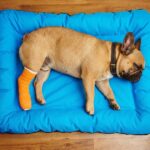
That is where a recovery collar or barrier becomes useful. A soft inflatable recovery collar or a low-profile doughnut-style cone is often more comfortable than the hard plastic cone, especially for a brachycephalic dog that already has a short muzzle and a wide neck. The key is choosing a design that actually blocks access to the lesion and fits your Frenchie well.
At home, you can also:
- keep the area clean and dry
- follow medication instructions exactly
- check the skin every day for spreading redness, swelling, or discharge
- keep the dog from rubbing the area against furniture or carpets
- contact your vet if the lesion gets worse instead of better
Avoid using hydrogen peroxide, alcohol, essential oils, or human creams unless your veterinarian specifically tells you to. These can irritate the skin further or be unsafe if licked. Gentle care works better than aggressive cleaning.
Healing timeline and what to expect
Mild French Bulldog hot spots often start improving within 3 to 5 days once the dog is no longer traumatising the skin and the right treatment is in place. Full healing may take 1 to 3 weeks, depending on the size of the lesion and whether the underlying cause is also being managed.
The early change is usually a reduction in moisture and discomfort. The lesion should look less angry, less sticky, and less spread out. Later, the skin should dry, the redness should fade, and hair regrowth may begin. If the skin is still wet, painful, or expanding after treatment starts, it is time to check back with the vet.
Recurrence is possible, especially if the root cause is chronic itch, ear disease, or repeated moisture in skin folds. In some studies, younger dogs and males were affected more often, and skin issues in the breed may become more common with age if they are not managed proactively. That does not mean recurrence is inevitable. It usually means the dog needs a more complete plan.
Hot spots and yeast problems can overlap in French Bulldogs, especially when repeated licking or scratching keeps the skin inflamed. What starts as irritation does not always stay simple. If you want to understand the yeast side of that skin pattern, see our guide on French Bulldog yeast skin infection.
How to help prevent future episodes
Prevention is where owners can make the biggest difference. For French Bulldog hot spots, the best long-term strategy is a simple routine that reduces moisture, lowers itchiness, and catches early changes before they become a full lesion.
Keep skin folds clean and dry
Check the face, neck, tail base, and any other folds once or twice a day. If you see debris or dampness, gently wipe the area with a vet-approved cleaner or a soft cloth and dry it thoroughly. Moisture is one of the biggest contributors to irritation, so this small habit matters more than many people realise.
Pay attention after meals, after drinking, after play, and after warm weather walks. Those are the times when a French Bulldog is most likely to have moisture sitting in a fold without anyone noticing right away.
Stay ahead of itching
Because itching is such a common trigger, allergy management is a major part of prevention. That may mean working with your veterinarian on elimination diet trials, environmental allergy control, or other long-term plans depending on the dog’s history. Flea prevention should also stay consistent, even if you do not see fleas. Some dogs react strongly to very few bites.
Keep an eye on the ears
Ear disease can trigger scratching that leads to French Bulldog hot spots near the head and neck. If your dog has recurrent head shaking, odour, discharge, or one-sided scratching, that deserves attention. Ear care should be guided by your veterinarian, not guessed at.
Dry well after baths or swimming
Bathing is useful, but French Bulldogs should not stay damp afterward. Dry the folds, the face, and the body carefully. If moisture lingers, it can become a recurring irritant.
Use good grooming habits
A well-groomed coat is less likely to trap debris and moisture. The goal is not to over-groom or irritate the skin. It is just to keep the dog clean, dry, and easy to inspect.
Breeding discussions about more moderate skin folds are ongoing in the veterinary community, but for current owners, the practical focus is daily care. Small habits are often what reduce the overall risk of French Bulldog hot spots over time.
FAQ
Final thoughts
French bulldog hot spots can look sudden and frustrating, but they usually fit into a bigger pattern once you step back and look at the whole dog. In this breed, anatomy, moisture, itch, allergies, and ear disease often interact. The visible skin lesion is the part you can see, but the trigger is often elsewhere.
The good news is that French Bulldog hot spots are often manageable when they are caught early and treated properly. The best approach is not guesswork or aggressive home remedies. It is a combination of prompt veterinary care, careful home support, and daily habits that reduce moisture and irritation.
If your dog is dealing with a lesion right now, start with your veterinarian. If your Frenchie is healthy today, consistent fold care, good drying habits, flea prevention, ear monitoring, and early attention to itching can go a long way toward lowering the chances of recurrence.
As always, this article is educational and based on veterinary literature and clinical patterns. Your veterinarian is the right person to examine your dog and build a plan that fits their individual needs.


Ultimate 2026 French Bulldog Harness & Health Guide
The Complete Scientific Guide to Cooling Vests for French Bulldogs
Overweight French Bulldog: Healthy Weight, Fat Frenchie Risks, and Safe Weight Loss Guide
How to Spot French Bulldog Breathing Issues Early: Early Warning Signs You Shouldn’t Ignore
How to Clean French Bulldog Wrinkles Safely: Step-by-Step Daily Care Guide