Written by Jinna CAMERON, veterinary medical student and dog health researcher. Reviewed for factual accuracy against trusted veterinary sources by DVM ,Carla DONTESK
French Bulldog allergies vs skin infection is one of the most common “is this serious?” questions owners run into, and for good reason. In French Bulldogs, the skin can look red, bumpy, greasy, crusty, or irritated for more than one reason at the same time. A rash may start as simple itchiness and later turn into an infection, or it may begin as an infection on top of already inflamed skin.
That overlap is what makes French Bulldog allergies vs skin infection such a useful topic to understand. The goal is not to diagnose your dog at home. The goal is to help you look at the pattern more calmly: where the problem is, what it looks like, whether it smells, whether it is painful, and whether your dog seems otherwise normal.
This guide is educational, not a diagnosis. If the skin is painful, oozing, smelly, rapidly worsening, or your dog seems unwell, a veterinarian should look at it.
Why French Bulldogs are prone to both allergies and skin infections
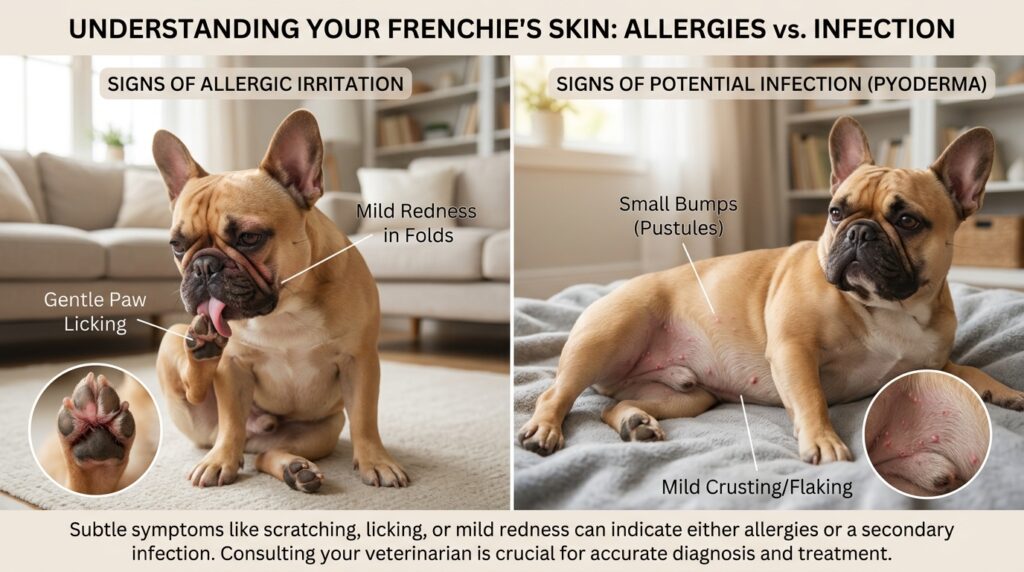
French Bulldog allergies vs skin infection is such a common comparison because this breed is predisposed to both. French Bulldogs tend to have skin that is more likely to get irritated, especially in folds, around the face, on the belly, in the armpits, and between the toes. Those are exactly the places where allergic inflammation and secondary infection tend to show up.
Allergies usually start the problem by disrupting the skin barrier. Once the barrier is weakened, bacteria and yeast can take advantage of the environment. In other words, French Bulldog allergies vs skin infection is often not a clean either-or situation. It may be both.
That is also why one dog can have:
- itchiness first
- then red skin
- then licking and scratching
- then a yeast or bacterial infection
French Bulldogs are especially good at making things look confusing because the same symptoms can overlap. A red belly does not automatically mean infection. Paw licking does not automatically mean allergies. A smelly fold does not always mean only one problem. The pattern matters.
What French Bulldog allergies usually look like
When French Bulldog allergies vs skin infection is the question, allergy signs usually show up first as itchiness. The dog may scratch, lick, rub, or chew one area repeatedly. Often the skin looks red, but not obviously oozing or crusted at the beginning.
Common allergy clues include:
- persistent itching
- red skin
- licking the paws
- rubbing the face
- irritation in the belly or armpits
- recurring ear problems
- several body areas affected at once
- a long-term or recurring pattern
A French Bulldog with allergies may look uncomfortable before the skin looks dramatic. That is one reason owners often think, “It’s just a little redness,” when the real issue is already building underneath.
French Bulldog allergies vs skin infection can also be confusing because allergic skin often becomes thicker, darker, and more irritated over time. That happens because of repeated scratching and licking. The skin may not smell very bad at first, and there may be no obvious pus, but the dog is still clearly bothered.
Allergies also tend to be recurrent. They can flare with:
- seasons
- grass exposure
- food changes
- new cleaning products
- dust or environmental triggers
- flea exposure
If the skin problem comes and goes over weeks or months, allergies become more likely. If the dog also has ear problems or paw licking, that pushes the allergy suspicion higher.
Because allergies in French Bulldogs often show up through the ears as itching, wax buildup, odor, or repeat irritation, ear care needs to be done carefully. Before assuming the problem is just dirt, it is worth reading this French Bulldog ear cleaning guide to understand what is normal, what is not, and when cleaning should stop and a vet should be involved.
What a skin infection usually looks like
When French Bulldog allergies vs skin infection is the question, infection signs are usually more obvious on the skin itself. Infection may show up as pustules, crusts, greasy debris, discharge, bad smell, or a sore-looking rash that feels warmer and more uncomfortable.
Common infection clues include:
- pustules or pimples
- yellow crusts
- greasy, brownish, or sticky debris
- bad odor
- moist or raw areas
- pain or tenderness
- skin that looks wet, eroded, or ulcerated
- hair loss around the affected area
- skin that keeps getting worse instead of settling down
Yeast infections often look greasy, flaky, and smelly. Bacterial infections can look more pimple-like or crusty. In both cases, the dog may still scratch, but the skin often looks more irritated and damaged than in a simple allergy flare.
That is why French Bulldog allergies vs skin infection should not be judged by itch alone. A very itchy dog may have allergies, infection, or both. But if there is odor, discharge, crusting, or pain, infection moves higher on the list.
Just like skin infections, ear infections in French Bulldogs are often secondary to allergies. This guide breaks down how to tell the difference between ear infection and ear allergies: French Bulldog Ear Infection vs Ear Allergies.
For a general veterinary overview of bacterial skin infection, VCA Hospitals has a useful guide to pyoderma in dogs: https://vcahospitals.com/know-your-pet/pyoderma-in-dogs
Allergy vs infection: the easiest clues to compare
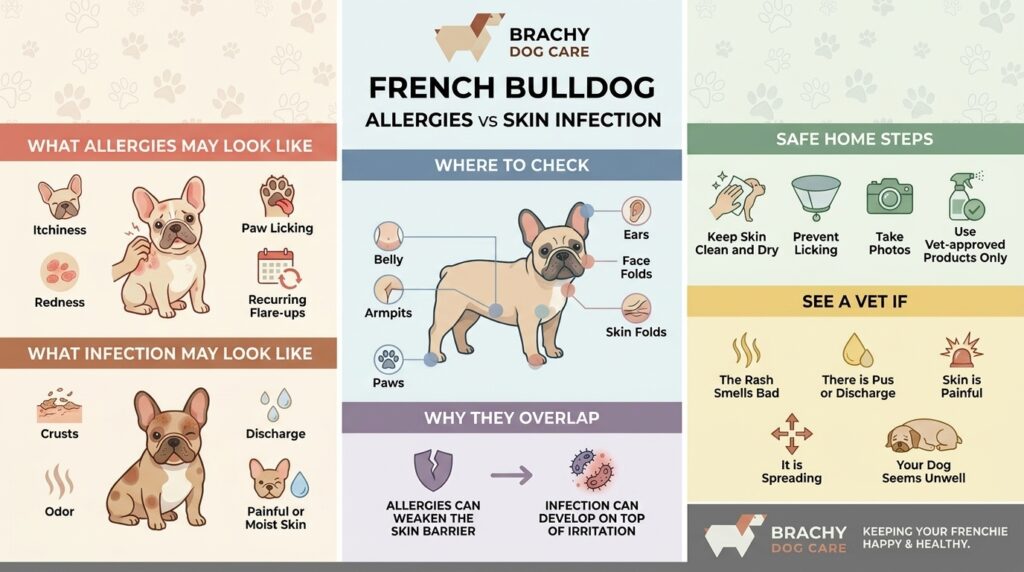
A useful way to think about French Bulldog allergies vs skin infection is to compare the overall pattern rather than one sign in isolation.
Allergy tends to look more like:
- itch first
- red skin
- recurring flare-ups
- paws, ears, belly, or armpits affected
- less obvious odor early on
- dry, irritated, or thickened skin over time
Infection tends to look more like:
- pustules, crusts, or discharge
- greasy or smelly skin
- sore, raw, or moist areas
- worsening local damage
- more obvious skin breakdown
- pain or tenderness
Overlap tends to look like:
- itch plus redness
- scratching plus crusting
- licking plus odor
- repeated flares in the same place
- skin that looks irritated and infected at the same time
This is the part many owners miss. French Bulldog allergies vs skin infection is rarely a simple “one or the other” answer. Allergies can set the stage, and infection can move in afterward. If you only treat one side of the problem, the other may keep the cycle going.
Why location matters so much
One of the most helpful parts of French Bulldog allergies vs skin infection is body location. Different areas of the body tend to point toward different patterns.
Belly
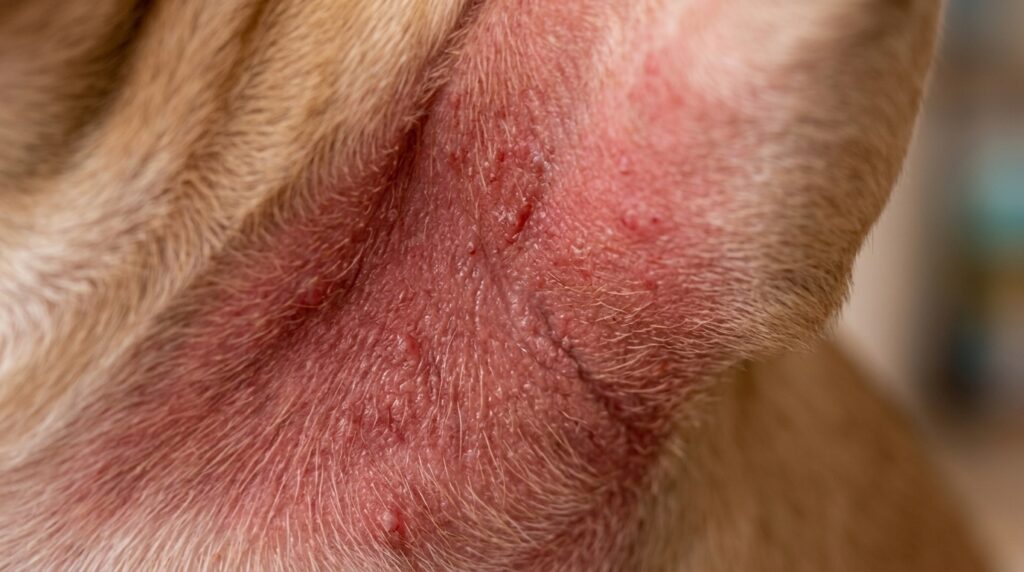
A red belly can happen with both allergies and infection. If the belly is just red, itchy, and a little irritated, allergy or contact irritation is more likely. If it has pustules, crusts, or a greasy smell, infection becomes more likely.
A French Bulldog belly rash often shows up after:
- grass exposure
- walking on treated surfaces
- allergy flares
- moisture trapped against the skin
- repeated licking
Armpits
The armpits are classic trouble spots because they trap heat and moisture. In French Bulldog allergies vs skin infection, armpit redness often starts as irritation or allergy, then infection can develop if the area stays damp and inflamed.
If the armpits look red but dry, think irritation or allergy. If they look moist, smelly, or crusted, think infection too.
Paws
Paw licking is one of the strongest clues that allergies may be involved. French Bulldogs often lick the paws when they are itchy or irritated, and that can eventually lead to infection if the skin stays wet and damaged.
In French Bulldog allergies vs skin infection, paws often tell you a lot:
- licking first suggests allergy
- brown saliva staining can mean chronic licking
- crusting or discharge suggests infection
- repeated inflammation between the toes may involve both
Face folds
Face folds are not just a cosmetic issue. They trap moisture and friction, which makes them a common site for inflammation and infection. In French Bulldog allergies vs skin infection, fold problems often start as redness and then become smellier or more irritated if bacteria or yeast overgrow.
If the fold is red but otherwise dry, irritation may be the main problem. If it is damp, sore, or smelly, infection is more likely.
Skin folds on the body or tail area
Skin fold areas are where French Bulldog allergies vs skin infection often becomes hard to separate. The folds can get irritated from friction and moisture, but they can also trap yeast and bacteria. That is why fold care matters so much in this breed.
Ears
Ears are another important clue. Allergies often show up alongside ear inflammation, discharge, or head shaking. If the skin and ears flare together, allergies move up the list. If there is a strong odor or thick discharge from the ears, infection is also very possible.
Why allergies and infections often happen together
The most important thing to understand about French Bulldog allergies vs skin infection is that these problems frequently overlap.
Allergies can:
- weaken the skin barrier
- create more scratching and licking
- increase moisture and irritation
- make the skin more vulnerable to bacteria and yeast
Once that happens, infection can take hold. Then the dog becomes even itchier, and the cycle gets worse.
That means an owner may think, “My French Bulldog has a skin infection,” when the deeper problem is ongoing allergy. Or they may think, “It’s just allergies,” when infection is already part of the picture.
This is why the article is framed as French Bulldog allergies vs skin infection rather than as one isolated diagnosis. In real life, they often come as a pair.
Some skin problems in French Bulldogs can look similar at first, especially when there is redness, moisture, and discomfort. If the lesion seems to have developed quickly after scratching or licking, it may
be useful to read our more detailed guide on French Bulldog hot spots.
Safe steps you can take at home while waiting for a vet
If you are trying to decide between French Bulldog allergies vs skin infection, the safest first step is to avoid guessing with random products. Keep things simple and gentle.
You can:
- keep folds clean and dry
- gently wipe away dirt or moisture with a soft cloth
- prevent licking or scratching if your dog is damaging the area
- take clear photos of the skin
- note when the problem started and whether it is getting worse
- write down any new foods, shampoos, cleaners, or walks in treated grass
If your vet has already discussed a food trial, do not change the diet randomly. If you suspect a food-related flare, discuss it with your vet rather than experimenting.
If the dog is scratching or licking enough to damage the skin, a cone or recovery collar may help until the vet visit.
If you use a dog-safe, fragrance-free skin wipe or fold-cleaning wipe as part of your routine. A wipe can help with cleaning and drying, but it is not a fix for infection on its own.
What not to put on the skin
This is where many well-meaning owners make things worse.
Do not use:
- human antibiotic creams
- human antifungal creams
- human steroid creams
- hydrogen peroxide
- alcohol
- essential oils
- random home remedies
- anything that stings, burns, or leaves the skin overly greasy
Coconut oil is a common search topic, but it should not be treated as a real solution for French Bulldog allergies vs skin infection. In fold-prone skin, oils can trap moisture and make things messier, not better. If the area is already smelly, moist, or infected-looking, oil is not the direction to go.
If you are unsure, it is better to leave the skin alone than to put something on it that may irritate it further.
When to see a vet
The French Bulldog allergies vs skin infection question should turn into a vet visit sooner if you see any of the following:
- pus or discharge
- strong smell
- painful skin
- rapidly spreading redness
- moist, raw, or ulcerated areas
- the dog seems tired or unwell
- the skin is not improving
- the problem keeps coming back
- the ears are also flaring
- the dog is scratching so much that the skin is breaking down
If the issue is recurring, that is especially important. Recurrent skin problems usually mean there is an underlying trigger that needs proper diagnosis, not just a one-time rinse or wipe.
If you are stuck between French Bulldog allergies vs skin infection and the area looks worse rather than better, that is the point where home care should stop and a vet exam should start.
FAQ
Final thoughts
French Bulldog allergies vs skin infection is not always a simple split. In this breed, the two often overlap, and the body location gives important clues. A red belly, itchy paws, or irritated folds may point more toward allergy or irritation, while odor, discharge, crusting, and pain raise concern for infection. When in doubt, treat the skin gently, avoid harsh products, and get veterinary help if the problem is spreading or recurring.
If you already want a broader background on the breed’s allergy tendency, it helps to read French Bulldog Allergies: Signs, Causes, and What Owners Should Know first. If the skin is mainly itchy rather than obviously infected, French Bulldog Itchy Skin: Common Causes and Safe Relief is the better companion article. And if the problem is centered in folds, French Bulldog Skin Fold Dermatitis: Signs, Causes, and Safe Treatment gives the fold-specific context.
If you are not sure whether your Frenchie is dealing with allergies, a hot spot, or something infected, the pattern of the skin can help, but it is not always easy to tell by eye. A separate guide on French Bulldog skin infection may make the differences a little clearer and show you when a vet visit is the safer next step: https://brachydogcare.com/french-bulldog-skin-infection/

French Bulldog Luxating Patella: Signs, Grades, and Surgery Costs
French Bulldog Hip Dysplasia: Signs, Causes, and What It Really Means

Can French Bulldogs Eat Onions or Garlic? Why Both Are Dangerous

Can French Bulldogs Eat Bananas? How Much Is Safe and How Often
Can French Bulldogs Eat Peanut Butter? Safety, Amounts, and the Xylitol Warning