Written by Jinna CAMERON, veterinary medical student and dog health researcher. Reviewed for factual accuracy against trusted veterinary sources by DVM Carla DONTESK.
French Bulldog heat exhaustion can develop faster than many owners expect. In a breed that already has a more difficult time moving air efficiently, heat, humidity, exercise, and even mild indoor warmth can become a real problem. A French Bulldog may seem only a little tired at first, but if the body is not cooling well, the situation can progress quickly.
That is why French Bulldog heat exhaustion should be taken seriously even when the signs look subtle. Heavy panting, drooling, slowing down, restlessness, or refusing to keep walking may be the first clues. If those signs are ignored, the dog can move into heatstroke, which is a medical emergency.
The goal here is not to make owners anxious. It is to help you spot the difference between a French Bulldog that is simply warm and a French Bulldog that is genuinely struggling. If you know what to watch for early, you can often act before things become dangerous.
Educational note: This article is for owner education only. It does not diagnose illness or replace veterinary care. If your French Bulldog is collapsing, unresponsive, or has blue/pale gums, seek emergency veterinary help right away.
Why French Bulldogs get heat exhaustion so easily
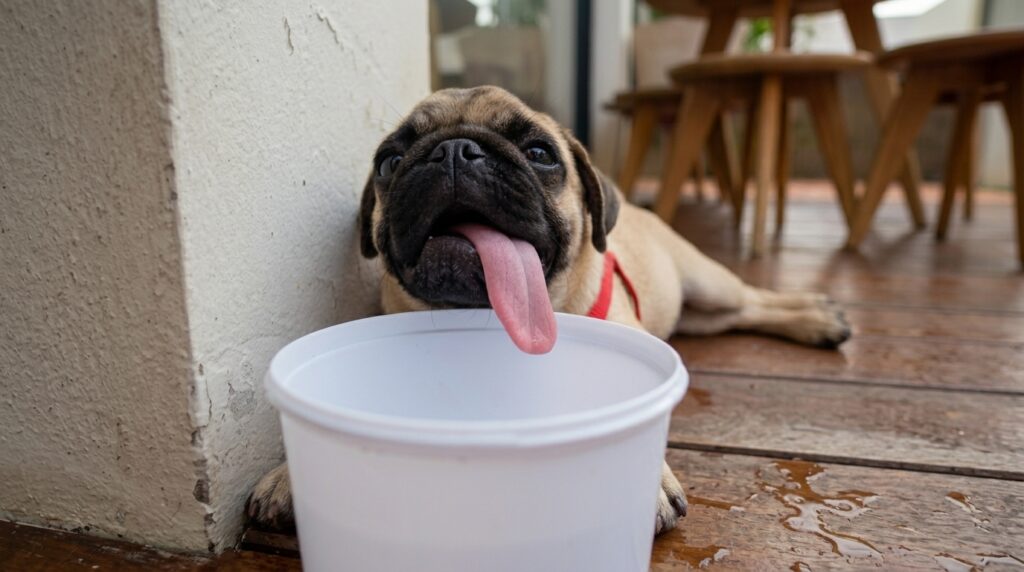
French Bulldogs are brachycephalic, which means they have a shortened skull and face. That face shape is part of the breed, but it also makes airflow less efficient. The dog has less room for air to move through the nose and upper airway, so panting works harder and cools the body less effectively.
The University of Cambridge’s BOAS overview explains this clearly: brachycephalic obstructive airway syndrome can increase airway resistance and reduce efficient cooling through panting. You can read that overview here. That matters because panting is the main way dogs release heat.
When a French Bulldog gets warm, the body tries to speed up panting to cool down. But if the airway is already narrowed or noisy, the dog cannot cool itself as well as a longer-muzzled breed. That is one of the main reasons French Bulldog heat exhaustion can happen so quickly.
Several factors make the risk even higher:
- Heat and humidity: high humidity makes panting less effective
- Exercise: even a short walk or play session can be enough
- Poor airflow: closed rooms, cars, or stuffy spaces are risky
- Obesity: extra weight makes cooling harder
- BOAS severity: some French Bulldogs struggle much sooner than others
A big point that owners sometimes miss is that heat exhaustion does not only happen outdoors in extreme summer weather. A French Bulldog can overheat indoors, on a warm day with poor airflow, or after only mild activity. The breed’s anatomy lowers the safety margin.
French Bulldog heat exhaustion symptoms
The first signs are often easy to overlook because they can look like simple tiredness or excitement. But when they happen in a warm setting, they deserve attention.
Common early symptoms include:
- heavy or rapid panting
- drooling more than usual
- restlessness or inability to settle
- slowing down or stopping during activity
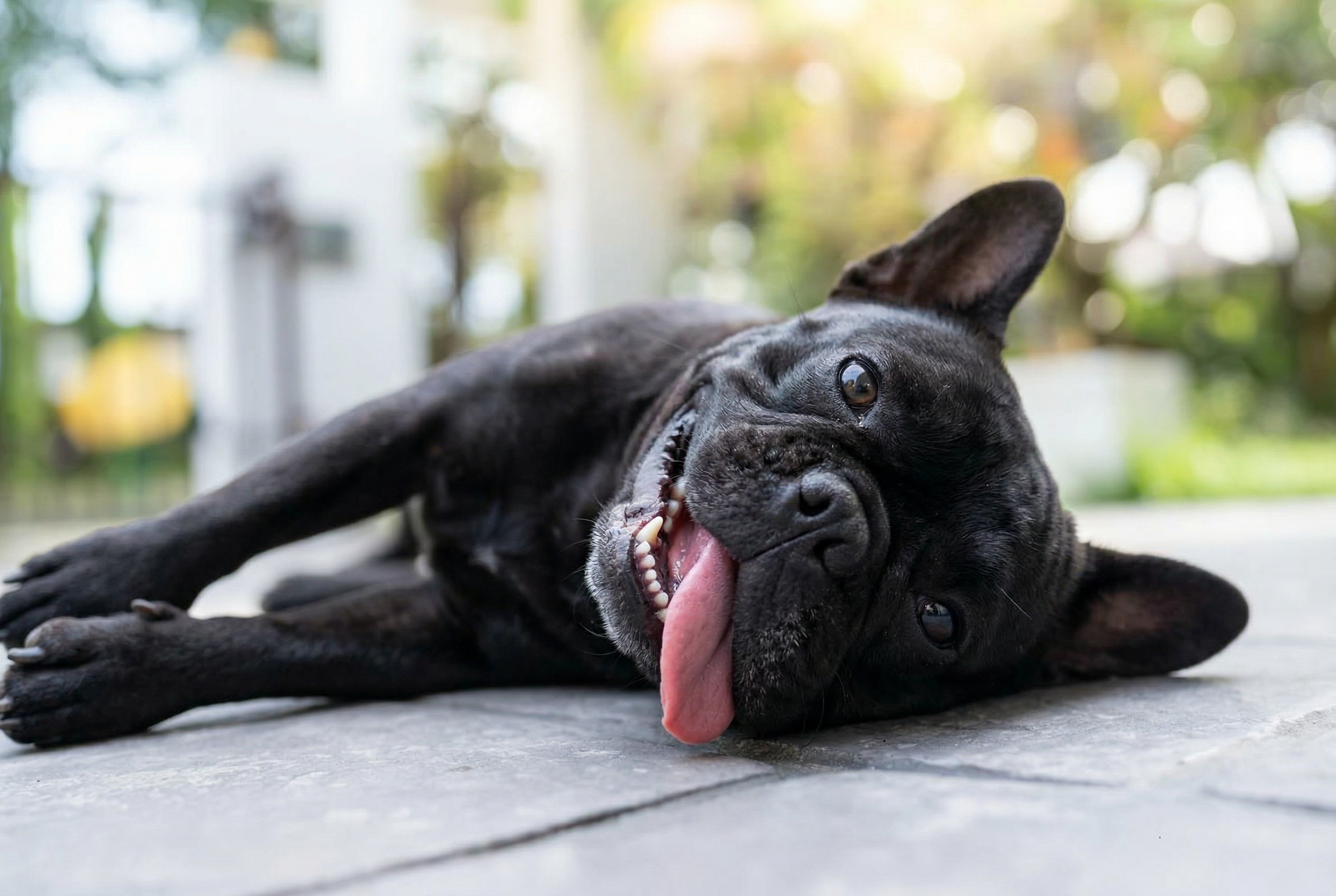
- seeking cool floors or tile
- bright red gums
- obvious discomfort
- fatigue or wobbliness in more serious cases
These are classic French Bulldog heat exhaustion symptoms. They may appear after a short walk, in a warm room, in a car, or even after excitement if the dog was already hot to begin with.
A good rule is to pay attention to the pattern, not just the fact that the dog is panting. A French Bulldog that is warm after activity and then settles quickly is different from a French Bulldog that keeps panting, seems restless, and does not recover normally.
If you want a broader breakdown of the earliest warning signs, our article on French Bulldog Overheating Signs: Early Warning Signs Before Heat Stroke goes deeper into the first clues owners usually see before the problem becomes more serious.
How to tell if a French Bulldog is overheated
A lot of owners ask the same question in different ways: how do I know whether this is normal panting or a real problem?
That question matters because French Bulldog heat exhaustion often begins as “just panting.” The difference is that the panting does not behave normally.
Normal panting is usually:
- triggered by exercise, excitement, or warmth
- steady and rhythmic
- mild to moderate
- improving after rest
- not paired with weakness or distress
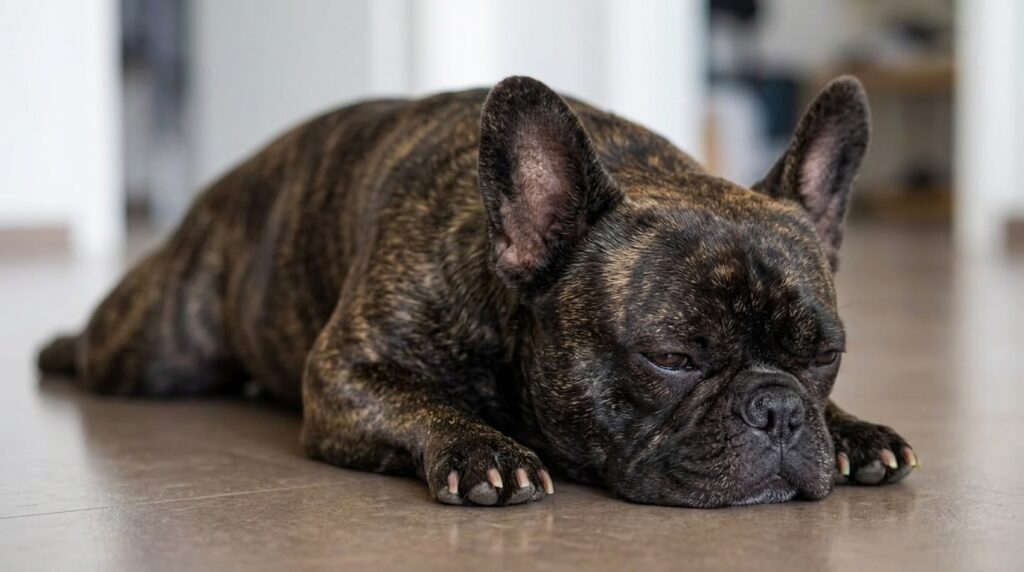
More concerning panting looks like:
- rapid, harder-to-control breathing
- panting that keeps going after activity stops
- panting in a cool room or at rest
- drooling, restlessness, or red gums
- trouble lying down or settling
- weakness or slowing down
If you are not sure where the line is, our French Bulldog Panting: Normal, Excessive, or a Warning Sign? guide walks through normal vs concerning panting in more detail.
One practical clue is recovery time. A French Bulldog that pants hard for a minute or two after excitement and then relaxes is often okay. A French Bulldog that keeps panting for a long time, looks uncomfortable, or seems worse rather than better is more concerning. If the panting is still clearly abnormal after cooling and rest, you should take it seriously.
Indoor clues matter too. If the room is warm, humid, or poorly ventilated, a French Bulldog may show French Bulldog heat exhaustion signs even without outside exercise. That is especially important in summer or in homes without strong airflow.
Heat exhaustion vs heatstroke in French Bulldogs
Heat exhaustion and heatstroke are related, but they are not the same thing.
Heat exhaustion
This is the earlier stage. The dog may show:
- heavy panting
- drooling
- fatigue
- restlessness
- slowing down
- mild weakness
- a desire to lie down or seek cool surfaces
At this stage, the dog is still struggling, but rapid cooling and rest may stop the situation from getting worse.
Heatstroke
Heatstroke is the emergency stage. It may include:
- collapse
- disorientation
- severe labored breathing
- vomiting
- pale or blue gums
- unresponsiveness
- wobbliness
- seizures in severe cases
Once a French Bulldog reaches this stage, it is no longer a “wait and see” situation.
The progression can be fast in brachycephalic dogs, especially if the dog is still being walked, left in a warm place, or not cooled promptly. That is why recognizing French Bulldog heat exhaustion early matters so much.
If the signs are already severe, our Heat Stroke in French Bulldogs article covers the emergency warning signs and what owners should do right away.
What to do if your French Bulldog has heat exhaustion
If you think your dog is showing French Bulldog heat exhaustion, the safest approach is calm, prompt action.
1) Stop activity immediately
Do not keep walking. Do not try to “finish the route.” Do not ask the dog to push through it.
2) Move the dog to a cool place
Get the dog into shade, air conditioning, or the coolest room you can access. Remove heat exposure first.
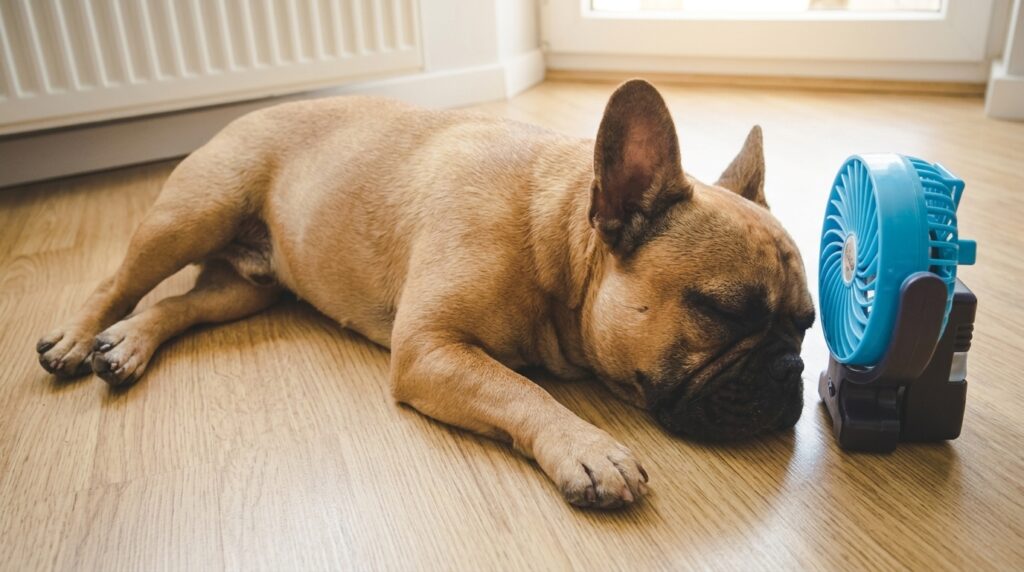
3) Use airflow
A fan or gentle moving air helps heat leave the body more effectively.
4) Offer small amounts of water
If your dog is alert and able to drink normally, offer cool water in small amounts. Do not force water.
5) Cool the body with cool, not icy, water
You can wet the belly, paws, and groin area with cool water and continue airflow with a fan. The idea is to help the dog release heat safely, not to shock the body with extreme cold.
6) Watch for improvement
A dog with mild French Bulldog heat exhaustion should start to look better after cooling. Breathing should begin to settle, the dog should look less restless, and the overall effort should decrease.
7) Call a vet if the dog is not improving quickly
If you are not seeing clear improvement within about 10–15 minutes, or if the dog worsens at any point, contact a veterinarian or emergency clinic.
If you can safely check temperature with a rectal thermometer, many clinicians aim to avoid overcooling and stop active cooling around 103°F. But do not delay care just to chase a number. The dog’s overall condition matters more.
How long does heat exhaustion last in a dog?
This is one of the most common questions owners ask, and the honest answer is that it varies.
In mild cases, a dog may look better within 15–60 minutes once cooling begins and the dog is rested. But improvement does not always mean the dog is completely back to normal. Some dogs stay tired or “off” for the rest of the day.
For a lot of dogs, especially those who were truly overheated, lingering fatigue can last 24–72 hours. In French Bulldogs, recovery may take longer because the airway limitations are still there, and the dog may remain more vulnerable during the rest of the day.
The important sign is not that the dog instantly becomes perfect. The important sign is that the dog is clearly improving.
Signs recovery is going the right way:
- panting returns closer to normal
- the dog becomes calmer
- energy gradually returns
- gums look normal again
- the dog can rest without effort
Warning signs recovery is not normal:
- no improvement after cooling
- worsening panting
- weakness that continues
- vomiting
- collapse
- confusion
- repeated episodes in a short time
If your French Bulldog is not recovering the way you would expect, treat that as a reason to call the vet even if the dog looks only mildly better.
What not to do
When a dog seems overheated, people sometimes try aggressive fixes that are not helpful.
Do not:
- force the dog to keep moving
- use ice baths as the only response
- give human medications
- ignore repeated episodes
- wait too long because the dog “seems a little better”
- leave the dog in a warm car or enclosed space
- assume recovery means the problem is solved
Heat-related illness can worsen again if the dog is returned to activity too soon or if the environment is still too warm. With French Bulldog heat exhaustion, caution is better than overconfidence.
How to prevent French Bulldog heat exhaustion
Prevention is one of the most useful things you can do for a French Bulldog because this breed has less room for error.
Keep your dog lean
Extra weight adds strain to breathing and cooling. Even small weight changes can matter in brachycephalic dogs.
Walk at safer times
Early morning and evening are usually better than midday. Keep walks short when the weather is warm.
Watch humidity as well as temperature
A day that looks only moderately warm can still be risky if the air is humid. Humidity makes panting less effective.
Avoid cars and stuffy rooms
A parked car is never safe. Poor airflow indoors can also create problems faster than owners expect.
Use a harness instead of a collar
A harness is usually more comfortable and safer for French Bulldogs than a neck collar during walks.
Build in rest breaks
Short activity bursts with breaks are usually safer than one long session.
Keep cool water and shade available
This sounds basic, but it matters. A dog that has quick access to water and a cooler environment is less likely to tip into French Bulldog heat exhaustion.
Be realistic about the breed
French Bulldogs are not built to tolerate heat the way some other breeds do. A mild day for you may still be uncomfortable for them. That does not mean your dog needs to live in a bubble, but it does mean heat exposure should be managed carefully.
When to call a veterinarian
Call your vet if your French Bulldog:
- is panting hard and not improving
- seems weak or wobbly
- has repeated episodes of overheating
- struggles after short walks
- has obvious breathing effort
- is drooling heavily in warm conditions
- seems unusually tired or restless after cooling
Seek emergency care immediately if you see:
- collapse
- blue or pale gums
- confusion or disorientation
- unresponsiveness
- vomiting with heat exposure
- severe labored breathing
- seizures
A key point: the dog does not need to be completely collapsed before the situation is urgent. If French Bulldog heat exhaustion is getting worse rather than better, do not wait.
Frequently asked questions
What to do when a French Bulldog gets overheated?
Stop activity right away, move the dog to a cool place, use airflow, offer small sips of water if appropriate, and cool the body with cool water. Call a vet if there is no quick improvement.
How can I treat my dog’s heat exhaustion at home?
Home care is supportive, not a full treatment. You can cool the dog safely, reduce heat exposure, and monitor closely. If the dog is not improving quickly, veterinary care is needed.
How long can heat exhaustion last in a dog?
Mild cases may improve within minutes to an hour, but tiredness can last longer. If the dog does not improve after cooling or seems to worsen, that is not normal.
How long do dogs take to recover from heat exhaustion?
Some recover in the same day, while others need 24–72 hours to feel normal again. French Bulldogs may take longer because they are more vulnerable to heat in the first place.
Are French Bulldogs prone to heatstroke?
Yes. Their brachycephalic anatomy makes them more vulnerable to heat-related illness than many longer-muzzled breeds.
How to cool down a French Bulldog fast?
Move the dog to a cool space, use a fan, offer small sips of water, and cool the body with cool water. Avoid ice baths and do not wait too long if the dog is not improving.
What temperature is too hot for a Frenchie?
There is no single universal cutoff. Heat, humidity, exercise, airflow, and the dog’s own airway problems all matter. Some French Bulldogs can struggle at temperatures that seem mild to people.
Conclusion
French Bulldog heat exhaustion is one of those problems that looks small at first and can become serious quickly if owners miss the early signs. Heavy panting, drooling, restlessness, slowing down, and seeking cool surfaces are all clues that your dog may be struggling to regulate temperature.
The most useful thing to remember is that French Bulldogs have less cooling reserve than many breeds. That means they can overheat indoors, outdoors, after short walks, or during humid weather even when the conditions do not seem extreme to us.
If you catch French Bulldog heat exhaustion early, move the dog to a cool place, use gentle cooling, and watch for clear improvement. If the dog is worsening, not recovering, or showing red-flag signs like collapse, abnormal gum color, or severe labored breathing, treat it as an emergency.
French Bulldogs do best with owners who are calm, observant, and realistic about the breed’s limits. That kind of care makes a real difference.
check our guide for best cooling vests for frenchie HERE.
French Bulldog Cost in 2026: Price, Vet Bills, and the True Lifetime Cost
French Bulldog Temperament: Personality, and Are They Good Family Dogs?
Best Dog Toothpaste for French Bulldogs: A Vet-Guided Guide
Do French Bulldogs Shed? Coat, Grooming, and When to Worry
Why Your French Bulldog Chews Everything (and How to Stop It)