French Bulldog breathing at night can be one of those things that sounds more dramatic than it looks. A little snoring, some noisy sleep, and an odd breathing rhythm are common in the breed. But there is a difference between a Frenchie who is simply making Frenchie noises and one who is struggling.
That difference matters.
French Bulldogs are brachycephalic, which means their faces are shortened and their airways are more crowded than in many other dogs. Because of that, French Bulldog breathing at night can become more noticeable when the dog relaxes into sleep. Some dogs snore lightly and sleep comfortably. Others breathe noisily, pant, shift around, or even seem to gasp during the night. Those signs do not always mean an emergency, but they should not be ignored either.
The goal here is not to scare anyone. It is to help you tell the difference between normal nighttime noise and the kind of breathing pattern that deserves a veterinary exam.
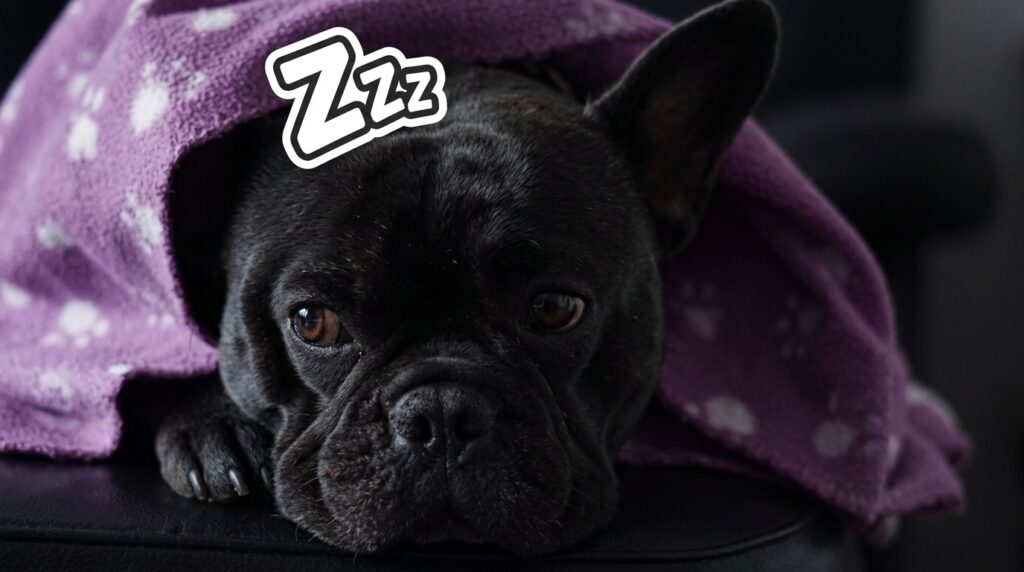
What French Bulldog Breathing at Night Can Look Like
A lot of owners notice the problem first when the house gets quiet. The TV is off, the dog is asleep, and suddenly the breathing sounds loud enough to wake you up.
That can include:
- snoring
- snorting
- noisy breathing
- brief pauses
- mouth breathing while asleep
- fast breathing
- panting
- restless sleep
- sleeping in odd positions
Some of that can be normal for a French Bulldog. Some of it can be a clue that the airway is working harder than it should.
The important thing is to look at the whole picture. Is the dog comfortable? Is the breathing effort mild or obvious? Is this new or has it always been that way? Is the dog only noisy when asleep, or does the breathing look difficult even when awake?
Those questions matter more than the noise alone.
If you want the broader background on airway anatomy, our BOAS Ultimate Guide for French Bulldogs goes deeper into the condition that often sits behind these symptoms.
Why French Bulldogs Breathe Noisily at Night
French Bulldogs are built in a way that makes nighttime breathing more likely to be noisy. Their short muzzle and compact airway leave less room for air to move freely. In sleep, the throat muscles relax, and that can make a narrow airway even narrower.
That is why French Bulldog breathing at night often sounds worse than daytime breathing.
A dog may seem fine while awake, then snore heavily or breathe with more effort once asleep. That does not automatically mean a crisis. It does mean the airway is more vulnerable during sleep.
Several things can make nighttime breathing more noticeable:
- brachycephalic facial structure
- crowded soft tissues in the throat
- overweight or obesity
- heat or poor airflow in the room
- excitement or exercise before bed
- nasal congestion or irritation
- BOAS-related airway narrowing
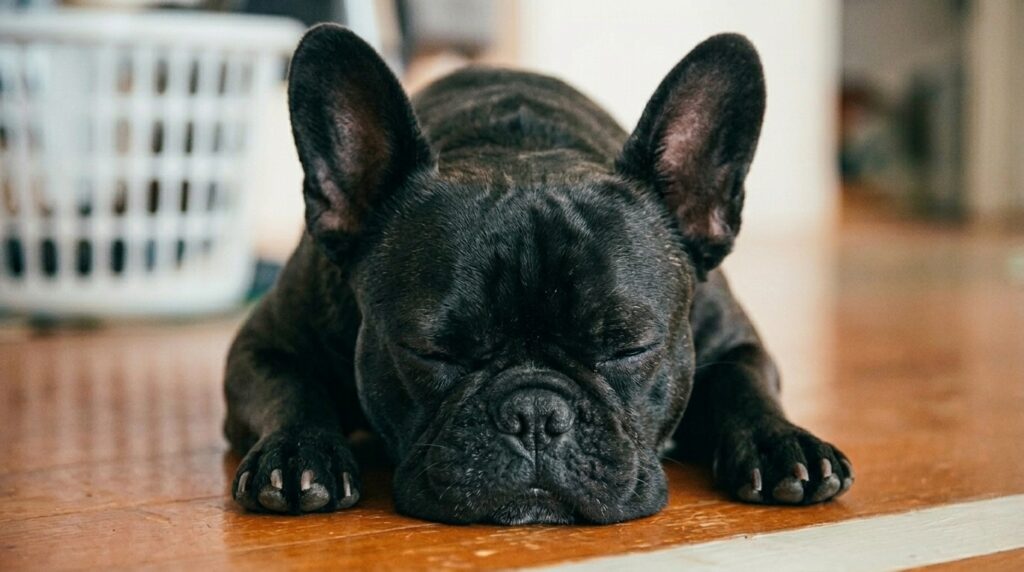
In simple terms, sleep takes away some of the muscle tone that helps keep the airway open. If the airway is already tight, that extra relaxation can create more noise or more obstruction.
Snoring vs Noisy Breathing vs Breathing Distress
Not every sound is the same. This is probably the most useful distinction for owners to learn.
Snoring
Snoring is usually a rhythmic vibration of soft tissue during sleep. A French Bulldog can snore and still be resting comfortably. Mild snoring by itself is common in the breed.
Noisy breathing
This is a broader category. It may include snorting, rattling, wheezing, or heavy breathing sounds. Some of that can still be benign, but it deserves more attention if it is frequent or getting worse.
Breathing distress
This is where the concern rises. Distress usually means the dog is visibly working to breathe, not just making noise. Signs can include:
- obvious chest or belly effort
- open-mouth breathing while asleep
- gasping
- repeated pauses
- inability to settle
- blue, gray, or pale gums
- collapse
- panic or restlessness
A snoring Frenchie is not automatically a sick Frenchie. But a French Bulldog breathing at night with visible effort is a different situation.
If your dog also has noisy breathing while awake, our French Bulldog Breathing Hard article may help you compare the patterns.
When Panting at Night Matters
Panting at night is one of the most worrying things owners notice, mostly because it feels out of place. A sleeping dog is supposed to look relaxed. So when a French Bulldog is panting in bed, it is natural to wonder what is going on.
Panting at night can happen for several reasons:
- the room is too warm
- the dog is overheating
- the dog is restless or stressed
- pain or discomfort is present
- the airway is working harder than normal
- BOAS is making breathing more effortful
A little panting after excitement or in a warm room is not the same as a dog who cannot settle and keeps breathing fast in a cool environment. That second pattern deserves more caution.
As a general rule, if French Bulldog breathing at night includes panting that is frequent, persistent, or paired with signs of effort, it is worth a veterinary discussion.
BOAS and Nighttime Breathing
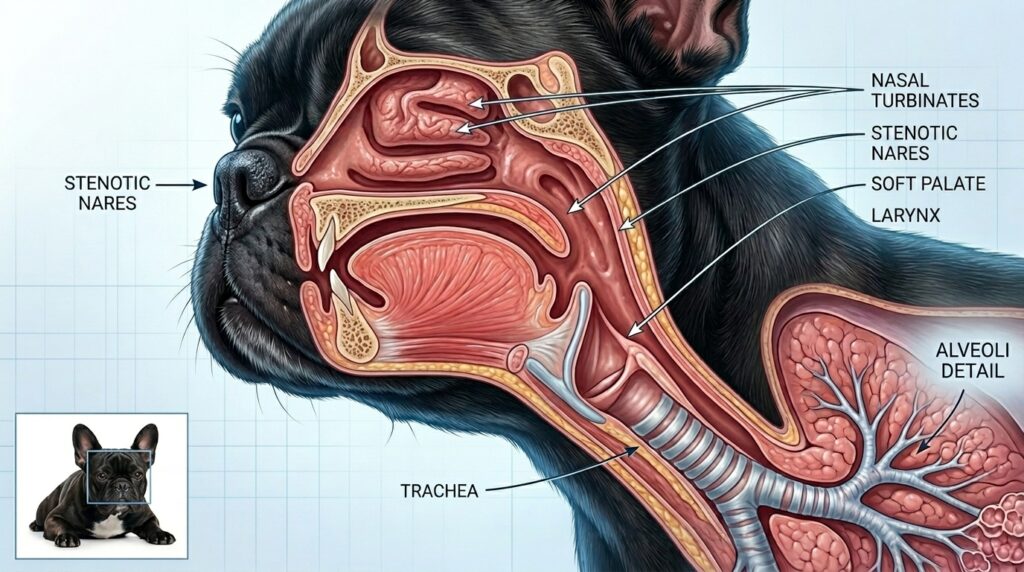
BOAS, or brachycephalic obstructive airway syndrome, is the big condition to keep in mind with this breed. It is the umbrella term for the airway problems that are common in flat-faced dogs like French Bulldogs.
BOAS can involve:
- narrowed nostrils
- elongated soft palate
- crowded throat tissues
- airway collapse or narrowing
- increased resistance to airflow
At night, those issues can show up more clearly because the muscles relax during sleep.
Researchers have found that brachycephalic dogs show more sleep-disordered breathing than non-brachycephalic dogs, including more snoring and more obstructive events. In one home-monitored study published in the Journal of Veterinary Internal Medicine, brachycephalic dogs had more obstructive respiratory events and more snoring during sleep than control dogs, and heavier body condition made things worse. You can read the study here.
That does not mean every snoring French Bulldog has severe BOAS. It does mean repeated nighttime breathing problems should be taken seriously, especially if they are getting worse over time.
Sleep Positions and the Environment Can Make a Difference
Some French Bulldogs seem to breathe better in certain positions than others. You may notice your dog trying to sleep with the neck stretched out, the head raised, or the body arranged in a way that looks a little unusual. That is often the dog trying to find a position where the airway feels easier.
Nighttime breathing can also get worse when the environment is not helping:
- a warm room
- poor airflow
- thick bedding that traps heat
- exercise too close to bedtime
- excitement before sleep
- obesity, which increases airway load
This is one reason owners sometimes notice French Bulldog breathing at night more during summer, after play, or after a very active day.
None of this replaces a vet exam if the breathing looks hard, but small comfort changes can help mild cases feel easier.
What Mild Night Breathing Can Look Like
Some nighttime noise can be normal for a French Bulldog.
A milder pattern may look like:
- light snoring
- brief snorts
- occasional noisy breaths
- the dog sleeps through it
- gums stay pink
- the dog wakes normally
- no obvious effort to breathe
- no distress when awake
If the dog otherwise seems comfortable and is not showing signs of struggle, the breathing may be more of a breed trait than a crisis.
But even when it seems mild, it is worth keeping an eye on the pattern. If French Bulldog breathing at night gets louder, more frequent, or more effortful, that change matters.
Warning Signs That Should Not Be Ignored
Nighttime breathing becomes more concerning when the dog looks like it is working harder to breathe.
Watch for:
- gasping
- long pauses in breathing
- repeated waking
- restlessness that does not settle
- open-mouth breathing during sleep
- wheezing or harsh breathing sounds
- blue, gray, or pale gums
- collapse
- obvious panic
- the dog sitting up repeatedly to breathe
- breathing that seems worse than usual in a cool room
If you see any of those signs, do not treat it as simple snoring.
A French Bulldog breathing at night with distress may need an exam, and in urgent cases it may need immediate care.

What You Can Do at Home Tonight
If your French Bulldog is breathing noisily but does not seem in distress, a few practical steps may help while you monitor the situation.
Helpful steps:
- keep the room cool
- improve airflow with a fan or open window if safe
- avoid thick, heat-trapping bedding
- keep your dog calm before bed
- avoid rough exercise late at night
- make sure your dog is not overweight
- watch for patterns and record a short video for the vet if needed
That video can be very useful. Owners often describe the sound one way, but a clip helps a vet judge whether it is snoring, panting, or something more concerning.
What not to do:
- do not ignore worsening symptoms
- do not force exercise if the dog is struggling
- do not assume every sound is “just Frenchie breathing”
- do not wait if gums change color or the dog seems panicked
- do not try random home remedies
The goal is to keep the dog comfortable, not to mask a serious problem.
French Bulldog Breathing at Night and Body Weight
Body weight matters more than many owners realize. Extra weight can make the airway work harder, especially at rest and during sleep. It does not cause every breathing issue, but it can make the problem more obvious.
In the sleep-breathing research, excess body condition was associated with worse obstructive events. That fits what many vets see in practice: when a brachycephalic dog carries extra weight, the breathing often becomes less forgiving.
If your French Bulldog is snoring loudly at night and is also overweight, that is worth addressing with your vet. Weight loss will not fix every airway issue, but it can make breathing easier in some dogs.
When to Call the Vet
You should contact your vet if:
- the nighttime breathing is new
- the snoring is getting worse
- panting happens often at night
- your dog seems tired the next day
- the dog wakes up repeatedly to breathe
- the breathing problem is one-sided or suddenly changed
- your dog also breathes hard during the day
- you notice exercise intolerance, coughing, or collapse
If the breathing includes blue gums, collapse, or severe gasping, that is an urgent situation.
Nighttime breathing problems can be easy to dismiss because the dog is asleep. But if French Bulldog breathing at night is showing a clear pattern of strain, the safest next step is a veterinary exam.
How Vets Evaluate Nighttime Breathing Problems
A vet will usually start with a history and physical exam:
- when the sounds started
- whether they happen every night or only sometimes
- whether the dog snores, pants, wheezes, or gasps
- whether the dog is overweight
- whether the dog is worse in warm rooms or after exercise
Depending on the case, the vet may assess for BOAS, evaluate the nostrils and throat, or recommend further airway work-up. Some brachycephalic dogs need a more detailed examination to understand how much obstruction is present.
The point of the exam is not to label the dog as a “noisy sleeper.” It is to figure out whether the dog is simply a French Bulldog with typical breed noise or whether there is a real airway problem that needs treatment.
Maintaining your French Bulldog’s health requires attention to their unique anatomical needs, particularly when it comes to breathing problems. If you notice your dog struggling with snoring, labored breathing, or excessive panting, it could be a sign of a more serious condition. Learn more about how to spot early signs of breathing issues and take the right steps for intervention in our guide to French Bulldog breathing problems.
What Not to Overlook
A lot of owners assume that snoring means the dog is sleeping deeply. Sometimes that is true. But in brachycephalic dogs, snoring can also be a sign that the airway is partially blocked.
That is why French Bulldog breathing at night should be watched as a pattern, not judged by one sound alone.
A few things can make it easier to overlook a problem:
- the dog has always been noisy
- the family is used to the sound
- the dog seems fine during the day
- the snoring has come on slowly
- the dog is “just being a Frenchie”
Those are understandable assumptions, but they should not replace observation. If the nighttime breathing is becoming louder, more strained, or more restless, that is a change worth noticing.
FAQ
Final Thoughts
French Bulldog breathing at night can be harmless noise, but it can also be a warning sign. The difference usually comes down to effort, pattern, and change. A dog that snores lightly, sleeps comfortably, and wakes normally is not the same as a dog that gasps, pants, sits up repeatedly, or seems unable to settle.
If your French Bulldog’s nighttime breathing is getting louder, more restless, or more strained, trust that pattern. Frenchies are known for noisy sleep, but they are also a breed where airway problems are common enough that it is better to check early than to assume everything is fine.
When in doubt, video the breathing and ask your vet. That small step can make a big difference in sorting out normal noise from a real airway problem.

French Bulldog Cost in 2026: Price, Vet Bills, and the True Lifetime Cost
French Bulldog Temperament: Personality, and Are They Good Family Dogs?

Best Dog Toothpaste for French Bulldogs: A Vet-Guided Guide
Do French Bulldogs Shed? Coat, Grooming, and When to Worry

Why Your French Bulldog Chews Everything (and How to Stop It)