Written by Jinna CAMERON, veterinary medical student and dog health researcher. Reviewed for factual accuracy against trusted veterinary sources by DVM Carla DONTESK
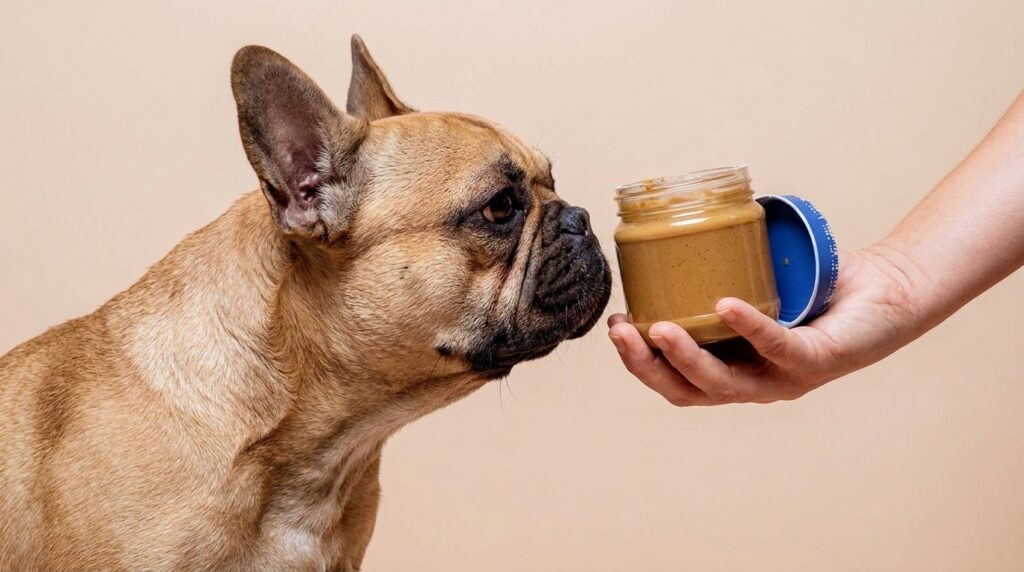
Yes, French Bulldogs can eat peanut butter, with one condition that genuinely matters: it has to be free of xylitol. Plain, xylitol-free peanut butter is a safe, useful treat for this breed in moderation, the kind of thing that makes hiding a pill easy and turns a lick mat into ten minutes of happy quiet. But some peanut butters now contain a sweetener that can kill a dog, so the single most important habit you can build is reading the label before you share. Get that right, and peanut butter is one of the better treats you can offer a Frenchie.
I run this site after losing my own French Bulldog, Pearly, so I don’t hand out cheerful “sure, dogs love it” advice without the caveats that keep dogs safe. This is educational, not a substitute for your vet, but the guidance here is straightforward and worth knowing before you reach for the jar.
The One Thing to Check First: Xylitol
Before anything else, this is the warning that makes the difference between a healthy treat and a tragedy. Xylitol is a sugar substitute that’s perfectly safe for people but highly toxic to dogs, and in recent years some manufacturers have started adding it to peanut butter, of all things, the very food owners use to give medication.
Here’s why it’s so dangerous. In a dog, xylitol triggers a rapid, massive release of insulin, which crashes blood sugar to dangerous levels within about ten to sixty minutes, and at higher doses it can cause liver failure. The toxic amount is tiny, even smaller than the amount of chocolate it would take to cause harm, so a small dog like a Frenchie is at serious risk from very little. The U.S. Food and Drug Administration has warned owners directly to check nut butter labels before using them for pills, which tells you how real this risk is.
The trap is that xylitol hides under other names. On a label it may appear as “birch sugar,” “wood sugar,” “birch bark extract,” or simply as “sugar alcohol,” and words like “sugar-free” or “natural sweetener” on the front of the jar are a red flag worth heeding. Some smaller specialty and high-protein peanut butter brands have used it, so the rule isn’t to memorize a brand list, it’s to read the ingredients every single time, even on a jar you’ve bought before, because recipes change. Xylitol belongs on the same mental list as the other toxic foods French Bulldogs can’t eat, and if your dog ever eats a xylitol-containing product, treat it as an emergency and call your vet or a poison line straight away.
The reassuring flip side: standard grocery-store peanut butters are typically xylitol-free. If the jar lists essentially just peanuts, you’ve cleared the one hurdle that really counts.
Is Peanut Butter Good for French Bulldogs?
Once you’ve ruled out xylitol, peanut butter has genuine things going for it. It’s a decent source of protein, healthy fats, niacin, and vitamins B and E, so in small amounts it’s a treat with a little nutritional value rather than empty calories. It won’t replace a balanced diet, but as an occasional extra it’s a reasonable one.
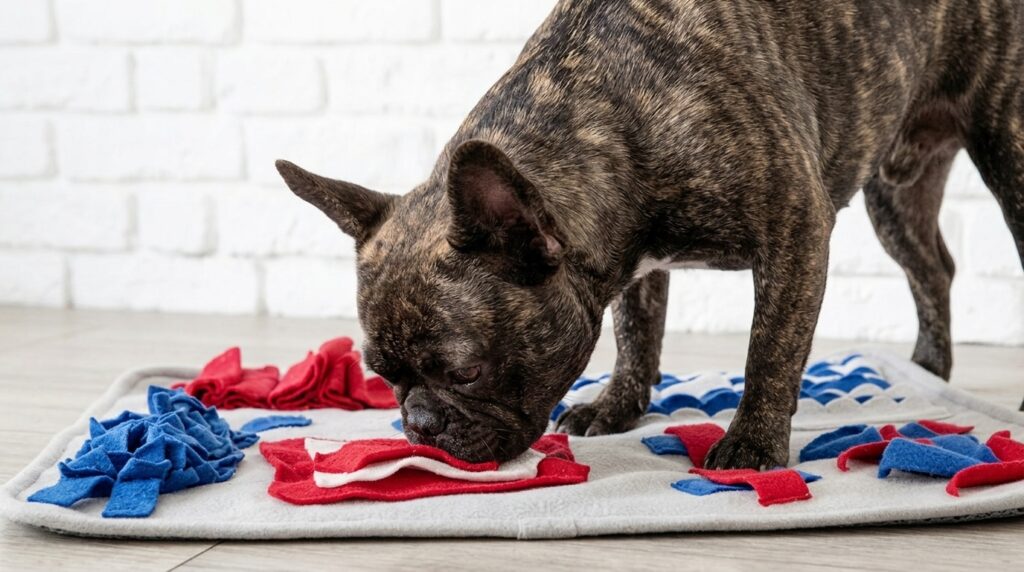
Where it really earns its place, though, is usefulness. Peanut butter is the classic way to hide a pill your Frenchie would otherwise spit across the room, and it’s brilliant for enrichment: smeared on a lick mat or stuffed into a rubber toy, it turns a few tablespoons into a calm, absorbing activity that tires a dog out mentally. For a breed that can’t take heavy exercise, that kind of low-effort mental stimulation is genuinely valuable. It’s also a handy, high-value reward for training, the sort of treat a dog will work hard for.
How Much Peanut Butter Can a Frenchie Have?
This is where the answer gets Frenchie-specific, because peanut butter is calorie- and fat-dense, and this breed has less room for error than most. A couple of tablespoons carries around 190 calories and 16 grams of fat, which is a lot for a small dog.
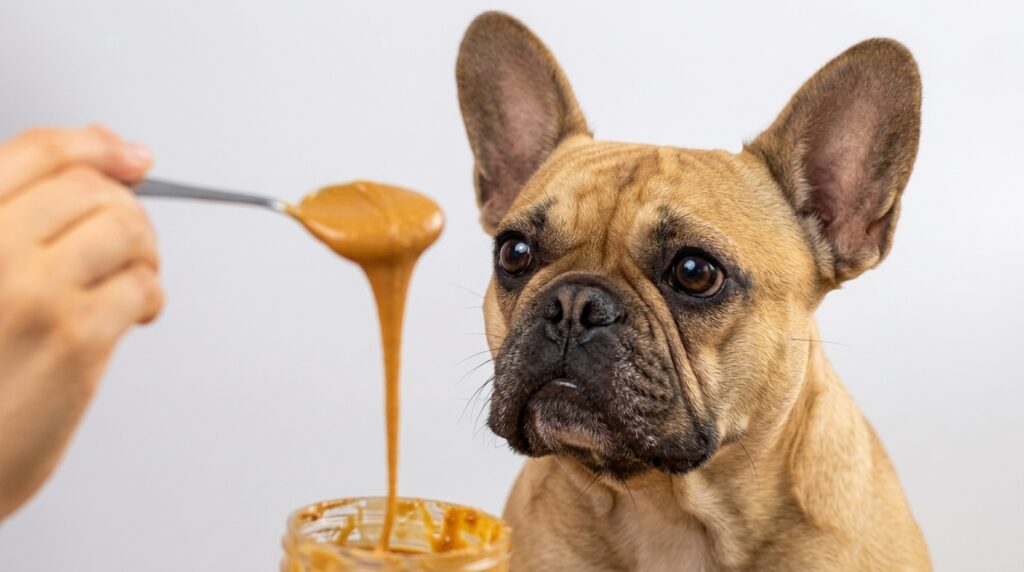
The sensible guideline is the one vets use for all treats: keep them to no more than about ten percent of your dog’s daily calories. For a French Bulldog, that translates to small amounts, think a fraction of a teaspoon up to about a teaspoon at a time, not spoonfuls. The fat is the real limiting factor, and it matters more for this breed than for many others, because French Bulldogs are prone to both pancreatitis and weight gain. Too much fat can trigger a painful pancreas flare, and the extra calories add up quickly on a compact frame. Keeping your dog lean is one of the most protective things you can do for a Frenchie, as our guide to the overweight French Bulldog explains, so treat peanut butter as an occasional pleasure rather than a daily habit. If your dog isn’t used to it, introduce a little at a time, since a sudden hit of fat can cause loose stools.
What Kind of Peanut Butter Is Best?
Beyond the non-negotiable of being xylitol-free, the best peanut butter for a Frenchie is the simplest one. Look for a “natural” peanut butter whose oil separates and needs stirring, because that separation is actually a good sign, it means no hydrogenated oils were added to hold the texture together. Ideally the ingredient list reads “peanuts,” maybe with a little salt, and nothing else.
What to avoid is added sugar, hydrogenated or palm oils, extra salt, and of course any sweetener. A peanut butter can be xylitol-free and still not ideal if it’s loaded with sugar and trans fats, which is worth knowing, since some “natural”-labeled spreads still sneak those in. Smooth versus crunchy makes little difference for most dogs, though some owners prefer smooth for a small breed. If you’d rather skip the label-reading gamble altogether, a dog-specific peanut butter made without xylitol, sugar, or salt takes the guesswork out and is formulated for exactly this use.
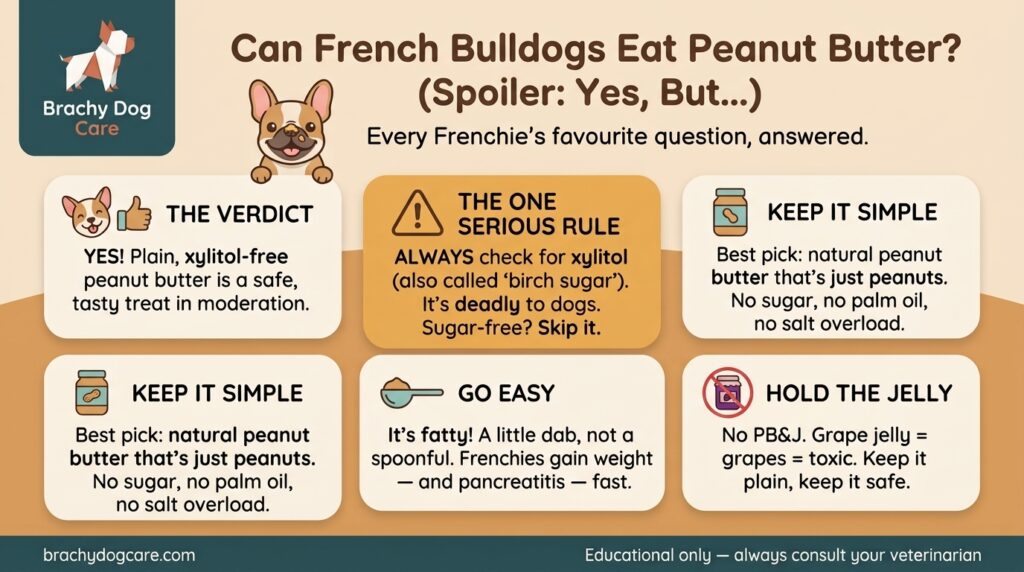
One more caution that ties back to your kitchen: hold the jelly. A peanut-butter-and-jelly treat is a bad idea, because jelly is loaded with sugar, some jellies contain xylitol themselves, and grape jelly is made from grapes, which are toxic to dogs. If you’ve read our guide on why French Bulldogs can’t eat grapes, you’ll know that’s not a risk worth taking. Keep it to plain peanut butter and skip the jelly entirely.
Fun, Safe Ways to Serve It
Part of what makes peanut butter such a good treat is how many ways you can use it. Smear a thin layer on a lick mat to slow your dog down and create a soothing few minutes, especially useful during nail trims, baths, or thunderstorms. Stuff a small amount into a rubber toy and freeze it for a longer-lasting puzzle on a hot day. Use a dab to disguise a pill, or as a training reward for something you really want your Frenchie to remember.
The only rule that runs through all of these is portion control. Because it’s so easy to keep adding “just a little more,” measure out your dog’s allowance for the day and work within it, rather than free-pouring from the jar. A thin smear goes a surprisingly long way with a dog who’s savoring every lick.

When to Avoid or Limit Peanut Butter
For most healthy Frenchies, xylitol-free peanut butter in small amounts is completely fine. But some dogs should have less, or none. A dog who is overweight, or who has a history of pancreatitis, should generally skip fatty treats like this, since the risk isn’t worth it. Dogs with known food allergies or sensitivities need it introduced cautiously, if at all, and any dog that reacts with persistent diarrhea may simply not tolerate the fat well. Puppies can have a tiny taste once they’re on solid food, but their portions should be even smaller, and moderation matters more while they’re growing.
There’s also a small, honest caveat worth a mention: peanuts can occasionally carry aflatoxins, natural mold toxins that are regulated but never quite zero. This isn’t a reason to avoid peanut butter, it’s just a reason to buy from reputable brands that test for it, store the jar sealed and cool, and not let peanut butter become a daily staple. As an occasional treat, it’s a non-issue; as a large part of the diet, it wouldn’t be ideal.
Frequently Asked Questions
The Bottom Line
Peanut butter is one of the genuinely good treats you can share with a French Bulldog, useful, enjoyable, and even mildly nutritious, provided you respect two simple rules: it must be xylitol-free, and it should be a small, occasional treat rather than a daily indulgence. Read the label every time, keep the portions small, skip the jelly, and you’ve got a safe reward your Frenchie will adore.
Having lost a dog myself, I’ve learned to take even the small, ordinary things seriously, and label-reading is one of those small habits that quietly prevents disasters. Check the jar, keep it plain, and let peanut butter be exactly what it should be for your Frenchie: a simple, happy treat.
This article is educational and is not a substitute for veterinary care. If you suspect your dog has eaten anything containing xylitol, contact your veterinarian or an animal poison control center immediately.
French Bulldog Cost in 2026: Price, Vet Bills, and the True Lifetime Cost
French Bulldog Temperament: Personality, and Are They Good Family Dogs?
Best Dog Toothpaste for French Bulldogs: A Vet-Guided Guide
Do French Bulldogs Shed? Coat, Grooming, and When to Worry
Why Your French Bulldog Chews Everything (and How to Stop It)