Written by Jinna CAMERON, veterinary medical student and dog health researcher. Reviewed for factual accuracy against trusted veterinary sources by DVM ,Carla DONTESK
If your an overweight French Bulldog, you’ve probably noticed the signs before you were ready to admit them. The waist that used to taper has disappeared. The ribs you could once feel easily now need a firm press to locate. Your vet mentioned it at the last checkup, or you’ve just started comparing your dog to others and something feels off.
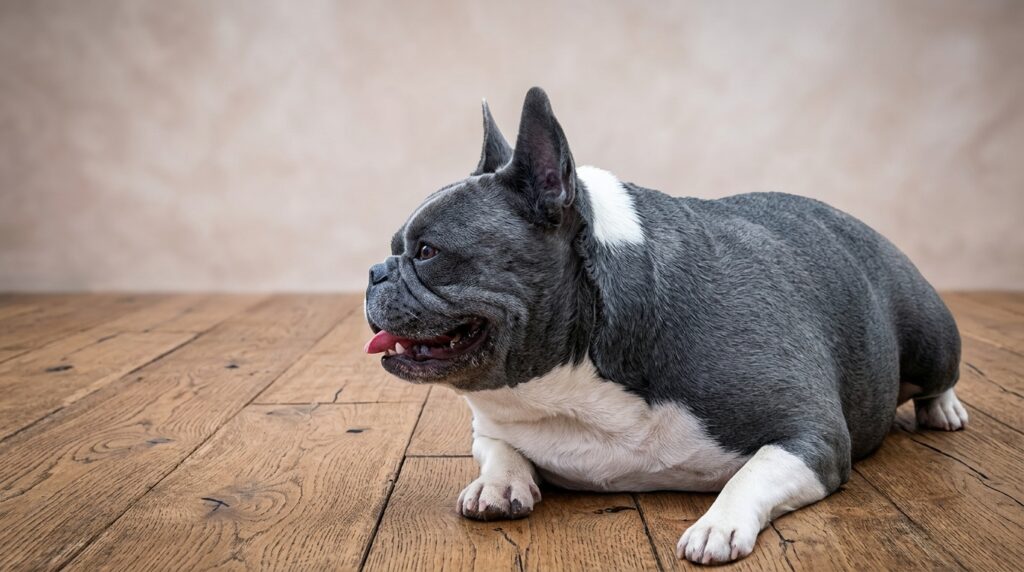
You’re not a bad owner. French Bulldogs gain weight easily, for reasons that have everything to do with how they’re built — and very little to do with how much you care. But extra weight in a brachycephalic breed isn’t just a cosmetic issue. It directly worsens breathing, raises heat risk, stresses already vulnerable joints, and makes every other health problem harder to manage.
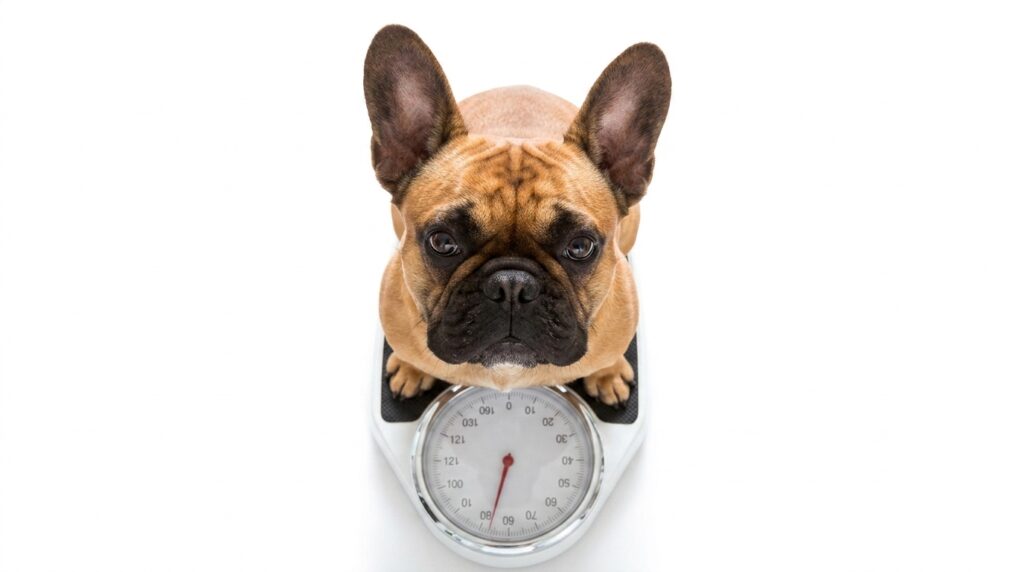
This guide covers how to tell if your Frenchie is genuinely overweight, what a healthy weight actually looks like, why fat french bulldog problems run deeper in this breed than most people realise, and exactly how to help them lose it safely.
How to Tell If Your French Bulldog Is Overweight
The scale is only part of the picture. Two Frenchies can weigh the same and have completely different body compositions — one lean and muscular, one carrying a layer of fat that quietly stresses every system in their body. What matters more than any number is body condition.
The Rib Test, Waist Check, and Tummy Tuck
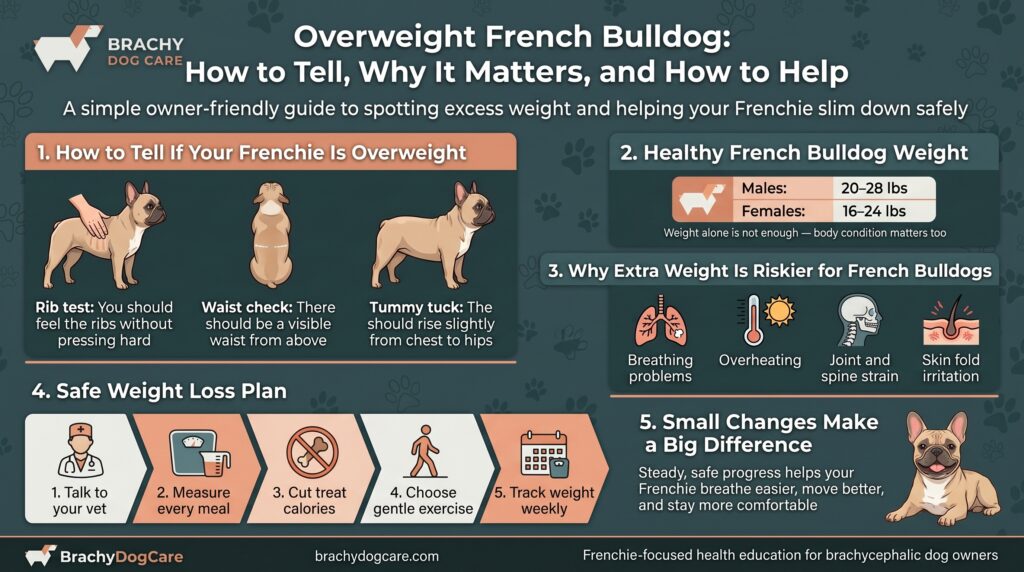
Vets use a three-point physical check that any owner can do at home in under a minute:
- Rib test: Place both hands on your Frenchie’s ribcage and run your fingers along the ribs gently, without pressing hard. You should be able to feel each individual rib clearly. If you have to push firmly to locate them — or can’t feel them at all beneath a soft, spongy layer — that’s excess fat coverage.
- Waist check (top-down view): Stand directly above your dog and look down. Behind the ribcage, there should be a visible narrowing before the hips — a clear waist. If your Frenchie looks uniformly barrel-shaped from above with no taper, that’s a concern.
- Tummy tuck (side view): Crouch down and view your dog from the side. The belly should rise slightly from the chest toward the hindquarters. A belly that hangs flat or drops downward suggests extra weight.
For French Bulldogs specifically, the rib test is the most reliable of the three. Their naturally stocky, barrel-chested build makes visual assessment harder than with other breeds. You might look at your Frenchie and think they seem fine — but if you can’t feel those ribs without effort, the visual is misleading you.
Three-second body condition check
✅ Can you feel ribs easily without pressing? → Healthy sign
✅ Is there a visible waist from above? → Healthy sign
✅ Does the belly tuck up from the side? → Healthy sign
❌ Two or more of these fail → Your Frenchie is likely carrying excess weight
Body Condition Score: What Vets Actually Use
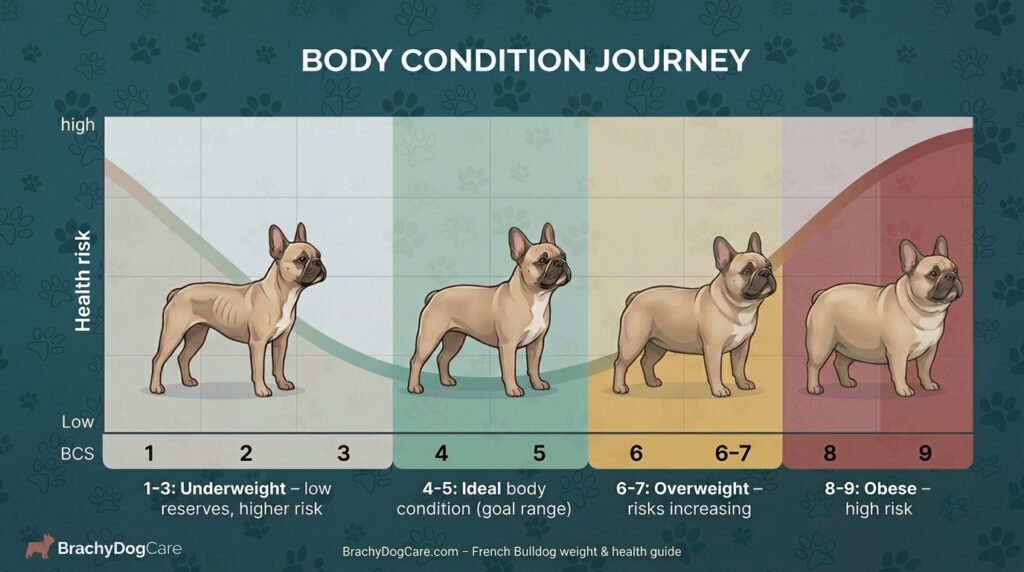
The standard veterinary assessment tool is the nine-point body condition score (BCS), developed by Purina and endorsed by the World Small Animal Veterinary Association (WSAVA). The ideal range for a healthy dog is 4 to 5 out of 9.
| BCS Score | What It Means |
|---|---|
| 1–3 | Underweight to very thin |
| 4–5 | Ideal body condition |
| 6–7 | Overweight |
| 8–9 | Obese to morbidly obese |
If your Frenchie sits at a 6 or above based on the three checks above, they’re carrying more than they should. A score of 8 or 9 means it’s time to involve your vet — not just swap to a lighter kibble and hope for the best.
Overweight vs. Obese: What’s the Difference?
Overweight means carrying more fat than is healthy — uncomfortable and risky if left unchecked, but manageable with the right changes at home. Obese means the fat burden has reached a level where it’s actively damaging health: joints are struggling, breathing is more laboured, and the risk of secondary conditions has climbed significantly.
The line between the two isn’t always obvious without a vet assessment. But if your fat french bulldog tires after a few minutes of gentle walking, or you notice louder or more laboured breathing at rest, treat it as urgent rather than something to monitor.
What Should a French Bulldog Weigh?
The American Kennel Club breed standard states that French Bulldogs should not exceed 28 lbs (12.7 kg). In practice, healthy adult Frenchies typically fall within these ranges:
| Sex | Healthy Weight Range |
|---|---|
| Male | 20–28 lbs (9–12.7 kg) |
| Female | 16–24 lbs (7.3–10.9 kg) |
These are guidelines, not hard rules. A larger-framed male might sit comfortably at the top of that range. A finer-framed female might be perfectly healthy at 15 lbs. The number tells part of the story — never the whole one.
Why the Number Isn’t Everything
A 30-lb Frenchie with visible muscle definition, a clear waist, and easily palpable ribs may actually be healthier than a 25-lb Frenchie who fails all three body condition checks. Weight doesn’t tell you where that mass is coming from. Muscle is dense and metabolically active. Fat is soft, insulating, and puts a quiet, constant strain on every system in the body.
This is why body condition score is the more important measure — and why “within range” on the scale isn’t always reassuring if the physical checks don’t back it up.
French Bulldog Weight Chart by Age
Frenchies grow quickly in their first year and typically reach adult weight between 10 and 14 months. Use the chart below as a reference, not a target. Puppies grow at different rates depending on sex, bloodlines, and diet.
| Age | Typical Weight Range |
|---|---|
| 8 weeks | 5–7 lbs (2.3–3.2 kg) |
| 3 months | 7–12 lbs (3.2–5.4 kg) |
| 6 months | 13–20 lbs (5.9–9.1 kg) |
| 9 months | 17–25 lbs (7.7–11.3 kg) |
| 12 months | 18–28 lbs (8.2–12.7 kg) |
| Adult (12+ months) | 16–28 lbs depending on sex and frame |
One important note on puppies: resist the instinct to “fill them out” during the growth phase. Overfeeding a Frenchie puppy doesn’t produce a bigger, healthier dog — it produces a fat french bulldog in the making, with joints being asked to carry more than they were designed for. If you’re unsure whether your puppy is on track, a quick vet check is always the right call.
Why Extra Weight Is Especially Dangerous for French Bulldogs
For most breeds, being a bit overweight is a health concern worth addressing. For French Bulldogs, it’s a significantly more serious problem — because of everything their anatomy is already dealing with.
Weight and Breathing Problems (BOAS)
French Bulldogs have brachycephalic obstructive airway syndrome to varying degrees. Their compressed airways, narrow nostrils, and elongated soft palates already limit how efficiently they breathe. Fat deposits around the chest, neck, and throat narrow those airways further and increase the respiratory effort required for everything — exercise, digestion, sleep, and even rest.
If your Frenchie is already a loud breather, snores heavily, or shows signs of breathing difficulty, excess weight is almost certainly making it worse. You can read exactly what to watch for — and when it becomes a structural problem — in the French Bulldog breathing problems and BOAS guide.
Overheating and Heat Intolerance
A Frenchie’s airway is also their primary cooling mechanism. They pant to regulate body temperature. When an overweight Frenchie pants, they’re fighting harder to breathe and harder to cool down simultaneously. Extra fat acts as insulation, trapping heat further. The result is a substantially elevated risk of heat exhaustion — especially in warm weather, after meals, or during any activity.
Getting weight under control is one of the most impactful things you can do for a Frenchie who struggles in the heat. The French Bulldog overheating signs guide covers the early warning signals to catch before heat exhaustion sets in.
Joint Stress and Spinal Issues
French Bulldogs are genetically predisposed to intervertebral disc disease (IVDD) and patellar luxation. Excess body weight accelerates cartilage degeneration, increases pressure on already-vulnerable spinal discs, and makes luxating kneecaps more symptomatic. Every extra pound is additional daily load on a spine and a set of joints that weren’t built to carry it.
Excess weight doesn’t just strain the hips and spine, it’s a recognised contributor to knee problems too. Obesity is a known factor in luxating patella, one of the most common orthopaedic conditions in small breeds, and it worsens the condition once it’s there. Our guide to French Bulldog knee problems explains how the condition develops and why keeping your dog lean is both treatment and prevention.
Skin Fold Problems
More fat means deeper, more compressed skin folds. That’s a direct path to more trapped moisture, more friction, and more opportunity for bacterial and yeast infections to develop in the creases. If your Frenchie already deals with fold irritation, weight management is part of the treatment — not just the cleaning routine. The French Bulldog skin fold dermatitis guide covers the skin side in detail.
Anaesthetic Risk
This one matters more for Frenchies than most breeds, because they’re frequently put under general anaesthesia — for BOAS surgery, dental procedures, C-sections, and other interventions. Obesity measurably increases anaesthetic complications and recovery time. If a procedure is on the horizon, bringing your dog’s weight down beforehand can genuinely reduce the risk.
Why French Bulldogs Gain Weight So Easily
Understanding how it happened removes the guilt — and makes the solution clearer.
Low exercise tolerance is the biggest structural factor. Frenchies cannot exercise as hard or as long as other breeds. Their BOAS limits aerobic capacity, and heat intolerance narrows the window further. A Labrador can burn substantial calories on an hour-long run. A Frenchie does 20 minutes of gentle walking on a cool morning and is done. That fundamentally changes the caloric equation, and it’s nobody’s fault.
Treat creep is the second biggest factor — and the one most owners underestimate. French Bulldogs are extraordinarily expressive when they want food. They make the eyes. They follow. They nudge. Most owners give in regularly, and each treat counts. A small dog biscuit can represent 50–80 calories. If your Frenchie’s daily budget is around 400 calories and they’re getting five or six treats, you’ve used up half the budget before a meal has been served.
Post-neuter metabolic changes are real and rarely explained clearly. Neutering and spaying can reduce a dog’s resting metabolic rate by roughly 20–30%. If food intake wasn’t adjusted after the procedure, gradual weight gain was almost inevitable — and it often goes unnoticed for months because it happens slowly.
Free-feeding removes portion control entirely. Frenchies are not reliable self-regulators when food is available all day. A full bowl sitting out invites grazing, and grazing adds up.
Even healthy treats can quietly pile on calories, and sweet fruits are a common culprit. Bananas are a good example, wholesome, but sugary enough that portion size genuinely matters for a weight-prone breed. Our guide on how much banana is safe for French Bulldogs breaks down sensible amounts and why moderation counts double for this breed.
How to Help Your French Bulldog Lose Weight Safely
Safe weight loss in dogs is typically defined as 1–2% of body weight per week, per the American Animal Hospital Association (AAHA) Weight Management Guidelines. For a 30-lb Frenchie, that’s roughly 0.3–0.6 lbs per week. Slower is fine. Faster is not. Rapid weight loss causes muscle loss alongside fat loss, which is the opposite of what you want.
Step 1: Talk to Your Vet First
Before changing anything, rule out a medical cause. Hypothyroidism and Cushing’s disease can both drive weight gain even with a controlled diet. If your Frenchie is eating a measured, consistent diet and still gaining weight, or if their BCS is 8 or above, a vet visit is the starting point — not an optional step you return to if the diet doesn’t work.
Step 2: Calculate the Right Calories
Your vet can calculate your dog’s resting energy requirement and the appropriate daily caloric intake for gradual weight loss. The general principle is to feed the calories needed for the target weight, not the current weight — typically around 80% of normal maintenance calories. Most adult French Bulldogs need roughly 25–30 calories per pound of ideal body weight per day, but individual needs vary enough that you shouldn’t treat this as a firm number without vet input.
Step 3: Audit Treats and Extras
Before cutting meal portions, work out what’s coming in outside of meals. Treats should make up no more than 10% of daily calories. Count everything — dental chews, training rewards, scraps from the table, toppers on kibble. This step alone often reveals where most of the excess is actually coming from.
Step 4: Measure Every Meal
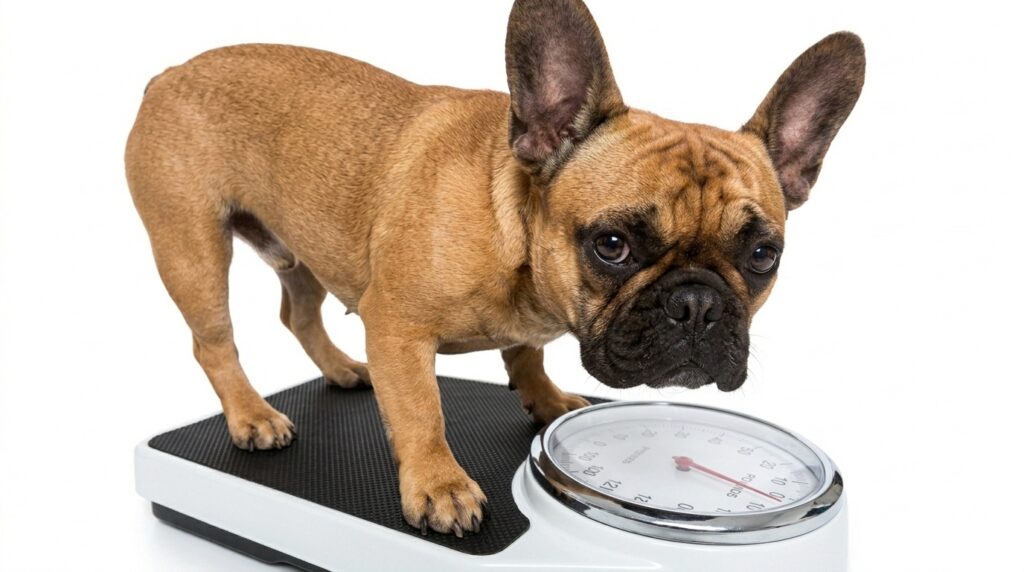
Stop estimating portions. Use a kitchen scale or a proper measuring cup every single time. “About a cup” varies by 30–40% depending on how you scoop. Consistent, weighed portions remove the margin for overfeeding that sneaks in gradually over months and years.
Treats are one of the sneakiest sources of extra calories, and peanut butter is a classic culprit, delicious, but fatty enough to add up fast on a compact frame. If it’s part of your Frenchie’s routine, our guide on how much peanut butter is safe for French Bulldogs explains sensible portions and why moderation matters extra for this pancreatitis-prone breed.
Step 5: Add Safe, Gentle Exercise
Increase activity gradually and always with breathing in mind. Short walks twice a day on cool pavement are far more sustainable than one long walk that overheats your dog. Indoor play works well for Frenchies — sniff games, light fetch in a cool room, gentle tug. If your dog starts mouth-breathing heavily, slows dramatically, or makes louder airway noises than usual, stop and rest. The French Bulldog exercise intolerance guide covers the specific warning signs in detail.
Never exercise an overweight Frenchie in warm weather or in the middle of the day. Early morning is the safest window.
Step 6: Track Progress Weekly
Weigh your Frenchie at the same time each week — at the vet, or on a consistent home scale. No change after three to four weeks means reducing calories slightly or adding gentle activity. Loss faster than 2% per week means increasing food slightly. The goal is slow, steady, and consistent.
Extra weight doesn’t just affect breathing and joints—it can also slow gut motility and make gas and bloating more noticeable. If your Frenchie is both on the heavier side and unusually gassy, you may find it helpful to read this guide on French Bulldog gas, everyday causes, and when flatulence is a warning sign alongside your weight‑loss plan.
Feeding an Overweight French Bulldog
Cutting portions of a standard adult food is a reasonable first step, but it has limits. At very reduced portions, you risk missing out on essential nutrients even while restricting calories. A purpose-formulated weight management food solves this by providing lower calorie density while maintaining complete, balanced nutrition — your Frenchie gets less energy but everything they need.
What to Look for in a Weight Management Food
High protein, moderate fat: Protein preserves muscle during weight loss. You want your Frenchie losing fat, not muscle.
Higher fibre content: Fibre increases satiety, so your dog feels fuller from a smaller portion.
No high-glycaemic fillers: Excessive refined carbohydrates contribute to fat storage and energy spikes that increase food-seeking behaviour.
Labelled complete and balanced: Essential if you’re feeding smaller quantities than the bag suggests.
If your Frenchie also has a sensitive stomach or food allergies, weight management gets more complex. The best food for French Bulldogs with sensitive stomachs and best dog food for French Bulldogs with allergies guides cover how to navigate both issues at once.
Low-Calorie Treat Swaps That Actually Work
Cutting treats doesn’t mean cutting joy. These swaps work well for most Frenchies and are genuinely low-calorie:
- Baby carrots: Crunchy, satisfying, most Frenchies love them
- Plain cooked green beans: Very low calorie, good fibre, easy to prepare
- Cucumber slices: Light, hydrating, palatable
- Blueberries: Nutritious but slightly higher in natural sugar — use sparingly
- Kibble from their daily measured ration used as training treats: Counts against their total, adds zero extra calories, and keeps training on schedule
Introduce any new food slowly if your Frenchie has a sensitive stomach. Start with small amounts and watch for loose stools or gas before making it a regular swap.
Extra weight, hard landings off furniture, and too many stairs all increase the load on a French Bulldog’s spine, which is already at high risk of IVDD. If your dog is a bit too round, slowing down on walks, or suddenly reluctant to jump, it’s worth understanding exactly what IVDD looks like in this breed and when you need to act fast. Our dedicated French Bulldog IVDD guide walks you through subtle early warning signs, true emergencies like dragging back legs or sudden paralysis, and the main treatment paths (conservative vs surgery), plus long‑term lifestyle support to protect the spine. You’ll find it here: French Bulldog IVDD: Early Signs,
Slow Feeders and Portion Tools
A slow feeder bowl is one of the most practical, low-cost changes you can make for an overweight Frenchie. It forces your dog to eat more slowly, which extends the sensation of fullness and reduces the amount of air swallowed during meals — a genuine bonus for brachycephalic dogs who already gulp and inhale more air than other breeds. Pair it with a kitchen scale for portion measurement and you’ve addressed two of the most common causes of Frenchie weight gain in one simple change. Look for a model specifically sized for flat-faced breeds so the maze pattern doesn’t push food into corners their short muzzle can’t reach.
When to See Your Vet About Weight
Most Frenchie weight issues respond well to the steps above. But some situations need more than a diet adjustment.
Red Flags That Suggest a Medical Cause
- Weight gain is sudden — over a few weeks, not months
- Your dog is eating a measured, controlled diet and still gaining
- New symptoms alongside the weight gain: hair loss, lethargy, increased thirst, changes in skin or coat
- Breathing has noticeably worsened in parallel with the weight increase
- BCS is 8 or 9 — obesity at this level always requires veterinary supervision, not home management
Hypothyroidism and Cushing’s disease are the two most common medical causes of unexplained weight gain in dogs. Both are diagnosable with blood tests and both are treatable – but they require a vet, not a new bag of kibble.
When a Prescription Diet Makes Sense
If your Frenchie is significantly overweight, has a complex health history, or has not responded to a well-managed home plan after eight or more weeks, ask your vet about prescription weight-management diets. Options like Hill’s Prescription Diet Metabolic and Royal Canin Satiety Support are clinically formulated for supervised weight loss and can be more effective than over-the-counter alternatives for dogs that need a tighter caloric reduction than standard food allows.
Frequently Asked Questions
Final Thoughts
Helping an overweight French Bulldog get back to a healthy weight isn’t about chasing a perfect number on the scale; it’s about giving a brachycephalic dog a fairer chance at comfortable breathing, safer summers, and joints that last longer. Small, consistent changes — measured meals, fewer empty-calorie treats, a better-quality diet, and gentle, well-timed exercise — do far more than any crash plan ever could. If you stay honest about your Frenchie’s body condition, work with your vet when things don’t add up, and treat this as a long-term lifestyle shift rather than a short-term fix, you’ll look back in a few months and realise you didn’t just “slim down a fat French Bulldog” — you made their whole life easier.

French Bulldog Cost in 2026: Price, Vet Bills, and the True Lifetime Cost
French Bulldog Temperament: Personality, and Are They Good Family Dogs?

Best Dog Toothpaste for French Bulldogs: A Vet-Guided Guide

Do French Bulldogs Shed? Coat, Grooming, and When to Worry

Why Your French Bulldog Chews Everything (and How to Stop It)