Written by Jinna CAMERON, veterinary medical student and dog health researcher. Reviewed for factual accuracy against trusted veterinary sources by DVM Carla DONTESK
If you’ve ever looked at a French Bulldog’s short, sleek coat and assumed it wouldn’t leave hair all over your sofa, you’ve probably since discovered otherwise. Yes, French Bulldogs shed, and the amount of French Bulldog shedding surprises a lot of new owners precisely because the hair is so short. This guide covers exactly how much they shed, why they do it, the grooming routine that keeps it under control, and the signs that mean it’s time to see a vet rather than reach for the brush.
I run this site after losing my own French Bulldog, Pearly, and I like to give people the honest, practical picture rather than the marketing one. A Frenchie is not a low-shedding, hypoallergenic dog, but they’re also far from the worst offenders, and with the right routine the hair around your home stays very manageable. I’m a veterinary medical student and dog-health researcher, not a vet, so treat this as informed guidance and see your own vet if something about your dog’s coat seems off.
Do French Bulldogs Shed a Lot?
The honest answer is that French Bulldogs are moderate shedders. They shed less than heavy, double-coated breeds like Huskies or German Shepherds, and considerably more than genuinely low-shedding dogs like Poodles, landing somewhere comfortably in the middle, roughly in line with other small single-coated breeds.
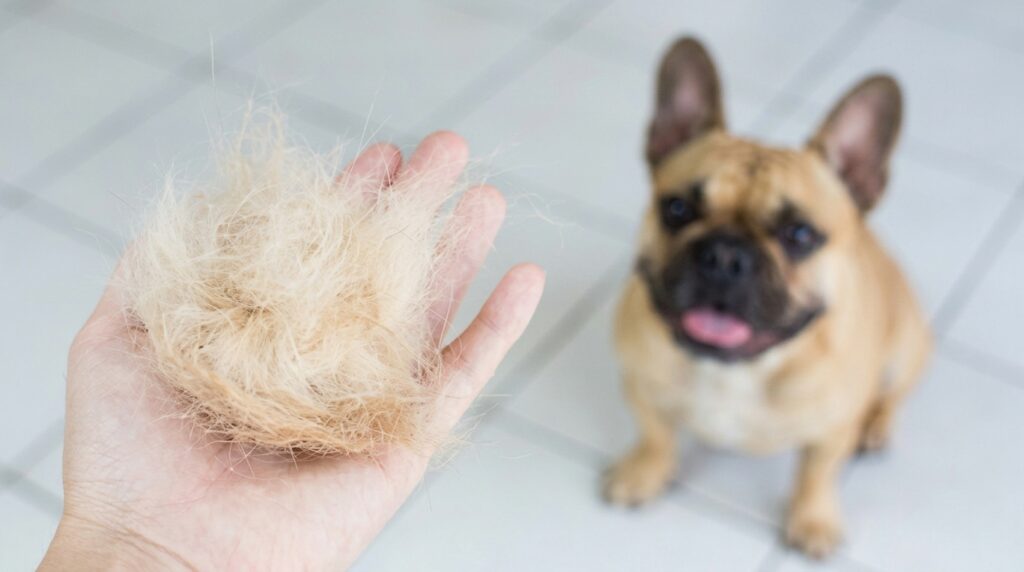
The reason it catches people off guard comes down to their coat. French Bulldogs have a short, fine, single-layer coat, which means they don’t have the dense undercoat that produces those dramatic tumbleweeds of fur from double-coated dogs. But single-coated doesn’t mean shed-free. Every hair on your dog goes through a constant cycle of growing, resting, and falling out to be replaced, and that cycle never stops, so short hairs are being lost all the time, they’re just finer and less obvious than a Husky’s. It’s worth stating plainly, too, that French Bulldogs are not hypoallergenic. No amount of short hair changes the fact that they produce dander and lose hair, so if allergies are your concern, this isn’t the breed marketed myths sometimes suggest. The upside is that manageable, moderate French Bulldog shedding is very much something you can stay on top of.
How Much and How Often? The Seasonal Pattern
Hair loss in this breed happens on two timescales at once, and understanding both helps you know what’s normal. There’s a low, steady background level of loss that continues all year round, the everyday loss of old hairs you’ll find on your clothes and furniture, and then there are two heavier seasonal periods layered on top.
Spring is the big one. As the weather warms, your Frenchie sheds the denser coat they grew for winter to help regulate their body temperature, and this is the heaviest period of the year, typically lasting somewhere around two to three weeks. Autumn brings a second, lighter shed as the summer coat makes way for a slightly thicker winter one, usually a more moderate one to two weeks. Importantly, French Bulldogs don’t dramatically “blow their coat” the way double-coated breeds do, so even these peaks are a subtle increase in density rather than an explosion of fur, generally running two to four weeks at most.
There’s a modern wrinkle worth knowing about here. Because so many Frenchies live indoors with stable heating, air conditioning, and artificial light, their bodies get fewer of the seasonal cues that drive sharp shedding cycles. The practical result is that many indoor French Bulldogs lose hair fairly steadily all year rather than in clear spring and autumn bursts, which is completely normal and nothing to worry about. If your dog’s coat loss feels constant rather than seasonal, their indoor lifestyle is probably the explanation.
Why Do French Bulldogs Shed So Much?
At its core, this is simply how your dog renews their coat and manages their body temperature, dropping old or seasonally unnecessary hair so fresh hair can grow. That’s the healthy baseline, and no dog with hair avoids it. But the amount an individual Frenchie sheds varies quite a bit, and several factors influence where your dog lands on that scale.
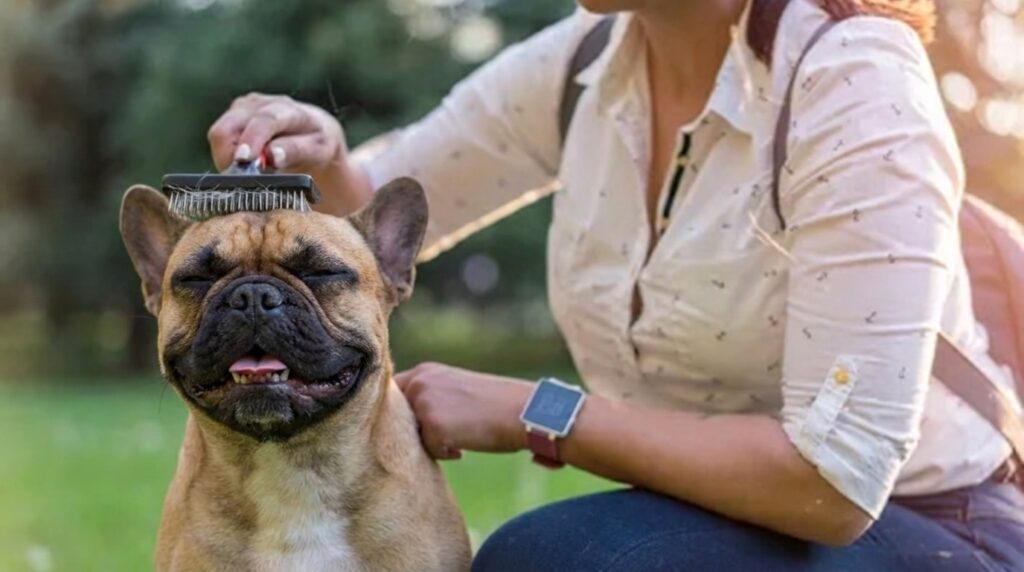
Diet is a big one, since the coat is built from what your dog eats, and a poor-quality diet lacking the right nutrients tends to show up as duller fur and heavier hair loss. Hydration matters for skin health too. Beyond nutrition, stress can increase it, as can the overall state of your dog’s health, their indoor environment, and how consistently they’re groomed. Genetics and each dog’s individual makeup play a role as well, which is why two Frenchies in the same house can shed noticeably different amounts. The reassuring takeaway is that while you can’t stop a healthy dog from shedding, a lot of what pushes shedding from moderate toward excessive is within your control, through good food, good grooming, and good general care.
Do Fluffy (Long-Haired) French Bulldogs Shed?
The fluffy or long-haired French Bulldog has become a talking point, and owners understandably wonder whether that longer coat behaves differently. The short answer is yes, they still shed. Fluffy Frenchies carry the same single-coat genetics as their short-haired relatives, so the underlying pattern is the same, moderate, year-round, with seasonal bumps.
What changes with a longer coat is mostly visibility and upkeep. Longer hairs are simply more noticeable when they fall, and they’re more inclined to tangle or mat, so a fluffy Frenchie benefits from the same brushing routine as any other, just with a little more attention to working through the longer fur and preventing knots. If you have one of these dogs, don’t expect the longer coat to mean less shedding, expect roughly the same amount, just more visible, and plan your grooming accordingly.
How to Manage Shedding: Grooming Your Frenchie
Here’s the genuinely good news: managing French Bulldog shedding is straightforward, and a simple, consistent routine does almost all the work. You’re not trying to stop the shedding, which is impossible and undesirable, you’re capturing the loose hair before it ends up on your furniture and keeping your dog’s skin and coat healthy so they don’t lose more than they need to.
Brushing is the single most effective thing you can do about loose hair, by a wide margin. For most of the year, brushing two to three times a week is plenty, and during the spring and autumn peaks you’ll want to step that up to three or four times a week, or even daily while the coat is dropping heaviest. The tools matter, especially for this breed’s sensitive skin: a soft-bristle brush, a rubber curry brush, or a grooming glove are all ideal, because they lift away loose hair gently without scratching or irritating the skin. A rubber grooming glove or de-shedding mitt is a particularly good pick for a Frenchie, since it doubles as a gentle massage most dogs actively enjoy, which makes the whole routine easier. Beyond just collecting hair, regular brushing distributes the natural oils across your dog’s skin and even stimulates healthy new growth, so it’s genuinely good for the coat, not just your carpets.
Bathing is where owners most often go wrong, so this is worth emphasising. The right frequency is roughly once a month, every four to six weeks, using a gentle, moisturising, dog-specific shampoo, ideally a hypoallergenic one for this sensitive-skinned breed. The crucial point is that more baths do not mean less shedding, quite the opposite: over-bathing strips the natural oils from your dog’s skin, dries it out, and actually increases hair loss while inviting skin problems. If you’re bathing your Frenchie every week hoping to cut down the hair, you’re very likely making it worse. Never use human shampoo, which is wrong for a dog’s skin pH, and take care to keep water out of the facial folds, drying them thoroughly afterward to prevent the moisture-related irritation these dogs are prone to.
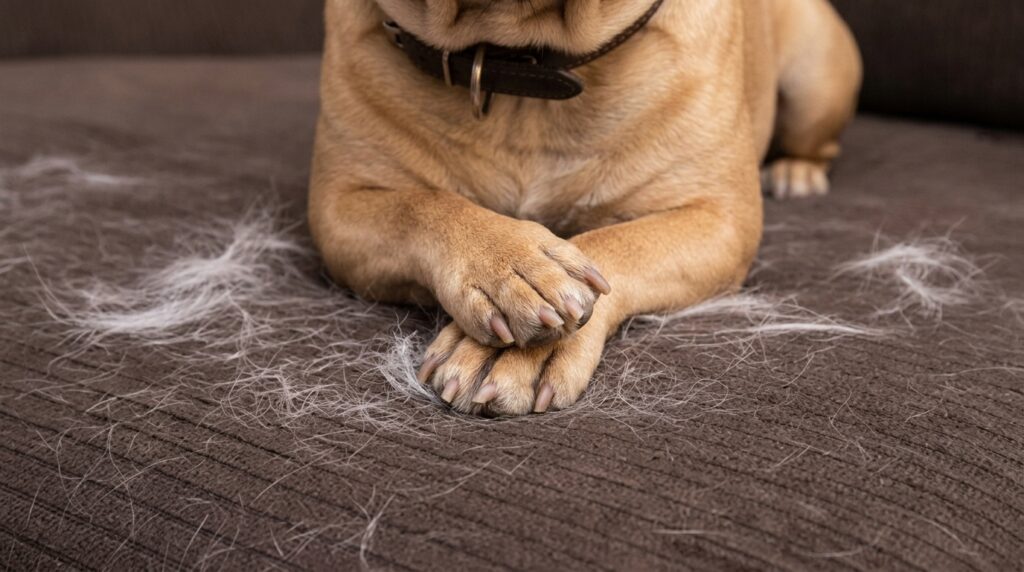
Two more pieces round out the routine. Diet does real work from the inside: a high-quality food rich in omega-3 and omega-6 fatty acids, along with nutrients like vitamin E and biotin, supports the skin barrier and a healthy coat, which keeps loose hair to its natural minimum. If your dog’s shedding seems excessive despite good grooming, it’s worth reviewing their diet, and if you suspect food is affecting their skin, our guide to French Bulldog food allergies is a useful next read. And don’t neglect the skin folds, since irritated, damp folds lead to scratching and irritation that can worsen coat problems, so keeping them clean and dry, as our guide to tail pocket care explains for that particular spot, is part of good coat care too. One thing you don’t need to do is trim or shave your Frenchie, their coat doesn’t require it, and shaving should only ever happen on a vet’s specific recommendation for a skin condition.
When Shedding Means a Vet Visit
Most French Bulldog shedding is completely normal, but part of being a good owner is knowing the line between an ordinary coat and a sign of something wrong, because this breed is genuinely prone to skin issues. Normal shedding is relatively even across the body, moderate in volume, and follows the year-round-plus-seasonal pattern described above. Healthy coat loss thins the fur a touch; it never leaves skin showing through. It thins the coat a little; it doesn’t create bare patches.
What isn’t normal, and does warrant a vet visit, is hair loss that goes beyond a seasonal increase: bald patches or spots, noticeable thinning, or shedding accompanied by excessive scratching, licking, or red, irritated skin. These signs can point to allergies, parasites like fleas or mites, a fungal infection, or another skin condition, none of which brushing will fix, and all of which are worth catching early. Because French Bulldogs are so susceptible to allergies and skin problems, a sudden spike in shedding or any bald areas deserve investigation rather than a wait-and-see approach, and our guide to French Bulldog skin allergies covers what else to look for. When in doubt, a quick vet check is always the safer call, because coat changes are often the first visible clue to a problem underneath.
Living With a Frenchie’s Coat: Keeping Hair Off Your Home
Since managing the loose hair is really why most owners look this up, a few practical habits make daily life much cleaner. The brushing routine above is the foundation, because every hair you catch on a glove is a hair that never reaches your cushions, so brushing outdoors or over a hard floor you can sweep is a small trick that pays off. A quick daily once-over with a grooming mitt during the spring and autumn peaks does more than a big weekly session, because you’re removing hair continuously rather than letting it build and drop.
Beyond grooming the dog, a washable throw over your Frenchie’s favourite sofa spot catches the bulk of it and goes straight in the machine, and a rubber-edged pet brush or a slightly damp rubber glove lifts embedded hair off upholstery far better than a standard vacuum. None of this stops a healthy dog losing hair, but it turns a constant background nuisance into a two-minute routine, and it keeps the coat you’re brushing out of your carpets in the first place.
Does Age or Season Change It?
A little context helps set expectations. Puppies often have a softer, thinner coat that gives way to their fuller adult coat over the first several months, and you may notice a change in texture and volume as that happens, which is entirely normal. Through adulthood the pattern stays fairly consistent, moderate and steady with the seasonal peaks, and it’s driven far more by health, diet, and grooming than by age itself. If an older dog’s coat changes markedly, becoming thin, patchy, or dull in a way that good care doesn’t fix, that’s worth mentioning to your vet, since coat quality can reflect underlying health. For most Frenchies, though, what you see in a healthy young adult is roughly what you’ll manage for years.
Frequently Asked Questions
The Bottom Line
So, do French Bulldogs shed? Yes, moderately, all year round, with a couple of heavier seasonal stretches, and no, that short coat won’t spare your sofa entirely. But French Bulldog shedding is one of the easier parts of owning this breed to manage. Brush a few times a week, bathe only about once a month, feed a good diet with the right fatty acids, keep the skin folds clean, and you’ll capture most of the loose hair and keep your dog’s coat in genuinely healthy condition.
Having lost a Frenchie myself, I’ve learned that the small, regular acts of care, a few minutes with a grooming glove, a proper monthly bath, an eye kept on the skin, add up to a dog who’s comfortable, healthy, and lovely to be around. The shedding is a minor trade for everything these dogs give back, and once the routine becomes habit you’ll barely think about it. Just stay alert to the coat changes that signal a problem, and let your vet help with anything beyond ordinary shedding.
This article is educational and is not a substitute for veterinary care. If your dog develops bald patches, persistent scratching, or irritated skin, have your veterinarian examine them.

French Bulldog Cost in 2026: Price, Vet Bills, and the True Lifetime Cost
French Bulldog Temperament: Personality, and Are They Good Family Dogs?

Best Dog Toothpaste for French Bulldogs: A Vet-Guided Guide
Do French Bulldogs Shed? Coat, Grooming, and When to Worry

Why Your French Bulldog Chews Everything (and How to Stop It)