Written by Jinna CAMERON, veterinary medical student and dog health researcher. Reviewed for factual accuracy against trusted veterinary sources by DVM ,Carla DONTESK
Finding the best dog food for French Bulldogs with allergies can feel frustrating fast. One food makes the itching worse, another seems to upset the stomach, and a third sounds perfect on the label but does nothing in real life. For owners dealing with recurring skin problems, ear infections, paw licking, soft stool, or diarrhea, food becomes one of the first things to question.
French Bulldogs do appear in veterinary literature as a breed that can be affected by allergic skin disease, and food-related signs can look a lot like environmental allergy signs. That overlap is one reason this topic is so confusing for owners. If your Frenchie is reacting to food, the answer is not just to pick a random “hypoallergenic” bag and hope for the best. It helps to understand what kind of food is most likely to fit the problem.
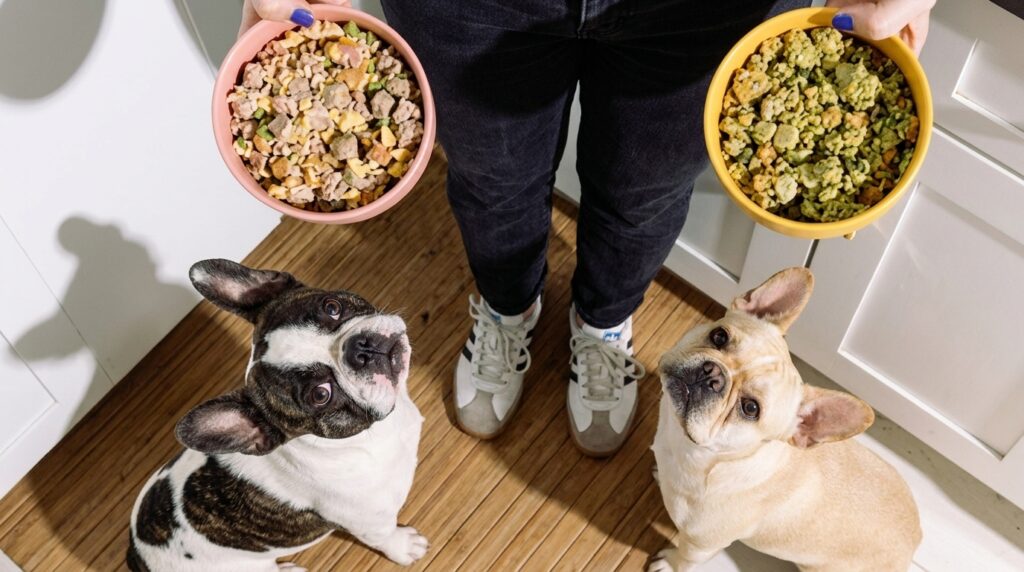
This guide is built to help you do exactly that. It explains the symptoms that suggest a food issue, the difference between allergy and intolerance, the main food types worth comparing, and how to choose the best dog food for French Bulldogs with allergies without getting pulled in by marketing claims. If you have not already read our broader food guide, you may also want to start with French Bulldog Food Allergies for a more symptom-focused overview.
How food allergies show up
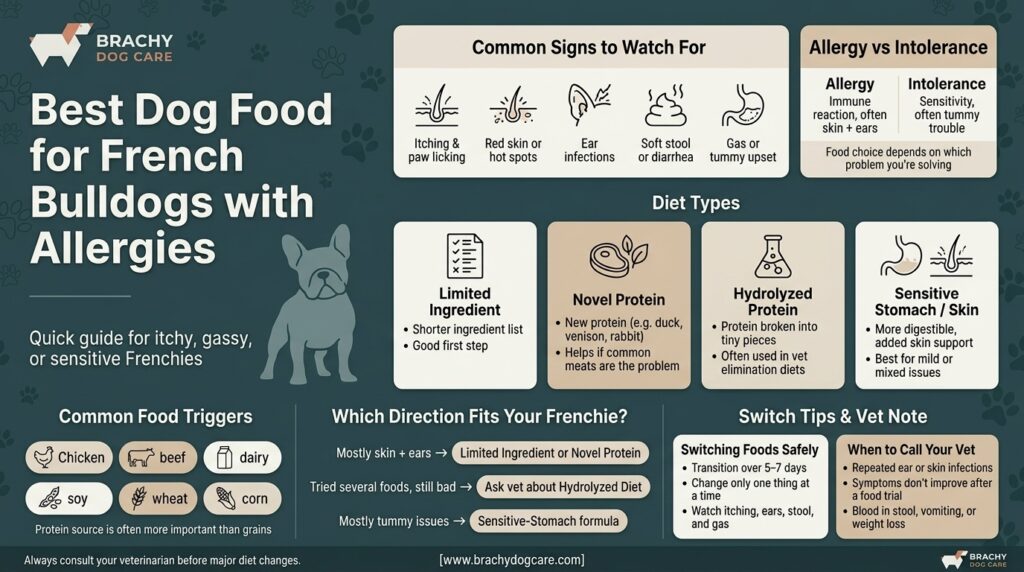
Food allergies in French Bulldogs do not always look the same from one dog to another. Some dogs scratch constantly. Others lick their paws, shake their heads, or get repeated ear problems. Some mainly show digestive trouble, which is why owners often confuse food allergy with a sensitive stomach.
Common signs include:
- itching that does not fully improve.
- paw licking or paw chewing.
- recurrent ear infections.
- red or irritated skin.
- soft stool.
- diarrhea.
- gas.
- occasional vomiting.
The hard part is that these signs can also happen with environmental allergies. Veterinary guidance notes that food-related and environmental allergy signs can be difficult to tell apart without a controlled elimination diet. That is why choosing the best dog food for French Bulldogs with allergies is not really about following trends. It is about matching the diet to the likely cause.
If your Frenchie’s symptoms are mainly digestive, our guide on French Bulldog Soft Stool may also help you narrow down whether the issue is food-related or something milder and temporary.
Allergy vs intolerance
This difference matters more than many owners realize. A true food allergy is an immune response. Food intolerance is different; it is a non-immune reaction that still causes symptoms but works through a different mechanism.
That distinction matters because the food choice changes depending on what you are trying to solve. If your French Bulldog has a true allergy, the best dog food for French Bulldogs with allergies is usually one that removes the likely trigger as cleanly as possible. If the issue is more about digestion than immune response, a highly digestible sensitive-stomach food may be a better fit.
A lot of owners end up stuck because they keep switching between foods that sound gentle but are not actually designed for allergy management. That is why it is useful to think first in categories, not brands. A French Bulldog with recurring soft stool may do better on a digestive formula, while a dog with recurring itching or ear problems may need a more structured allergy-focused approach.

If the main concern is more digestive than skin-based, it may also be worth reading Best Food for French Bulldogs with Sensitive Stomachs.
Common triggers
Some ingredients come up again and again in allergy conversations because they are common, widely used, and often heavily exposed in commercial food. That does not mean every dog reacts to them, but it does mean they are worth paying attention to.
The most common suspected triggers include:
- chicken.
- beef.
- dairy.
- soy.
- wheat.
- corn.
- eggs.
- unnamed animal proteins.
- vague ingredients such as “meat meal” or “animal flavor.”
A lot of owners assume grain is the main issue, but that is not always the case. In French Bulldogs, as in other dogs, the protein source often matters more than the grain content. In other words, a grain-free food is not automatically the best dog food for French Bulldogs with allergies if it still contains the protein that your dog reacts to.
Soy is also worth mentioning because it is often overlooked in consumer discussions. Veterinary literature has identified soy among important food allergens in some allergic dogs, which is one reason why ingredient label reading matters so much when you are trying to narrow down what a Frenchie can actually tolerate.
Types of allergy-friendly food
The best dog food for French Bulldogs with allergies is not one single type of product. It depends on the dog’s symptom pattern, ingredient history, and how severe the problem is.
Limited ingredient diets
A limited ingredient diet uses fewer ingredients than a standard formula. The idea is simple: fewer ingredients means fewer things that could trigger a reaction. That makes this category appealing for owners who want to simplify the diet without moving straight to a prescription food.

But limited ingredient does not automatically mean safe for every allergic dog. A limited ingredient food that still uses chicken will not help a French Bulldog with a chicken trigger. The label may sound reassuring, but the ingredient list matters more than the marketing.
Novel protein diets
A novel protein diet uses a protein source the dog has not eaten much, or at least not recently. That might include rabbit, venison, duck, or another less common protein. This can be helpful if common proteins like chicken and beef seem to be the problem.
The main strength of a novel protein diet is that it helps reduce repeat exposure to a trigger the dog may already be sensitized to. The weakness is that “novel” is not truly novel for every dog. If your Frenchie has already eaten duck in treats or mixed foods, duck is not really a novel protein anymore.
Hydrolyzed protein diets
Hydrolyzed protein diets are often the most controlled option. The protein is broken into smaller pieces so it is less likely to trigger an immune reaction. Veterinary nutrition services note that hydrolyzed diets and novel protein diets are the main dietary tools used in elimination trials, and prescription hydrolyzed diets offer stricter quality control than many over-the-counter foods.
This is often the closest thing to a gold standard for suspected food allergy, especially when a dog has tried many foods already. The downside is that these diets are often prescription-based and not always the most palatable or affordable.
Sensitive skin and sensitive stomach formulas
These are useful, but they are not the same thing as true allergy diets. A sensitive skin formula may support the skin barrier with omega-3s and related nutrients. A sensitive stomach formula is usually built around digestibility and gut comfort.
That means these foods may help some French Bulldogs, especially when the issue is mild or mixed. But if your dog has a true allergy, these formulas may not be enough on their own. They can still contain the same protein sources that caused the problem in the first place.
Dry, wet, and fresh food
Dry food is convenient and usually easier to store, but kibble size and texture matter for French Bulldogs. Their flat-faced anatomy can make some shapes harder to pick up and chew comfortably. Wet food is often easier to eat and may be more appealing, but it can cost more and may not suit every household. Fresh food can be attractive because it often has clearer ingredient lists, though not every fresh brand is built for allergy management.
The best dog food for French Bulldogs with allergies is not always dry, and it is not always wet. It is the food type that best fits the dog’s symptoms, ingredient history, and practicality for the owner.
How we evaluated foods
When comparing foods, the most important thing is not the marketing claim on the front of the bag. It is whether the formula actually fits the problem you are trying to solve.
Here is the practical framework:
- Is the protein source clearly named?
- Does the formula really limit ingredients?
- Is the protein likely to be new to the dog?
- Is there a hydrolyzed version if a stricter diet is needed?
- Does the food support skin health with helpful fats and nutrients?
- Is it digestible enough for a French Bulldog’s stomach?
- Are there vague ingredients or unnecessary additives?
- Is the kibble size realistic for a Frenchie’s face and eating style?
- Could this food work in an elimination trial if needed?
That is the kind of thinking that leads to the best dog food for French Bulldogs with allergies instead of just the most heavily advertised one.
What to choose
If you are trying to choose the best dog food for French Bulldogs with allergies, start with the type of problem first.
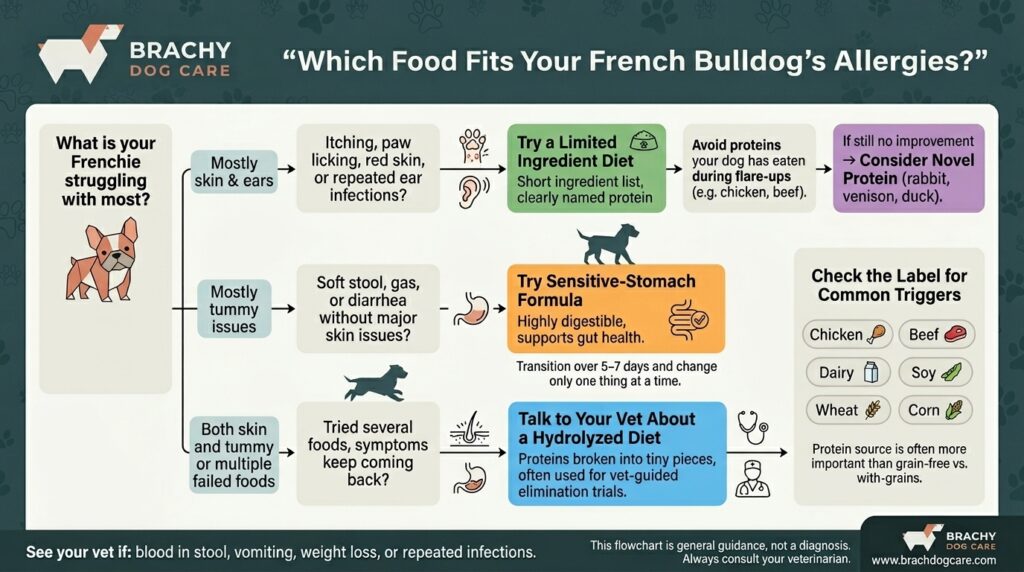
If your dog has clear itching, recurrent ear issues, and ongoing skin flare-ups, a limited ingredient or novel protein diet may be a sensible starting point. If those signs have already been happening for a while and several foods have failed, a hydrolyzed diet may be a better next step. If the problem is more digestive, a sensitive-stomach formula may be more appropriate than a true allergy diet.
A useful way to think about it is this:
- choose limited ingredient if you want a simpler ingredient list.
- choose novel protein if you suspect common proteins.
- choose hydrolyzed if you need a more controlled elimination approach.
- choose sensitive stomach if digestion is the main issue rather than allergy.
- choose skin-supportive formulas if the main concern is barrier health and mild irritation.
If you want a broader comparison of regular Frenchie foods before going deeper into allergy-specific choices, our general guide to Best Dog Food for French Bulldogs can help you compare basic feeding options too.
Best foods to look for
When you move from theory to shopping, the best dog food for French Bulldogs with allergies usually falls into one of a few practical categories.
A strong shortlist often includes:
- a limited ingredient formula with a clearly named protein.
- a novel protein formula that avoids the dog’s known triggers.
- a prescription hydrolyzed diet if the case is more difficult or recurring.
- a wet option if chewing, palatability, or moisture matters.
- a formula with supportive fats if skin is a major issue.
- best overall allergy-friendly formula.
- best limited ingredient pick.
- best novel protein pick.
- best hydrolyzed prescription option.
- best budget option.
Food allergies in French Bulldogs often show up as a mix of itchy skin, recurrent ear problems, and gut signs like soft stool and bad gas. If flatulence is one of the main issues you’re seeing, this in‑depth article on French Bulldog gas: what’s normal, what’s not, and how diet plays a role can help you understand how gas fits into the bigger allergy picture.
How to switch foods
Switching too quickly can confuse the picture. If your French Bulldog’s symptoms are already active, a slow transition makes more sense than a sudden one. A gradual change over several days is easier on the stomach and gives you a better sense of whether the new food is helping.
During the transition, watch for:
- itching changes.
- ear flare-ups.
- stool quality.
- gas.
- appetite.
- scratching or paw licking.
If things get worse, that is information too. It may mean the ingredient choice is still wrong, or it may mean the problem is bigger than food alone.
When to see your vet
The best dog food for French Bulldogs with allergies can help in many cases, but it is not a substitute for diagnosis when the signs are persistent or severe. You should involve your veterinarian if symptoms keep returning, if there are repeated ear infections or skin infections, or if the stool stays poor despite changing food.
A proper elimination diet is still the most reliable way to confirm a food allergy. Veterinary guidance notes that elimination trials should use a hydrolyzed or truly novel protein diet exclusively for several weeks, followed by rechallenge if the goal is diagnosis. If your Frenchie has had multiple foods already and nothing seems to work, that is a strong sign that a vet-guided approach is worth discussing.
For a verified veterinary explanation of hydrolyzed diets and elimination-style feeding, NC State Veterinary Hospital is a useful reference: NC State Veterinary Hospital – Hydrolyzed Diets.
FAQ
Final thoughts
The best dog food for French Bulldogs with allergies is not the one with the loudest claims. It is the one that best matches your dog’s actual symptoms, ingredient history, and level of sensitivity. For some dogs, that means limited ingredient. For others, it means novel protein or hydrolyzed protein. For many, the right answer is only clear after a careful diet trial.
If your Frenchie’s symptoms are mild, the goal is to simplify the diet and watch for patterns. If the symptoms are persistent, severe, or repeating, the better next step is often a veterinary-guided elimination approach rather than endless food switching.
French Bulldog Cost in 2026: Price, Vet Bills, and the True Lifetime Cost
French Bulldog Temperament: Personality, and Are They Good Family Dogs?

Best Dog Toothpaste for French Bulldogs: A Vet-Guided Guide
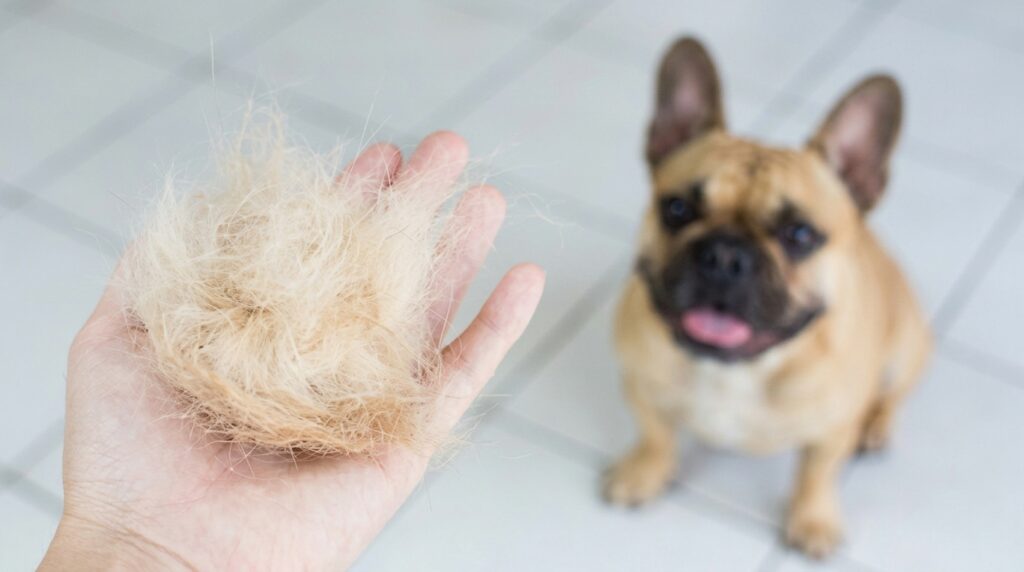
Do French Bulldogs Shed? Coat, Grooming, and When to Worry

Why Your French Bulldog Chews Everything (and How to Stop It)