Written by Jinna CAMERON, veterinary medical student and dog health researcher. Reviewed for factual accuracy against trusted veterinary sources by DVM Carla DONTESK
French Bulldog snoring is extremely common, but that does not automatically mean it is harmless. Many Frenchies make noise when they sleep, yet in a brachycephalic breed, snoring is often a sign of upper-airway narrowing, not just a cute breed quirk.
If your dog snores loudly, snores while awake, seems restless at night, or struggles more in heat or exercise, it is worth paying attention. In this guide, I’ll explain why French Bulldog snoring happens, when it may be normal, when it may point to BOAS or another breathing problem, and what owners can safely do next.
I’m writing this as a veterinary medical student and dog health educator, not as a licensed veterinarian. This article is for education only and should not replace veterinary advice for your individual dog.
What is snoring in dogs?
Snoring in dogs is a low-pitched upper-airway noise caused by turbulent airflow. When air has to move through a narrowed or partially obstructed passage, soft tissues in the airway can vibrate and create the familiar snoring sound.
In dogs, that noise usually comes from structures in the nose, soft palate, pharynx, or other upper-airway tissues. The tighter the airway and the more forceful the airflow, the more likely the dog is to snore.
Why some dogs snore more than others
Some dogs are more prone to snoring because of:
- skull and airway shape
- narrowed nostrils
- soft palate length or thickness
- body weight
- airway inflammation
- sleep position
- breed-related respiratory disease
A long-nosed dog may snore occasionally without much concern. A French Bulldog is different, because the breed’s anatomy already makes the airway more crowded and more vulnerable to obstruction.
Normal sleep snoring vs abnormal noisy breathing
Mild snoring that happens only during deep sleep and does not seem to affect the dog’s comfort may be less concerning than:
- very loud snoring
- worsening snoring
- snoring with pauses in breathing
- restless sleep
- snoring while awake
- choking, gagging, or obvious effort to breathe
That distinction matters a lot in brachycephalic dogs.
Why do French Bulldogs snore so much?
French Bulldog snoring is mainly linked to the breed’s brachycephalic anatomy. Frenchies have shortened skulls and compressed upper-airway structures, which means air often has to move through a tighter space than it would in a longer-nosed dog.
That creates more turbulence, more tissue vibration, and more upper-airway noise.
Brachycephalic anatomy and BOAS
French Bulldogs are one of the breeds most affected by brachycephalic obstructive airway syndrome (BOAS). BOAS is not one single abnormality. It is a group of airway problems related to the shortened skull shape seen in flat-faced breeds.
These may include:
- stenotic nares (narrowed nostrils)
- elongated soft palate
- thickened upper-airway tissues
- narrowing in the nasal passages or pharynx
- secondary changes like everted laryngeal saccules
- progressive airway collapse in more severe cases
Because of this anatomy, many French Bulldogs are noisy breathers. That is why French Bulldog snoring is so common — but again, common is not the same as healthy.

Stenotic nares and soft palate issues
Two major contributors to French Bulldog snoring are:
1. Narrowed nostrils
When the nostrils are too narrow, air has to be pulled in with more force. That increases negative pressure in the airway and makes breathing noisier.
2. Elongated or thickened soft palate
The soft palate may sit too far back in the throat, where it can partially obstruct airflow and vibrate during breathing. This can contribute to:
- sleep snoring
- noisy breathing while awake
- gagging
- reverse sneezing-like sounds
- disturbed sleep
These problems often overlap rather than appearing one at a time.
Snoring and airway noise can overlap with other breathing concerns in this breed. If your dog seems to be making more effort to breathe, especially during rest or sleep, see our guide to French Bulldog breathing hard for signs that may need closer attention
Is French Bulldog snoring normal?
This is one of the biggest questions owners ask, and the honest answer is:
French Bulldog snoring is common, but it is not always normal in a healthy sense.
Many French Bulldogs do snore because of their airway shape. However, veterinary BOAS resources make an important point: if a dog snores because the airway is narrowed, the noise is still a sign of some degree of compromise.
So instead of saying:
“Frenchies snore, so it’s fine,”
a more accurate way to think about it is:
“Frenchies commonly snore because of their anatomy, but that noise may still reflect upper-airway disease.”
When French Bulldog snoring may be less concerning
Some snoring may be less worrying if it is:
- mild
- occasional
- only during deeper sleep
- not getting worse
- not paired with exercise intolerance or heat sensitivity
- not affecting sleep quality
- not happening while awake
When French Bulldog snoring may be more concerning
French Bulldog snoring deserves more attention if it is:
- loud
- frequent
- worsening
- paired with choking or gagging
- linked to poor sleep
- happening while awake
- associated with heat intolerance
- associated with open-mouth breathing at rest
That is where the conversation shifts from “noisy sleeper” to “possible airway problem.”
Why is my French Bulldog snoring?
If you are asking “why is my French Bulldog snoring?”, the most likely answer is that airflow is being partially obstructed somewhere in the upper airway.
But the exact reason may vary.
Common causes of French Bulldog snoring
Here are the main possibilities:
1. Brachycephalic airway narrowing
This is the most important breed-related reason. French Bulldogs often have a structurally narrowed airway that creates turbulence during sleep.
2. BOAS
If the snoring is loud, persistent, or paired with other symptoms, BOAS becomes more important to consider.
3. Excess weight
Obesity or even moderate excess body fat can worsen airway collapsibility. Fat around the neck and pharyngeal area can make the airway narrower and noisier during sleep.
4. Sleeping position
Some dogs snore more in certain positions, especially if the head, neck, tongue, or soft palate shifts backward and crowds the airway.
5. Upper-airway inflammation or congestion
Snoring may get worse if the airway is inflamed from:
- irritation
- mild infection
- allergies
- chronic nasal congestion
6. Heat or exertion effects
French Bulldogs already struggle more with heat exchange than longer-nosed dogs. After exertion or in warm conditions, airway noise may worsen.
7. Progressive airway changes
More severe BOAS cases can involve secondary tissue changes and worsening obstruction over time, which may make snoring louder and more constant.
If your Frenchie’s snoring seems louder than usual or you notice panting, gasping, or restless sleep, it may help to read our guide on French Bulldog breathing at night to tell normal snoring from a warning sign.
Why is my French Bulldog snoring so loud?
French Bulldog snoring loud enough to disturb sleep or sound harsh is more concerning than light sleep noise.
Loud snoring may suggest:
- increased airway resistance
- more severe nostril narrowing
- a longer or thicker soft palate
- worsening BOAS
- excess weight
- upper-airway inflammation
- poorer airflow during sleep
Loudness alone is not a diagnosis, but very loud or worsening snoring should not be brushed off, especially in a breed already prone to airway disease.
If your dog’s snoring has clearly changed, become harsher, or is now paired with restless sleep or breathing pauses, that is worth discussing with your veterinarian.
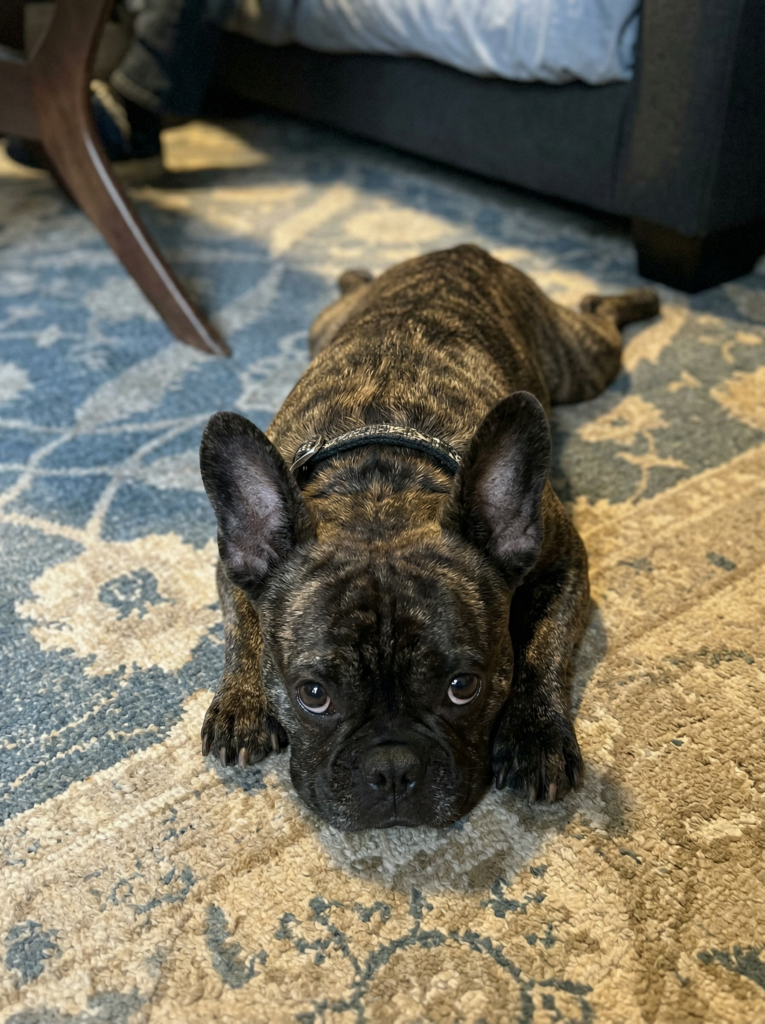
French Bulldog snoring while awake
French Bulldog snoring while awake is one of the most important symptom patterns in this whole topic.
A dog that snores only in deep sleep may have less severe airway compromise than a dog who makes low-pitched snoring or stertor noises while:
- resting awake
- walking around the house
- eating
- calmly sitting
- doing mild activity
Is French Bulldog snoring while awake normal?
In general, snoring while awake is not considered normal. In a French Bulldog, it can suggest:
- upper-airway obstruction
- elongated soft palate issues
- more significant BOAS
- chronic airway narrowing
- inflamed or crowded soft tissues
This is one of the best clues that the dog may need a more formal breathing evaluation.
Why it matters more in Frenchies
Because brachycephalic dogs already have reduced airway efficiency, awake snoring may indicate that the airway is struggling even when the dog is not in deep sleep. That is more meaningful than occasional quiet nighttime snoring.
If your dog is making persistent snoring-type sounds while awake, it is a good idea to bring that up with your vet.
French Bulldog snoring when sleeping
French Bulldog snoring when sleeping is the version many owners are most used to. It often happens because tissues relax during sleep, which can make an already narrow airway even tighter.
Sleep-related snoring may become more obvious when:
- the dog is in deep sleep
- the head is tucked or flexed
- the room is warm
- the dog is overweight
- BOAS is present
- the soft palate is elongated or thickened
Some Frenchies also show signs of sleep-disordered breathing, including:
- repeated snoring bursts
- breathing pauses
- sudden waking
- restless position changes
- sleeping upright or with the head elevated
These patterns deserve more attention than mild occasional snoring alone.
Can obesity make French Bulldog snoring worse?
Yes this is one of the better-supported risk factors.
Excess body weight can worsen French Bulldog snoring by increasing fat around the airway and neck, which makes the airway more collapsible during sleep. In brachycephalic dogs, that added pressure can matter a lot.
Weight may worsen:
- snoring intensity
- sleep disruption
- heat intolerance
- exercise intolerance
- BOAS severity
This does not mean weight is the only cause. A thin Frenchie can absolutely still have significant airway disease. But if a snoring French Bulldog is overweight, weight management becomes an important part of the conversation.
French Bulldog puppy snoring
French Bulldog puppy snoring is another common owner concern.
Some puppies do make breathing noise, especially if they are excited, sleeping deeply, or already showing brachycephalic airway narrowing. But puppy snoring should not automatically be dismissed as harmless just because the dog is young.
Is it normal for a French Bulldog puppy to snore?
A little snoring may happen, but persistent or loud puppy snoring can still suggest:
- narrowed nostrils
- early BOAS-related anatomy
- airway crowding
- noisy upper-airway breathing
- sleep-disordered breathing tendencies
A puppy does not necessarily “grow out of” structurally narrow airways. So if snoring is significant, very loud, or paired with breathing effort, it is worth raising at a veterinary visit.
When French Bulldog snoring could be a sign of a problem
This is where your article can really help owners.
You should be more concerned about French Bulldog snoring if you notice:
- very loud snoring
- worsening snoring over time
- pauses in breathing
- choking or gasping during sleep
- repeated waking during the night
- sleeping in unusual upright positions
- heat intolerance
- exercise intolerance
- open-mouth breathing at rest
- blue or pale gums
- collapse or severe lethargy
- snoring while awake
Behavioral and physical warning signs
Some warning signs are subtle at first. For example:
- your dog seems to tire faster than before
- they avoid play in warm weather
- they wake themselves up at night
- they snore even when lightly asleep or resting
- they breathe noisily after very mild effort
These may all fit into the bigger BOAS picture.
Sleep-disordered breathing and apnea-like pauses
Sleep-disordered breathing is especially relevant in brachycephalic dogs. Owners may notice:
- brief pauses in breathing
- gasping or snorting awakenings
- repeated posture changes during sleep
- sleeping with the head elevated
- poor sleep quality
You should not try to diagnose apnea at home, but these patterns are worth mentioning to your veterinarian.
How to help a snoring French Bulldog safely
If you are searching how to stop French Bulldog snoring, the most important point is this:
You should focus on safe management and veterinary evaluation, not risky home fixes.
Weight management
If your dog is overweight, moving toward a leaner body condition may help reduce airway burden. This is one of the most evidence-supported owner-level steps.
Use a harness instead of a collar
A harness is usually a better choice for French Bulldogs because neck pressure can worsen upper-airway stress.
If you need one, see my guide to the best harnesses for French Bulldogs.
Optimize the sleep environment
Some dogs do better when they sleep in a cooler, well-ventilated area. You may also notice slightly less snoring when the head is more elevated or the neck is less tightly curled.
Reduce heat stress
Heat makes breathing harder for French Bulldogs. If your dog snores heavily and also struggles in warm conditions, that deserves extra caution. You can read more in my guide to heat stroke in French Bulldogs.
Avoid unsafe home remedies
Do not:
- force the mouth open
- pull on the tongue
- use “airway tricks” from social media
- assume supplements or sprays will fix the problem
- treat loud chronic snoring as only a cosmetic issue
These steps can delay proper care or make the dog more distressed.
When to see a vet for French Bulldog snoring
You do not need to panic over every snore, but French Bulldog snoring should be discussed with a veterinarian if it is:
- loud
- chronic
- worsening
- disturbing sleep
- happening while awake
- paired with exercise intolerance
- paired with heat intolerance
- paired with gagging, choking, or breathing pauses
Routine veterinary discussion
Bring it up at a routine visit if:
- your dog has always been noisy but seems to be getting worse
- the snoring is much louder than before
- sleep seems disturbed
- your dog snores even in mild rest states
Possible BOAS workup
A more focused airway discussion or BOAS workup may be needed if snoring is paired with:
- noisy breathing while awake
- open-mouth breathing at rest
- poor exercise tolerance
- upper-airway distress
- repeated sleep disruption
Urgent care
Seek prompt or emergency care if your Frenchie has:
- blue or pale gums
- collapse
- severe breathing effort
- prolonged choking or gasping
- sudden major change in breathing
Those signs go beyond ordinary snoring.
French Bulldog snoring and BOAS
You cannot talk about French Bulldog snoring properly without talking about BOAS.
BOAS is one of the most important reasons snoring matters in this breed. A Frenchie who snores loudly may also have:
- narrowed nostrils
- elongated soft palate
- stertor while awake
- heat intolerance
- poor stamina
- gagging or reverse sneezing episodes
- disturbed sleep
That does not mean every snoring French Bulldog has severe BOAS. But it does mean snoring should be understood as part of a broader airway picture.
This is where internal cluster strength helps your site. If readers want a deeper look at this condition, send them to your BOAS Ultimate Guide for French Bulldogs.
French Bulldog snoring vs other breathing problems
Snoring is usually a sleep-related upper-airway noise, but owners may confuse it with other breathing concerns.
| Feature | French Bulldog Snoring | More Concerning Breathing Problem |
|---|---|---|
| Typical timing | Most obvious during sleep or deep rest | May happen during sleep, rest, exercise, or all day |
| Sound | Low-pitched snoring or stertor | Harsh breathing, choking, wheezing, or obvious respiratory distress |
| While awake | Mild occasional noise may happen, but persistent awake snoring is concerning | Frequent daytime noise, effort, or open-mouth breathing is more concerning |
| Sleep quality | May snore but sleep relatively normally | Repeated waking, gasping, posture changes, or poor rest |
| Exercise effect | May be more obvious after activity | Clear exercise intolerance or collapse is more serious |
| Owner response | Monitor patterns and discuss at a vet visit if persistent | Seek prompt veterinary guidance, especially with distress or gum color change |
Owners cannot always tell these apart at home, especially in brachycephalic breeds. When in doubt, a veterinary opinion is safer than assuming it is “just snoring.”

Is French Bulldog snoring dangerous?
French Bulldog snoring is not automatically dangerous in every case, but it is also not something to automatically dismiss.
The more useful question is:
what does this snoring say about the airway?
In French Bulldogs, snoring may be a marker of:
- airway narrowing
- BOAS
- sleep-disordered breathing
- worsening obstruction
- weight-related airway stress
- upper-airway inflammation
So while mild snoring may not be an emergency, chronic or loud snoring deserves respectful attention.
FAQ
Final thoughts
French Bulldog snoring is one of those symptoms owners hear so often that it can start to feel normal. But in this breed, snoring is usually tied to anatomy and airway resistance, which means it deserves more respect than a harmless sleep noise in many other dogs.
The best approach is calm and practical:
- notice the pattern
- watch for worsening
- pay attention to awake snoring
- take heat and exercise intolerance seriously
- avoid unsafe home fixes
- bring persistent or loud snoring to your vet
If your Frenchie snores lightly once in a while and otherwise breathes comfortably, it may be a mild expression of breed anatomy. But if French Bulldog snoring is loud, constant, worsening, or paired with other breathing issues, it may be an important clue that the airway needs professional evaluation.for heat issue take a look on a cooling vest.

French Bulldog Cost in 2026: Price, Vet Bills, and the True Lifetime Cost
French Bulldog Temperament: Personality, and Are They Good Family Dogs?

Best Dog Toothpaste for French Bulldogs: A Vet-Guided Guide
Do French Bulldogs Shed? Coat, Grooming, and When to Worry

Why Your French Bulldog Chews Everything (and How to Stop It)