Written by Jinna CAMERON, veterinary medical student and dog health researcher. Reviewed for factual accuracy against trusted veterinary sources by DVM Carla DONTESK
French Bulldog yeast skin infection can be easy to miss at first because it often starts with a smell, a greasy patch, or a bit of redness in a fold rather than a dramatic wound. In French Bulldogs, a French Bulldog yeast skin infection is rarely just a random skin event. More often, it sits on top of moisture, itch, allergies, or fold irritation, which is why the visible skin change does not always tell the full story.
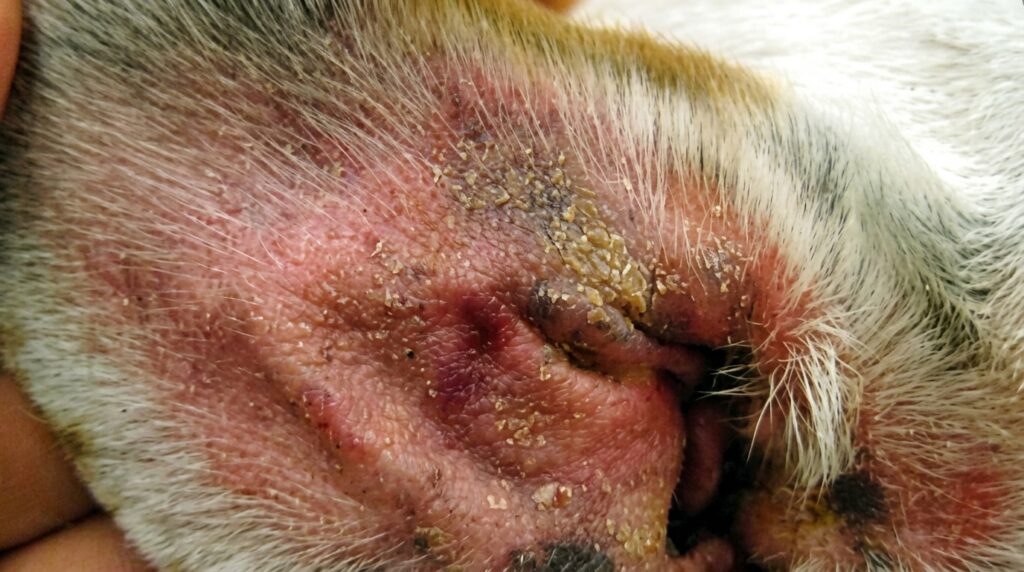
This article is educational only and not a diagnosis. If your Frenchie is uncomfortable, the safest next step is to have your veterinarian examine the skin directly.
What Malassezia actually is
The most common yeast involved in a French Bulldog yeast skin infection is Malassezia pachydermatis. That sounds technical, but the idea is simple: this yeast normally lives on dog skin in small amounts without causing problems. Trouble starts when the skin environment changes enough that the yeast overgrows and becomes inflammatory.
That overgrowth can make the skin itchy, red, greasy, and thickened. It can also change the way the skin smells. Many owners describe it as a musty, stale, or “corn chip” type of odor, although not every dog smells the same. In chronic cases, the skin can become darker, thicker, and a little leathery. Some people compare that texture to “elephant skin,” which is a fair way to picture the thickened, inflamed change that can happen over time.
A French Bulldog yeast skin infection is often not the root problem by itself. It is usually a secondary issue, which means something else made the skin easier for yeast to overgrow in the first place.
Why French Bulldogs are so prone to this problem
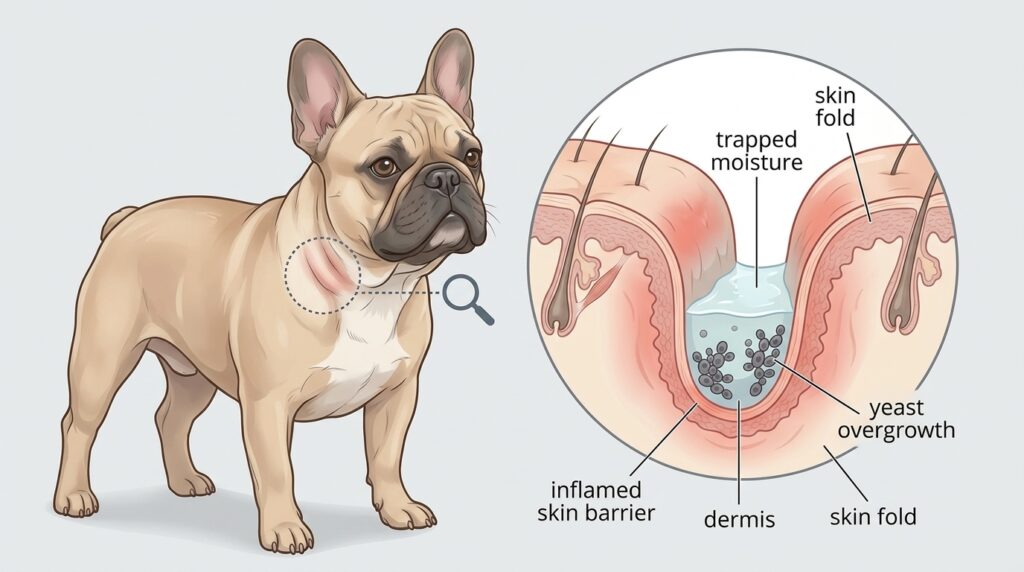
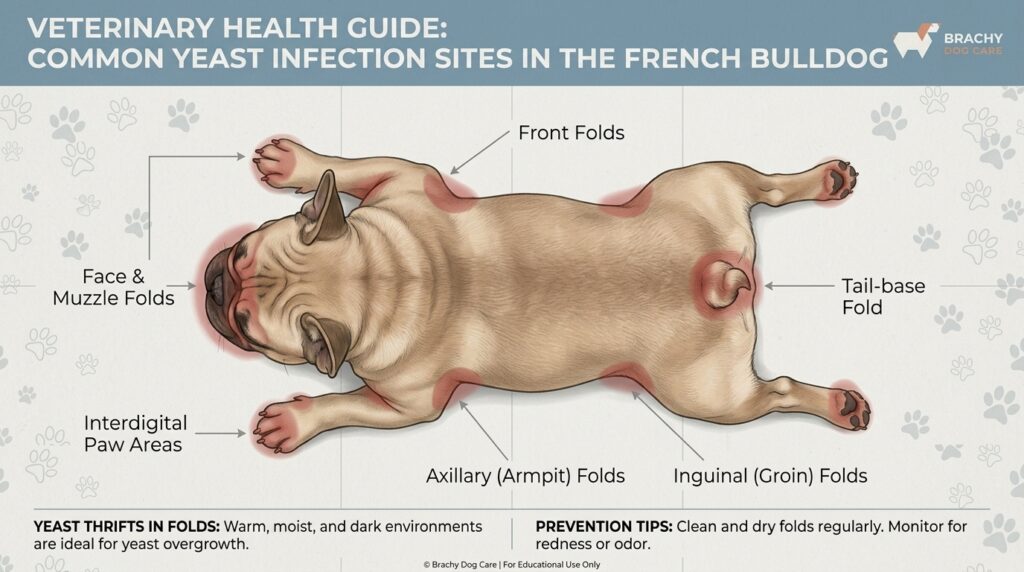
French Bulldogs have several breed traits that make yeast more likely to overgrow on the skin. The biggest one is anatomy. Their facial wrinkles, neck folds, tail folds, and other skin-on-skin contact areas create warm, damp microenvironments. Yeast likes moisture. If moisture gets trapped repeatedly, the skin barrier becomes weaker and yeast has an easier time multiplying.
Allergies are another major factor. French Bulldogs are well known for itchy skin, and itch is one of the fastest ways to turn a mild irritation into a French Bulldog yeast skin infection. A dog that keeps licking, chewing, or scratching one area creates small injuries in the skin barrier, and those injuries allow yeast to thrive.
If your dog already seems to have a broader itch pattern, our guide on French Bulldog itchy skin explains how the itch-scratch cycle often starts.
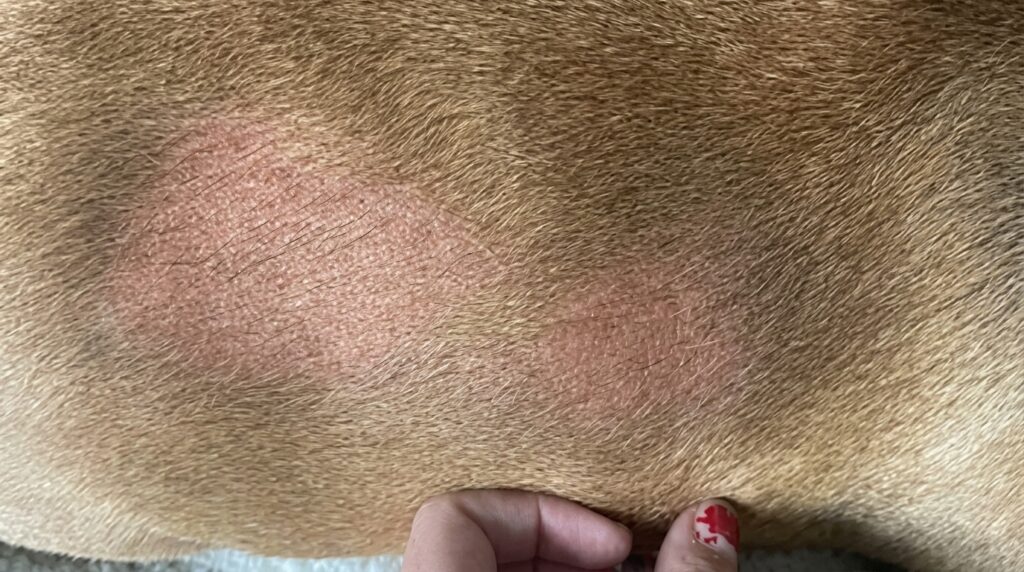
French Bulldogs are also predisposed to atopic dermatitis and other allergic skin disease. That matters because yeast overgrowth commonly appears on top of chronic allergies rather than in isolation. The same dog may deal with fold irritation, ear problems, paw licking, and recurring skin flare-ups all at once. For the bigger background on that pattern, see our article on French Bulldog allergies.
Other factors can add to the risk too:
- moisture left behind after bathing or swimming
- humid weather
- obesity, which can make folds deeper and harder to dry
- recent antibiotic use, which may alter the skin’s normal balance
- seborrhea or greasy skin tendencies
- immune suppression or other medical problems
So when people ask why this breed, the French Bulldog yeast skin infection so often, the answer is usually not one single cause. It is the combination of folds, moisture, allergies, and chronic irritation.
What a French Bulldog yeast skin infection usually looks like
A French Bulldog yeast skin infection can show up in a few different ways, but some signs come up again and again.
The most common signs include:
- itching or repeated licking
- redness
- greasy or flaky scaling
- hair loss in patches
- darker skin over time
- skin thickening or a leathery feel
- a musty odor
- discomfort when the area is touched
In more obvious cases, the skin may look shiny and greasy, or the coat may seem clumped together because of the oiliness. Some dogs have patchy hair loss around the folds, armpits, belly, groin, or paws. In the ears, yeast overgrowth can cause chronic redness, waxy debris, odor, and head shaking.
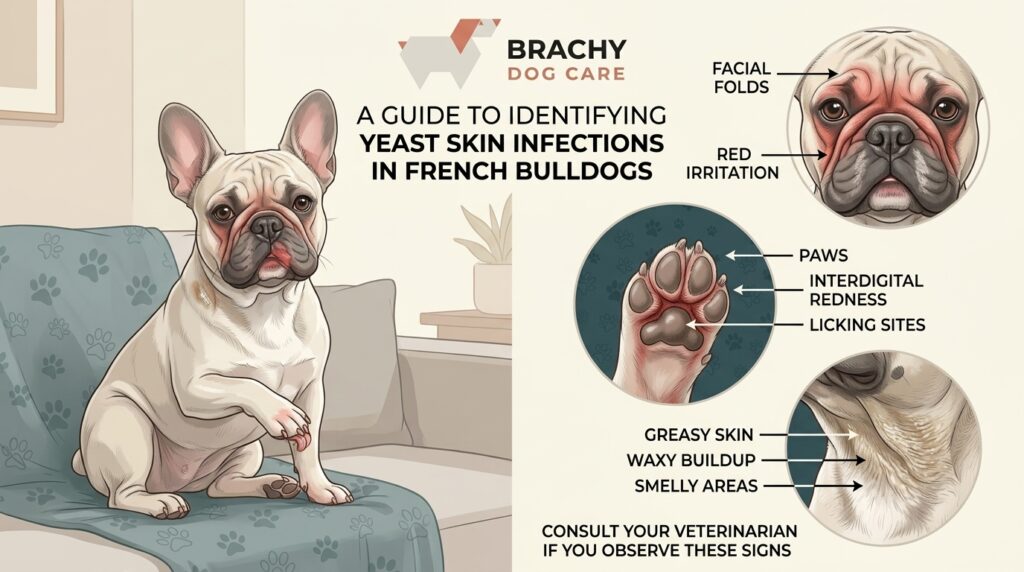
Common locations for a French Bulldog yeast skin infection include:
- facial folds
- lip folds
- neck folds
- armpits
- groin
- ventral abdomen
- paws and interdigital spaces
- ears
That pattern matters because location often gives the first clue. If your dog is licking the paws a lot, scratching the face, or rubbing one side of the body more than the other, yeast may be part of the picture. But a picture alone is never enough to confirm it.
If you are trying to compare infection patterns more broadly, our article on French Bulldog skin infection explains how yeast, bacteria, folds, and allergies can overlap.
Yeast vs bacterial infection vs allergies
This is the part that confuses most owners, and honestly, it can confuse people in veterinary medicine too. A French Bulldog yeast skin infection may look similar to a bacterial skin infection or an allergy flare, and all three can happen together.
Yeast tends to cause more:
- greasy or waxy skin
- musty odor
- thickened, darker skin in chronic cases
- itchy folds, paws, or ears
Bacterial skin infection more often causes:
- pustules
- crusts
- more sharply inflamed red patches
- hair loss
- pain or tenderness
Allergies are a major underlying trigger, not just a separate problem. A dog can have allergies first, itch because of them, break the skin barrier, and then develop yeast overgrowth on top of that. That is why treating only the visible spot does not always fix the bigger issue.
If your Frenchie has a repeated pattern of skin trouble, it helps to think of the problem in layers:
- something made the dog itchy or irritated
- the dog started licking or scratching
- the skin barrier broke down
- yeast overgrew in the damaged area
That chain of events is common in a French Bulldog yeast skin infection, which is why looking for the root cause matters so much.
How veterinarians usually confirm it
A veterinarian usually does not guess. The most common way to confirm a French Bulldog yeast skin infection is cytology, which means looking at a skin sample under the microscope. That sample can come from an impression smear, a tape prep, or a swab. Cytology helps the vet see whether the yeast is present in a normal amount or whether it has overgrown enough to be part of the problem.
That is one reason skin cases are often more straightforward in the clinic than at home. A lesion that looks vaguely “infected” can actually be yeast, bacteria, both, or something else entirely. Culture and biopsy are used less often, usually when the problem is unusual, severe, recurrent, or not responding as expected.
In practice, the vet is usually trying to answer a bigger question than “Is there yeast here?” They also want to know:
- why the yeast overgrew
- whether bacteria are present too
- whether allergies are driving the itch
- whether the ears or paws are involved
- whether the problem is likely to recur
For a concise clinician-level overview of Malassezia dermatitis, the Merck Veterinary Manual has a helpful summary here: https://www.merckvetmanual.com/skin-disorders/dermatologic-diseases-in-dogs/malassezia-dermatitis-in-dogs
What treatment often involves
Treatment depends on how widespread the problem is and what else is going on underneath. For a mild, localized French Bulldog yeast skin infection, topical therapy is often the first step. That may include medicated wipes, creams, mousses, or shampoos containing ingredients such as miconazole, ketoconazole, climbazole, or chlorhexidine combinations.
For a dog with a broader or more stubborn case, a veterinarian may prescribe systemic antifungal medication such as itraconazole, ketoconazole, or terbinafine. These medications are prescription-only and should be monitored by a veterinarian, especially if they are used for longer periods. Liver monitoring may be part of that plan, depending on the drug and the case.
Bathing instructions matter too. A medicated bath is not just “wash and rinse.” Your vet may want the product to stay on the skin for a contact time of around 10 minutes before rinsing, and the bath may need to be repeated every 3 to 5 days for several weeks. That schedule can vary, but the general point is that consistency matters more than one heavy treatment.
If there is also bacterial infection, that may need to be addressed at the same time. If itch is severe, the dog may also need a plan to calm the underlying inflammation so the skin stops getting re-traumatized.
In a lot of recurring cases, the goal is not just to clear the current French Bulldog yeast skin infection. It is to make the next flare less likely.
Safe first steps while you are waiting for the vet
There are a few low-risk things owners can do while waiting for an appointment, but these are supportive steps only.
You can:
- gently clean visible folds with a soft cloth
- dry the area thoroughly afterward
- keep the skin as dry as possible after drinking, bathing, or being outside
- take clear photographs of the area for your vet
- prevent licking or scratching if needed with a recovery collar
Some owners find it helpful to keep veterinarian-approved chlorhexidine-miconazole wipes or a matching shampoo on hand for routine maintenance between flare-ups. If your vet confirms that a product is appropriate for your dog, this can be useful for fold care and hygiene. The important part is that the product fits your dog’s skin situation and is not used as a substitute for an exam.
What you should avoid:
- human creams unless your veterinarian told you to use them
- essential oils
- alcohol
- hydrogen peroxide
- prolonged steroid use without veterinary guidance
- unprescribed antibiotics
- trying to treat a severe or spreading case at home
A French Bulldog yeast skin infection can look simple on the surface, but home remedies can easily make the skin more irritated. Dryness, gentle hygiene, and prompt veterinary care are usually the safest path.
When it becomes urgent
A French Bulldog yeast skin infection is not usually a life-threatening emergency by itself, but there are times when the situation deserves urgent veterinary attention.
Seek care quickly if you notice:
- rapidly spreading redness
- significant swelling
- open sores or ulceration
- a strong worsening odor
- marked pain
- large areas of crusting or oozing
- lethargy
- fever
- not wanting to eat
- severe ear pain
- head tilt or balance changes
Those signs may mean the problem is deeper, more inflamed, or mixed with bacterial infection or another condition. Deep ear involvement, especially, should not be ignored.
If the lesion is getting worse instead of better over a short period of time, that is another reason to call the vet sooner rather than later.
Why recurrence is so common
One of the most frustrating parts of managing a French Bulldog yeast skin infection is that it often comes back if the underlying issue is still there. That underlying issue is usually something like:
- allergies
- folds that stay moist
- chronic ear disease
- a tendency to lick or chew at the skin
- greasy or seborrheic skin
- weight or body shape that makes drying difficult
That means long-term control sometimes requires more than a single medication course. Some dogs need ongoing intermittent topical maintenance. Others need allergy management, ear care, or more careful daily fold hygiene. And some need all of the above.
This is also where the overlap with bacterial infection becomes important. If the skin remains inflamed, the yeast may disappear temporarily and then return. If the dog keeps scratching because of allergies, the same cycle can start again. A French Bulldog yeast skin infection is often a symptom of that bigger pattern, not the entire disease by itself.
How to help prevent future flare-ups
Prevention in French Bulldogs is usually about small habits, repeated consistently.
The most useful steps are:
- dry folds well after baths, drinking, and play
- keep skin folds clean without over-scrubbing
- monitor the ears for odor or debris
- manage allergies with your veterinarian’s help
- keep flea prevention consistent
- address weight if folds are becoming deeper
- watch for early itching before it turns into a bigger skin problem
If your dog has already had a French Bulldog yeast skin infection once, it is worth paying attention to the earliest clues next time. A little odor, a damp fold, or increased paw licking may be the earliest sign that another flare is starting.
For a broader look at skin barrier issues and secondary infection, our article on French Bulldog skin infection is useful background. If itch is the thing that keeps starting the cycle, the piece on French Bulldog itchy skin fits naturally alongside this one.
FAQs
Final thoughts
A French Bulldog yeast skin infection is usually not just about yeast. It is often a sign that the skin has been set up to fail by moisture, folds, allergies, itch, or another ongoing trigger. That is why the same dog may keep dealing with the same pattern unless the underlying issue is addressed too.
The good news is that this problem is usually manageable when it is caught early and treated properly. The main mistake I see owners make is waiting too long because the skin looks “not that bad” at first. In French Bulldogs, small skin changes can become larger, smellier, and more uncomfortable pretty quickly.
If your Frenchie is dealing with a French Bulldog yeast skin infection right now, start with your veterinarian. If the dog is healthy today, consistent fold care, allergy awareness, and early attention to itch can make a real difference over time.
As always, this article is educational and not a substitute for veterinary diagnosis or treatment.

Why Your French Bulldog Chews Everything (and How to Stop It)
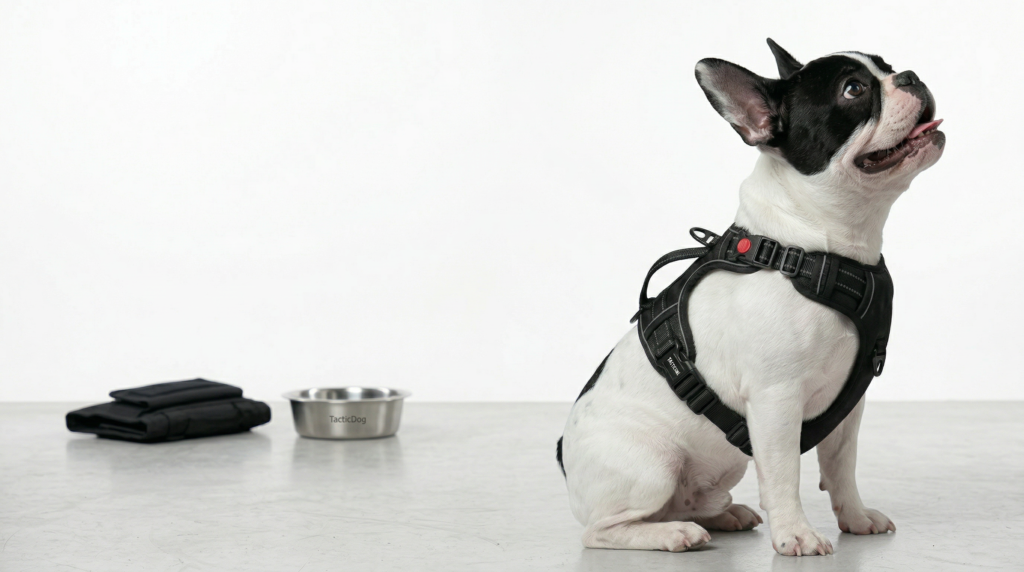
Ultimate 2026 French Bulldog Harness & Health Guide
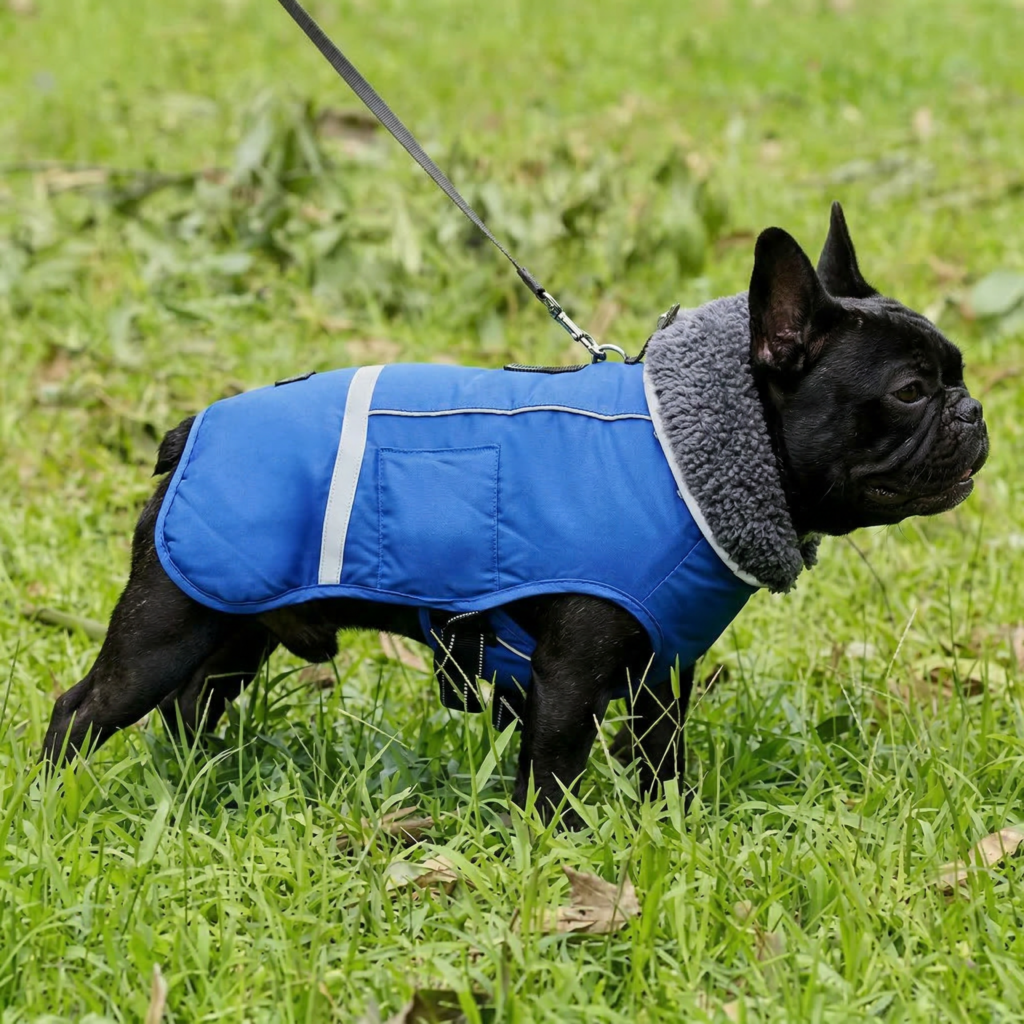
The Complete Scientific Guide to Cooling Vests for French Bulldogs
Overweight French Bulldog: Healthy Weight, Fat Frenchie Risks, and Safe Weight Loss Guide
Joint Supplements for French Bulldogs: What Actually Works