A Veterinary Student’s Analysis of Thermoregulation, Fit, and Safety
By: Jinna CAMEROUN | 19-Year-Old Veterinary Medical Student, Brachycephalic Anatomy Specialist Reading Time: 15 Minutes
If you notice a red or pink lump in the inner corner of your dog’s eye, French bulldog cherry eye may be the reason. This condition can look dramatic at first, but it is also a very real eye-health issue because it involves a tear-producing gland that helps keep the eye protected and comfortable.
Many owners first panic because the swelling seems to appear suddenly. That reaction is understandable. The good news is that French bulldog cherry eye is a known condition, and vets see it often enough to diagnose and manage it effectively. What matters most is understanding what it is, what it looks like, and why proper treatment can help protect your dog’s long-term eye health.
French bulldogs are one of the breeds more likely to develop this issue. Because of that, learning about French bulldog cherry eye is especially useful if you own a Frenchie or are researching common eye problems in flat-faced dogs.
Educational disclaimer: This article is for informational purposes only and does not replace professional veterinary diagnosis, or treatment. If your dog has eye redness, discharge, squinting, or a visible lump, contact your veterinarian promptly.
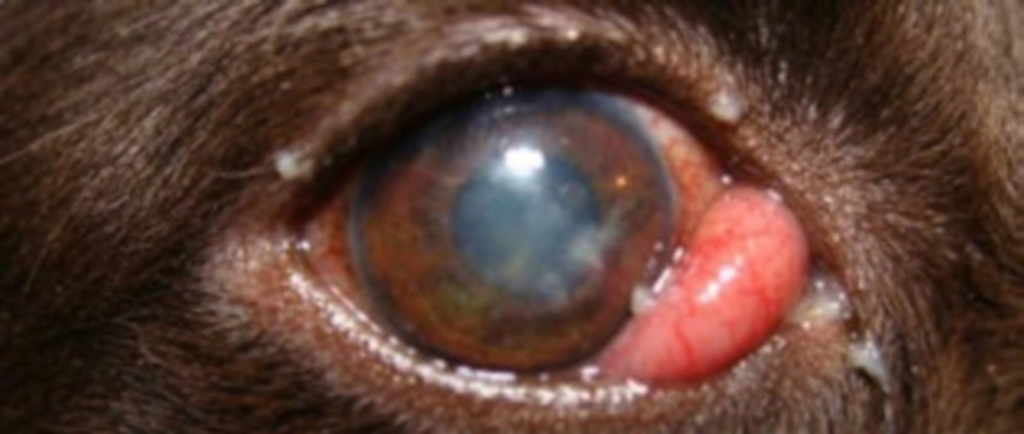
What is French bulldog cherry eye?
French bulldog cherry eye is the common term used when the gland of the third eyelid slips out of its normal position and becomes visible. Dogs have a third eyelid, also called the nictitating membrane, in the inner corner of the eye. Inside that third eyelid is a gland that helps produce part of the tear film.
When that gland prolapses, it creates the rounded pink or red swelling owners often describe as a “cherry.” That is why the condition is called cherry eye.
Although French bulldog cherry eye may look like a simple lump, it is more than a cosmetic problem. The third eyelid gland contributes to normal tear production, and if the gland becomes inflamed, damaged, or removed, the dog may be at greater risk of chronic dry eye later on.
What does French bulldog cherry eye look like?
The classic appearance of French bulldog cherry eye is a fleshy pink or red lump in the inner corner of the eye, usually near the nose side. In mild cases, the lump may look small at first. In more obvious cases, it can appear suddenly and stay visible.
Owners may notice:
- a round pink or red swelling in the eye corner
- a fleshy lump that looks unusual or new
- increased eye redness
- watery eyes
- sticky or mucus-like discharge
- squinting or blinking more than usual
- rubbing at the face
Sometimes French bulldog cherry eye seems to come and go in the early stage. The gland may slip back temporarily and then prolapse again later. Over time, if irritation increases, the swelling often becomes more persistent.
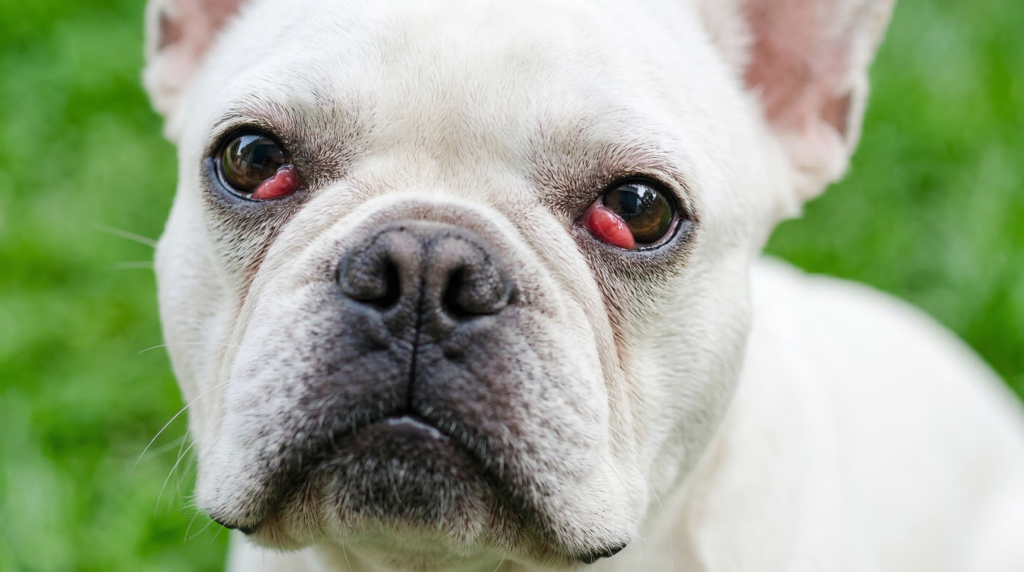
What causes French bulldog cherry eye?
The most widely accepted explanation is that the connective tissues that hold the gland in place are too weak or become stretched. Once those supporting tissues fail to keep the gland anchored normally, the gland can pop forward.
There is also an important breed factor. French bulldog cherry eye is more commonly discussed in Frenchies because this breed is predisposed to several eye problems.
Breed predisposition and head shape
French bulldogs are brachycephalic, meaning they have a shortened skull and flatter face. Their eyes are often more prominent and more exposed than those of many longer-nosed breeds. This head shape may increase the risk of certain eye conditions, including French bulldog cherry eye.
That does not mean every Frenchie will develop it, but it does mean the breed has a higher reason for careful eye monitoring.
Why the third eyelid gland matters
The gland involved in French bulldog cherry eye is not just extra tissue. It plays a real role in tear production. Healthy tears help:
- lubricate the surface of the eye
- protect the cornea
- flush away debris
- keep the eye comfortable
That is why preserving the gland is such an important part of modern treatment.
Common symptoms of French bulldog cherry eye
The most obvious sign is the visible lump, but French bulldog cherry eye can come with other symptoms too.
These may include:
- red or pink mass in the inner corner of the eye
- mild swelling around the eye
- blinking more often
- squinting
- watery eyes
- eye discharge
- rubbing or pawing at the eye
- visible irritation of nearby tissues
Not every dog will show the same level of discomfort. Some Frenchies seem only mildly bothered at first, while others become irritated quickly.
If French bulldog cherry eye is accompanied by heavy discharge, cloudiness, severe squinting, or obvious pain, that deserves urgent veterinary attention because another eye problem may also be present.
Is French bulldog cherry eye painful?
A lot of owners ask whether French bulldog cherry eye is painful. The answer is that it may not always be severely painful at the start, but it can definitely be uncomfortable and irritating.
Some dogs mainly show:
- extra blinking
- rubbing at the face
- pawing at the eye
- mild squinting
As the exposed gland becomes more inflamed, discomfort may increase. If the eye develops secondary dryness, corneal irritation, or ulceration, then pain becomes a much bigger concern.
So while French bulldog cherry eye may not always begin as a dramatic emergency, it should never be ignored.
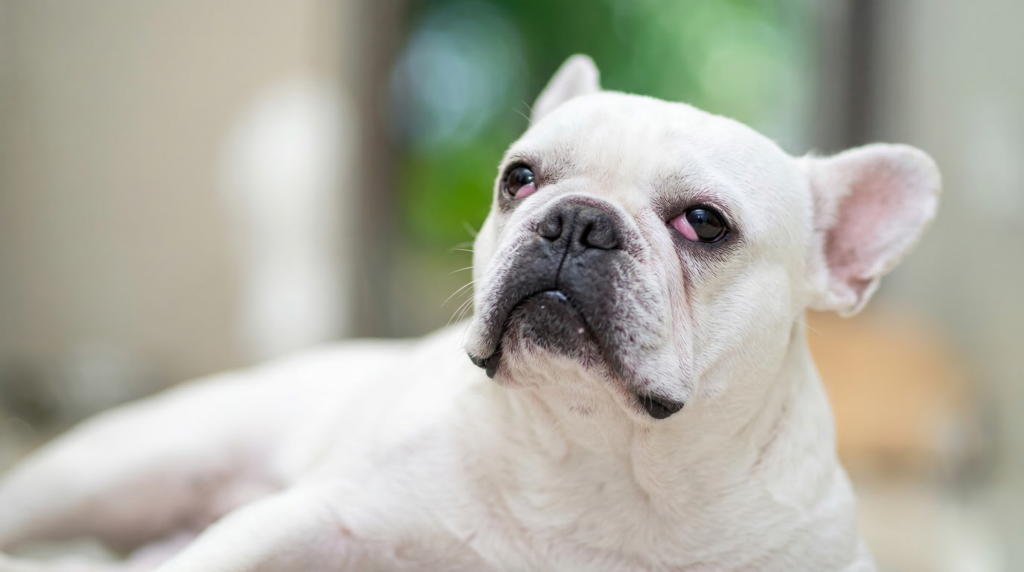
Can French bulldog cherry eye heal on its own?
Many people hope the prolapsed gland will simply go away. In some cases, it may slip back into place temporarily. That can make it seem as though the issue has resolved. However, French bulldog cherry eye often returns after that temporary improvement.
So, can French bulldog cherry eye heal on its own? Long-term, spontaneous resolution is uncommon. Temporary improvement can happen, but many dogs eventually need veterinary treatment, and surgery is often the best long-term solution when the prolapse persists.
Because of that, a wait-and-see approach is usually not the most reliable plan.
What happens if French bulldog cherry eye is left untreated?
Leaving French bulldog cherry eye untreated can lead to more than a visible red lump. The gland is supposed to stay protected, and when it remains exposed, it can become increasingly irritated.
Possible complications include:
- chronic inflammation
- reduced tear production
- dry eye
- conjunctival irritation
- discharge
- repeated rubbing and self-trauma
- corneal damage
One of the biggest long-term concerns is dry eye, because the gland contributes to normal tear production. This is one reason why French bulldog cherry eye is taken seriously by veterinarians, even if it does not look catastrophic in the beginning.
Can you push French bulldog cherry eye back in at home?
A lot of owners search for home solutions, especially after seeing videos online. However, trying to manually fix French bulldog cherry eye at home is risky.
Trying to push the gland back in yourself can:
- scratch the cornea
- worsen swelling
- irritate the gland
- delay proper treatment
A vet may occasionally use medication and careful manipulation in a controlled setting, but that is very different from trying to handle French bulldog cherry eye on your own at home.
The safest step is to keep your Frenchie from rubbing the eye and arrange a veterinary exam.
How a veterinarian diagnoses French bulldog cherry eye
In many cases, French bulldog cherry eye is diagnosed based on how the prolapsed gland looks during an eye exam. Your veterinarian may:
- inspect the inner corner of the eye
- assess whether one or both eyes are affected
- look for discharge or infection
- check the cornea for scratches or ulcers
- evaluate tear production if needed
This exam is important because some other eye conditions in French bulldogs can also cause redness, swelling, or visible irritation.
French bulldog cherry eye treatment options
The two main approaches to French bulldog cherry eye treatment are supportive medical care and surgery.
Medical management
Medical treatment may include:
- lubricating eye drops or gel
- anti-inflammatory medication prescribed by a vet
- treatment for secondary infection if needed
These measures may reduce swelling and improve comfort, especially in the short term. In some cases, the gland may look less swollen for a while. Still, medical care alone often does not permanently solve French bulldog cherry eye if the gland keeps prolapsing.
When surgery is recommended
Because the gland is important for tear production, surgery is commonly recommended if the prolapse remains visible or keeps returning. The goal of French bulldog cherry eye treatment is usually to reposition and preserve the gland rather than remove it.
For many dogs, surgery offers the best chance of long-term stability and protection of tear function.
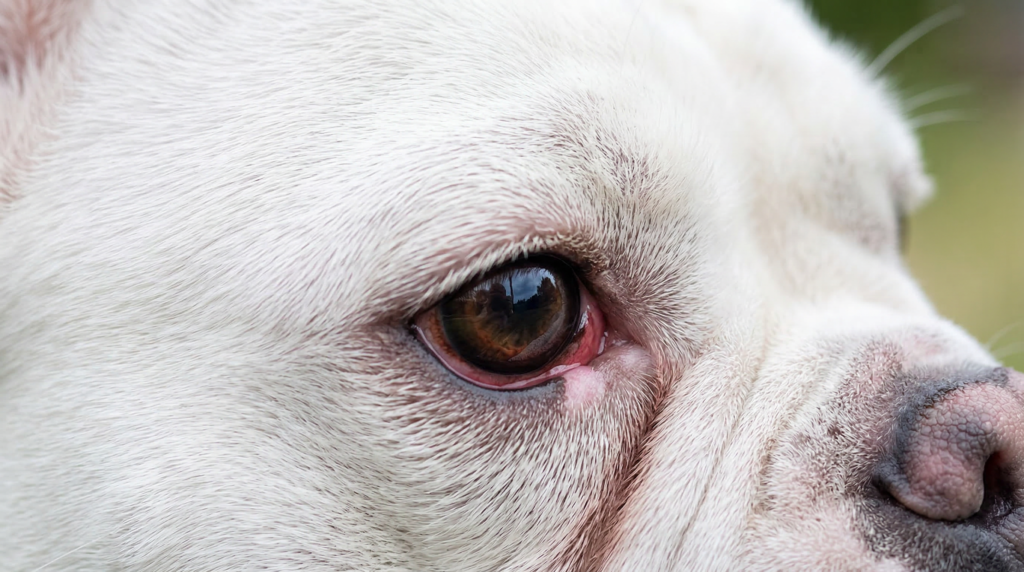
French bulldog cherry eye surgery
French bulldog cherry eye surgery is performed to reposition the gland into a more normal place and keep it functioning. The exact technique depends on the veterinarian and the case.
Common surgical approaches
The most common methods include:
- pocket techniques
- anchoring or tacking techniques
Both methods aim to preserve the gland.
Why removal is usually avoided
In the past, removing the prolapsed gland was more common. While that got rid of the visible lump, it also increased the risk of dry eye later. Because of that, modern French bulldog cherry eye treatment usually focuses on gland preservation whenever possible.
Recovery after French bulldog cherry eye surgery
Most dogs recover well after French bulldog cherry eye surgery, but aftercare matters a lot.
Your vet may prescribe:
- a cone or e-collar
- eye drops or ointment
- pain medication if needed
- follow-up visits
During recovery, you may need to:
- prevent rubbing or scratching
- give medication exactly as directed
- watch for increased redness or discharge
- return for rechecks
The eye may still look slightly swollen or red during the first few days. Mild post-operative inflammation is common. What matters is steady improvement.
If the lump seems to return or your dog appears more uncomfortable instead of less, contact your veterinarian promptly.
Can French bulldog cherry eye come back after surgery?
Yes, French bulldog cherry eye can recur after surgery. Even with good treatment, some dogs experience another prolapse.
Possible factors include:
- the dog’s individual anatomy
- the amount of inflammation before surgery
- healing response
- the technique used
- rubbing during recovery
That said, many dogs do well long term after French bulldog cherry eye surgery and do not have ongoing issues.
How much does French bulldog cherry eye treatment cost?
The cost of French bulldog cherry eye treatment can vary depending on your location, whether one or both eyes are affected, the clinic you use, and whether a general veterinarian or veterinary ophthalmologist performs the procedure.
Here is a general cost guide:
| Treatment item | Typical cost range |
|---|---|
| Initial veterinary exam | $50–$150 |
| Eye stain or tear test | $20–$80 |
| Prescription eye drops or medication | $20–$100 |
| Cherry eye surgery, one eye | $300–$1,200 |
| Cherry eye surgery, both eyes | $600–$2,000 |
| Specialist ophthalmology surgery | $800–$2,500+ |
| Follow-up visit | $40–$120 |
| E-collar / recovery supplies | $10–$40 |
What affects the cost?
The final price may be higher or lower depending on:
- your city or country
- whether surgery is done by your regular vet or a specialist
- whether one or both eyes need treatment
- medications and follow-up visits
- whether your dog needs extra tests before anesthesia
If you have pet insurance, check whether eye surgery is covered under your plan.
When to see a vet urgently
You should contact a veterinarian as soon as possible if your dog has:
- a new red lump in the inner eye corner
- squinting or holding the eye closed
- thick discharge
- a cloudy or blue-looking eye
- obvious pain
- repeated rubbing or pawing
- sudden worsening swelling
Although French bulldog cherry eye itself may not always be a same-hour emergency, eye problems can worsen quickly, and some other conditions can look similar while being more serious.
What not to do
If you suspect French bulldog cherry eye, avoid these common mistakes:
- do not try to force the gland back in
- do not use human eye drops unless a vet approves them
- do not ignore pain, cloudiness, or heavy discharge
- do not let your dog keep rubbing the eye
- do not assume it will permanently go away on its own
FAQ about French bulldog cherry eye
Conclusion
French bulldog cherry eye is more than a red lump in the corner of the eye. It involves an important tear-producing gland, which is why early veterinary assessment matters. While the condition may not always start as a severe emergency, it can lead to ongoing irritation, tear problems, and more serious eye complications if left untreated.
If you notice signs of French bulldog cherry eye in your dog, avoid trying to fix it at home and book a veterinary visit as soon as possible. With the right care, many Frenchies do very well and can return to being comfortable quickly.
Final reminder: This article is educational only and does not replace professional veterinary care. If your dog has eye redness, discharge, squinting, or a new visible lump, contact your veterinarian.
Looking at your Frenchie’s health as a whole
Cherry eye is just one example of the broader pattern of eye issues in French bulldogs and tear production problems like dry eye Because Frenchies are a brachycephalic breed, they can also be prone to dryness, corneal irritation, and other eye problems that owners should watch closely. Looking at eye health alongside other common breed concerns such as BOAS, heat stroke, and even daily care choices like using a properly fitted harness for French bulldogs can help owners build a more complete approach to Frenchie health,and also what eye discharge in French Bulldogs can mean
French Bulldog Cost in 2026: Price, Vet Bills, and the True Lifetime Cost
French Bulldog Temperament: Personality, and Are They Good Family Dogs?
Best Dog Toothpaste for French Bulldogs: A Vet-Guided Guide
Do French Bulldogs Shed? Coat, Grooming, and When to Worry
Why Your French Bulldog Chews Everything (and How to Stop It)
Calming Aids for French Bulldogs: What Actually Works