Written by Jinna CAMERON, veterinary medical student and dog health researcher. Reviewed for factual accuracy against trusted veterinary sources by DVM Carla DONTESK
French Bulldog paw licking is a common concern for owners, especially when it starts happening more often, lasts longer, or becomes difficult to interrupt. A little licking now and then can be normal grooming, but persistent French Bulldog paw licking usually means something is irritating the skin, making the paws itchy, or causing discomfort.
In many cases, the paws are not the real problem. French Bulldog paw licking is often a sign of an underlying issue such as allergies, a skin infection, irritation between the toes, or even pain. French Bulldogs are especially prone to these problems because of their sensitive skin, allergy tendencies, and breed traits that can make skin issues more noticeable.
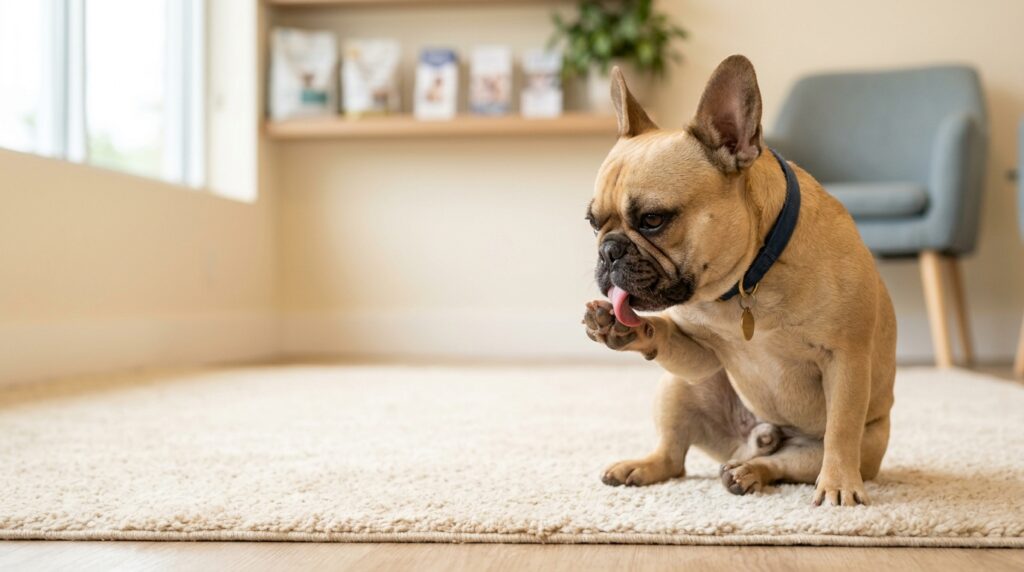
This guide explains the most common causes of French Bulldog paw licking, the signs that should not be ignored, safe things you can do at home, and when it is time to call the vet.
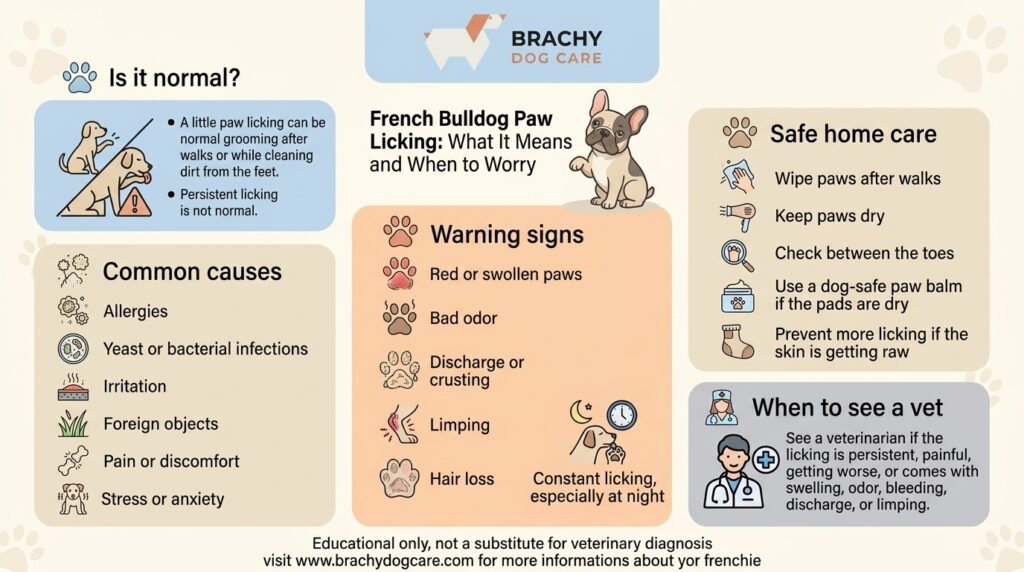
Is paw licking normal in french bulldogs?
Some paw licking is completely normal. Dogs naturally groom themselves, clean debris from their paws, and sometimes lick after walks or outdoor activity.
A healthy French Bulldog may:
- briefly lick its paws after being outside
- clean dirt from between the toes
- lick once in a while before settling down to rest
French Bulldog paw licking becomes more concerning when it
- happens repeatedly
- is hard to interrupt
- focuses on one paw
- seems obsessive
- is paired with redness, swelling, or odor
When licking becomes constant, the skin can stay moist and irritated, which raises the risk of inflammation and secondary infection.
Common causes of French Bulldog paw licking
Environmental allergies
Environmental allergies are one of the most common reasons for French Bulldog paw licking.
French Bulldogs are often prone to canine atopic dermatitis, a chronic allergic skin condition linked to triggers like pollen, grass, dust mites, and mould. When allergens touch the skin, the paws can become itchy and inflamed, and many dogs respond by licking or chewing the feet.
Signs that may suggest environmental allergies include:
- seasonal flare-ups
- licking after walks
- redness between the toes
- recurring ear problems
- itchy skin on the belly, face, or legs
Many owners notice French Bulldog paw licking gets worse in spring and summer when pollen levels rise. If your dog also has broader itching issues, our guide to French Bulldog allergies may help.
Food allergies
Food allergies can also contribute to French Bulldog paw licking, although they are usually less common than environmental allergies.
Dogs with food-related allergies may develop:
- itchy paws
- recurring ear infections
- skin irritation
- digestive upset in some cases
Proteins such as chicken, beef, dairy, or certain grains are sometimes involved, but identifying food allergies usually requires a structured elimination diet supervised by a veterinarian. Random diet changes at home can make the picture harder to sort out later.

If food seems like a possible trigger, see our related guide on French Bulldog food allergies.
Yeast infections between the toes
Chronic licking creates moisture between the toes, and that damp environment can encourage yeast overgrowth.
Yeast infections in the paws often cause the following:
- redness
- brown saliva staining
- greasy skin
- a musty odor
- persistent itchiness
Many owners notice their French bulldog’s paw licking gets worse at night, when the house is quiet and the irritation becomes easier for the dog to focus on. Yeast issues are especially common in dogs with underlying allergies because allergic inflammation weakens the skin barrier and changes the skin environment.
Bacterial skin infections
Bacterial infections can develop alongside allergies or after the skin becomes damaged from repeated licking.
Signs may include:
- swelling
- redness
- discharge
- crusting
- pain
- small bumps between the toes
Some French Bulldogs develop painful inflamed nodules between the toes called interdigital furuncles, which may look like cysts. Because bacterial infections can worsen quickly, French Bulldog paw licking with visible inflammation should be checked by a veterinarian rather than managed only with home remedies.
Dry or irritated paw pads
Not all French Bulldog paw licking is caused by allergies.
French Bulldogs may also lick their paws because of irritation from the following:
- hot pavement
- rough surfaces
- snow salt
- cleaning chemicals
- dry or cracked paw pads
After walks, it is worth checking the paw pads for cracks, redness, abrasions, or trapped debris, especially during very hot or very cold weather. If dryness is the main issue, a dog-safe paw balm can help support the skin barrier. This is also a natural place to add an affiliate product if you want to feature one.
Foreign bodies or injuries
Sudden paw licking that stays focused on one foot may point to a splinter, grass awn, thorn, torn nail, or another foreign object trapped between the toes.
Owners sometimes cannot see the problem easily because the object is buried in the fur or lodged deeper in the skin. Warning signs include:
- limping
- swelling
- sensitivity when the paw is touched
- sudden onset of licking
- holding one paw up
If the paw looks painful or swollen, it is safer to have a veterinarian examine it than to try removing something deeply embedded at home.
Pain or orthopedic discomfort
Dogs often lick areas that hurt, even when the problem is deeper than the skin.
French Bulldog paw licking can sometimes be linked to the following:
- joint pain
- nail injuries
- arthritis
- spinal discomfort
- localized nerve irritation
This becomes more likely if the licking happens alongside stiffness, limping, reluctance to exercise, or a change in how the dog moves.
Stress or anxiety
Behavioural licking can happen, although medical causes should usually be ruled out first.
Some dogs develop repetitive licking habits because of:
- stress
- boredom
- anxiety
- lack of stimulation
- changes in routine
Behaviour-related French Bulldog paw licking is more likely when the skin looks mostly normal and the behaviour increases during quiet periods or separation from the owner. Even so, it is important not to assume anxiety is the main cause too quickly. Many dogs with allergies are mistaken for anxious dogs when they are actually uncomfortable.
Signs the paw licking may be a medical problem
Occasional licking is usually harmless, but persistent or intense licking deserves attention.
Watch for:
- redness between the toes
- swollen paws
- odor
- discharge
- limping
- bleeding skin
- hair loss
- thickened skin
- constant nighttime licking
- visible pain
- saliva staining
- repeated ear problems
A FrenchOne pattern many owners notice is that paw problems often appear alongside ear irritation or recurring infections. In French Bulldogs, itchy paws and chronic ear issues frequently overlap because both can be linked to allergic skin disease. If that sounds familiar, our article on ear infections in French bulldogs may help.
What red or brown paw staining can mean
Many owners notice reddish-brown discolouration on the fur around the paws.
This staining is usually caused by saliva exposure from repeated licking. Over time, moisture and irritation can change both the appearance of the fur and the condition of the skin underneath.
Red or brown staining may occur with:
- allergies
- yeast overgrowth
- chronic inflammation
- damp skin between the toes
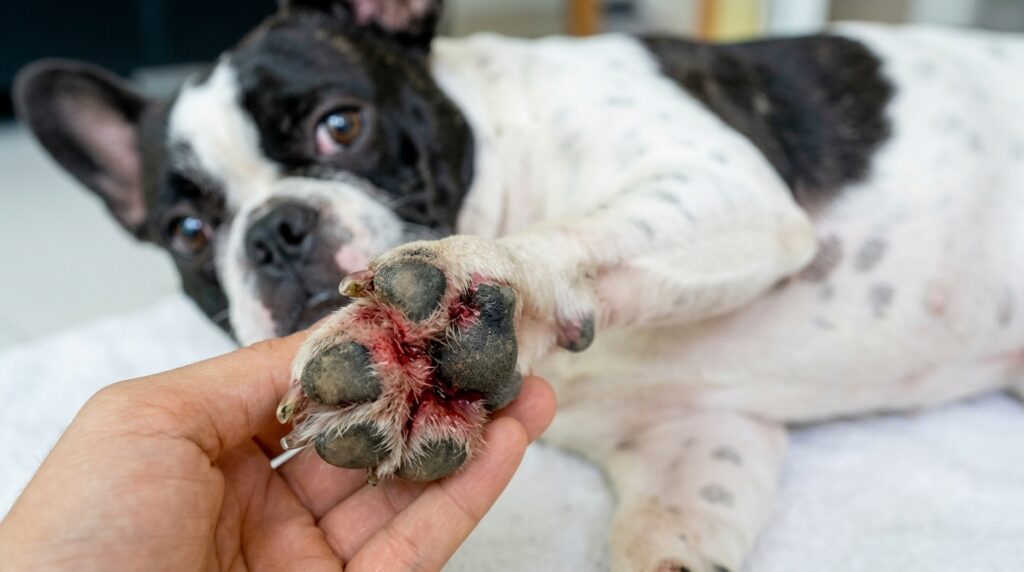
The staining itself is not always dangerous, but it often means the French bulldog’s paw licking has become chronic. If the paws also smell unusual or look greasy, yeast overgrowth becomes more likely.
Why French Bulldogs are prone to paw problems
French Bulldogs have several breed-related traits that increase their risk of skin irritation and allergic disease.
Research on brachycephalic breeds suggests they may have:
- more sensitive skin barriers
- a higher rate of allergic skin disease
- greater risk of skin fold irritation
- more secondary infections
Their compact structure and skin folds can also create warm, moist environments where bacteria and yeast thrive more easily.
if you want a more detailed dermatitis guide check the vet manual: https://www.merckvetmanual.com/
This overlap helps explain why some French Bulldogs develop repeated issues involving itchy paws, ear infections, facial rubbing, and broader skin irritation at the same time.
Paw licking can happen with allergies, irritation, or infection, and sometimes more than one is going on at once. If your French Bulldog is licking the paws and also has redness elsewhere, it may be worth looking at the bigger picture. Read more in our guide to French Bulldog allergies vs skin infection.
How veterinarians diagnose excessive paw licking
Because French Bulldog paw licking can have multiple causes, diagnosis usually involves several steps rather than a single test.
A veterinarian may ask about the following:
- when the licking started
- whether symptoms are seasonal
- diet history
- exposure to grass or other allergens
- signs of ear or skin disease
They may also perform:
- skin cytology to look for bacteria or yeast
- a careful paw exam for foreign objects, nail problems, or swelling
- skin scrapings if parasites are suspected
- fungal testing if needed
- culture or imaging in more complex cases
If allergies are suspected, the vet may discuss elimination diet trials, allergy management, or referral to a veterinary dermatologist.
Safe things owners can do at home
Home care should focus on reducing irritation while avoiding anything that might make inflammation worse.
Helpful steps include:
- wiping the paws after walks to remove pollen, dirt, and outdoor allergens
- keeping the paws dry, especially between the toes
- checking the feet regularly for cuts, redness, swelling, or debris
- limiting licking if the skin is becoming raw
If your dog keeps licking nonstop, some dogs temporarily benefit from soft recovery collars or protective socks while the underlying cause is being addressed.
For mild dryness or cracked paw pads, a veterinarian-approved paw balm can help support the skin barrier. A fragrance-free dog-safe balm is often a good choice for sensitive paws.
Things owners should avoid
Some home treatments can make paw irritation worse.
Avoid:
- essential oils
- hydrogen peroxide
- alcohol-based sprays
- harsh disinfectants
- human creams without veterinary guidance
- excessive washing with strong soaps
It is also important not to assume every case is caused by food allergies. Restrictive diets started without supervision can create nutritional problems and delay proper diagnosis.
When to see a veterinarian
Veterinary evaluation is important if your French Bulldog has persistent paw licking with swelling, limping, bleeding skin, odour, discharge, or visible pain.
You should also make an appointment if:
- the licking suddenly becomes severe
- symptoms keep returning
- home care is not helping
- your dog seems uncomfortable at night
- sores or open skin appear
- there are repeated ear infections or other allergy signs
Early treatment may help prevent chronic skin thickening, deeper infections, and long-term discomfort.
Can paw licking be prevented?
Not every case can be fully prevented, especially when allergies are involved, but good skin care can reduce flare-ups.
Helpful prevention strategies include:
- regular paw inspections
- cleaning the feet after walks
- controlling moisture
- avoiding overheated pavement during warm weather
- managing allergies early rather than waiting for major flare-ups
For allergy-prone French Bulldogs, finding the trigger early is often more effective than repeatedly dealing with severe symptoms later.
FAQs
Conclusion
French Bulldog paw licking is often more than a simple habit. In many dogs, it is a visible sign of itching, inflammation, irritation, infection, or discomfort that deserves closer attention.
Environmental allergies, food sensitivities, yeast overgrowth, bacterial infections, irritation between the toes, pain, and even stress can all play a role. Because French Bulldogs are especially prone to skin problems, recurring French Bulldog paw licking should not be ignored when it becomes persistent or severe.
Careful monitoring, gentle home care, and early veterinary evaluation can help identify the real cause before the skin becomes significantly damaged. For many French Bulldogs, treating the root problem is the key to reducing the licking itself.
French Bulldog Cost in 2026: Price, Vet Bills, and the True Lifetime Cost
French Bulldog Temperament: Personality, and Are They Good Family Dogs?
Best Dog Toothpaste for French Bulldogs: A Vet-Guided Guide
Do French Bulldogs Shed? Coat, Grooming, and When to Worry
Why Your French Bulldog Chews Everything (and How to Stop It)