Written by Jinna CAMERON, veterinary medical student and dog health researcher. Reviewed for factual accuracy against trusted veterinary sources by DVM Carla DONTESK
French Bulldog allergies are one of the most common reasons owners start noticing repeated itching, red skin, ear problems, or paw licking in this breed. The frustrating part is that French Bulldog allergies are not one single problem. They can involve environmental triggers, food reactions, fleas, contact irritation, and secondary skin or ear infections that build on top of the original issue.
That is why French Bulldog allergies can be hard to recognize early. A dog may look “just itchy” for a while, when the real pattern is already becoming clear. The goal of this guide is to explain what French Bulldog allergies usually look like, what commonly causes them, what owners can safely do at home, and when it is time to involve a veterinarian.
What French Bulldog allergies usually look like
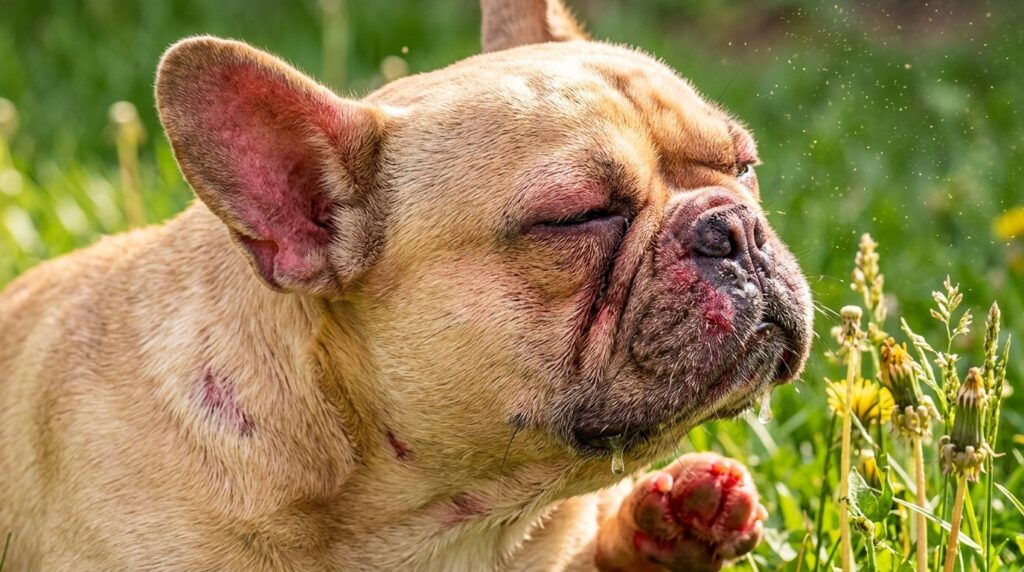
French Bulldog allergies often show up on the skin first. Some dogs scratch a lot. Others lick their paws, rub their face, or develop recurring ear problems before the skin looks obviously inflamed. In many French Bulldog allergies, the signs are more uncomfortable than dramatic at first, which is part of why owners sometimes assume the problem is minor.
Common signs include:
- scratching or biting at the skin
- licking or chewing the paws
- face rubbing
- red skin, especially on the belly, groin, armpits, paws, or around the ears
- recurrent ear infections
- head shaking or ear scratching
- skin odor or greasy skin
- small rashes, bumps, or crusting
- hair loss from repeated licking or rubbing
- watery eyes in some dogs
- licking the groin or belly
- occasional sneezing if environmental irritation is involved
Not every itchy French Bulldog has French Bulldog allergies. Parasites, yeast, bacterial infection, mange, and simple skin-fold irritation can look similar. That is especially true in this breed because the skin folds and ear canals can make irritation easier to notice and infection easier to develop.
A useful rule of thumb is this: if the itching keeps coming back, if ears are repeatedly involved, or if redness seems to return in the same areas, French Bulldog allergies move higher on the list of likely causes.
What causes French Bulldog allergies?
French Bulldog allergies usually fall into a few broad categories. The most common are environmental allergies, food adverse reactions, flea allergy dermatitis, and contact irritation. Secondary infections often complicate the picture.
1) Environmental allergies
Environmental allergies are also called atopic allergies or atopic dermatitis. These are very common in French Bulldog allergies. In practical terms, this means the dog is reacting to things in the environment such as dust mites, pollens, molds, or grass.
Studies in French Bulldogs and other dogs with atopic skin disease have found that common triggers often include:
- house dust mites
- grass pollens
- molds
- weeds or tree pollens in some dogs
French Bulldogs seem overrepresented in skin and ear allergy cases, but that does not mean they are “allergic to everything.” It means the breed tends to show the problem through the skin barrier, immune response, and ear/skin anatomy. Genetics likely play a role, and some studies have suggested immune-related variants may increase risk.
For a clear veterinary overview of this pattern, the Merck Veterinary Manual’s page on atopic dermatitis in dogs is a solid reference.
2) Food adverse reactions
Food is another important part of French Bulldog allergies, but it is easy to overestimate its role. Owners often suspect food first because diet feels controllable. In reality, food is one possible cause, not the default cause.
Food adverse reactions can cause:
- itching
- paw licking
- ear inflammation
- red skin
- recurrent infections
- sometimes vomiting or diarrhea
The key point is that French Bulldog allergies caused by food cannot be confirmed by guessing. A strict elimination diet trial is usually needed. Many dogs with food-related French Bulldog allergies also have skin and ear signs that look very similar to environmental allergies.
If your French Bulldog’s itching, ear problems, or skin irritation seems to happen after certain foods, it may be worth looking at the bigger picture. In some dogs, French Bulldog food allergies can cause signs that look very similar to environmental allergies or skin infections, which is why a careful, step-by-step approach matters.
3) Flea allergy dermatitis
Even a small number of flea bites can trigger major itching in a sensitive dog. Flea allergy dermatitis is worth thinking about even if you do not see fleas. French Bulldogs that live indoors can still pick up fleas from other pets, yards, or shared environments.
If a dog is suddenly much itchier around the base of the tail, back legs, or hindquarters, flea allergy should stay on the list.
4) Contact irritation
Some French Bulldog allergies are really contact reactions or irritant responses. These may happen after exposure to:
- scented cleaners
- harsh shampoos
- fabric detergents
- grass or outdoor surfaces
- topical products that irritate the skin
This is not always a true allergy in the immune sense, but it can still make a Frenchie uncomfortable.
5) Secondary yeast or bacterial infections
This part matters a lot. Many French Bulldog allergies become more obvious because yeast or bacteria move into already inflamed skin. That can create:
- odor
- greasy skin
- redness
- crusting
- moist skin folds
- repeated ear problems
Sometimes the infection is what owners notice first, but the underlying trigger is still French Bulldog allergies.
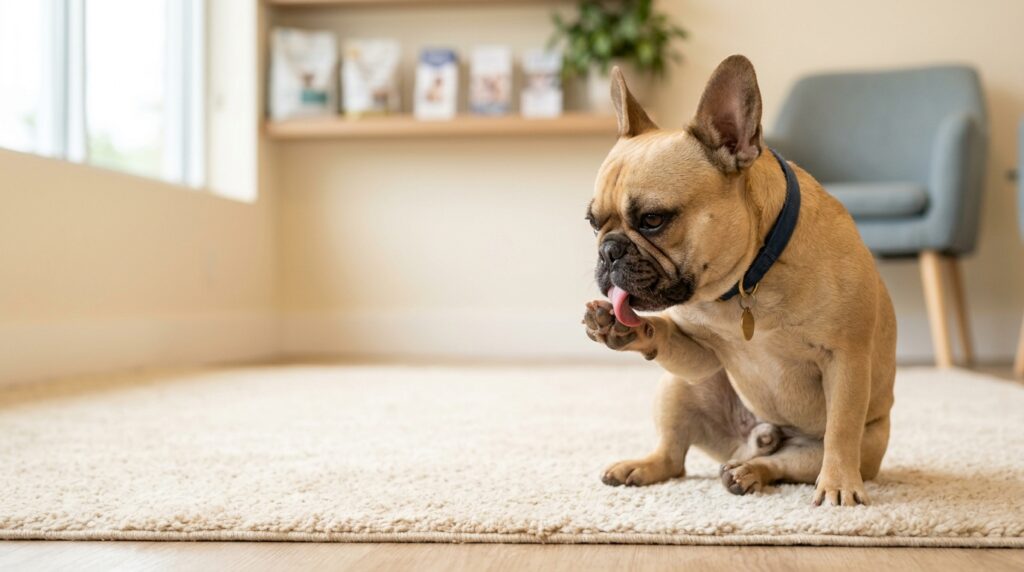
When food allergies are involved, French Bulldogs may develop itchy paws along with skin irritation or recurring ear problems. Since paw licking can have several different causes, it helps to look at the full picture, our guide to French Bulldog paw licking walks through the most likely explanations in a simple way.
Food vs environmental French Bulldog allergies
One of the most important distinctions is between food-related French Bulldog allergies and environmental French Bulldog allergies.
Food allergy
A food allergy is an immune reaction to something in the diet, usually a protein source. The diagnosis is not made by a quick test or by switching foods randomly. The most useful diagnostic tool is a strict elimination diet trial.
Food intolerance
Food intolerance is different. It does not necessarily involve the immune system. It may cause digestive upset, soft stool, gas, or vomiting, but it is not the same as a true allergy.

Environmental allergy
Environmental allergy means the dog is reacting to something inhaled or touched in the environment, such as dust mites, pollen, or mold. These French Bulldog allergies are often chronic, and signs may be seasonal at first but become year-round in some dogs.
Can a dog have both?
Yes. A French Bulldog can absolutely have both food and environmental allergies at the same time. That is one reason diagnosis can take time. If a dog improves partially on a diet change but still scratches, food may only be part of the story.
In general, food is not the only or even the most common cause of French Bulldog allergies. But it is common enough that it deserves careful, structured evaluation.
Food triggers in French Bulldog allergies: what the evidence says
This is the section many owners care about first, and for good reason. Search demand is very strong around food because people want practical answers. Still, the evidence needs to stay honest.
The ingredients most often associated with canine food adverse reactions in the veterinary literature include:
- beef
- dairy
- chicken
- wheat
- egg
- soy
- lamb
- corn
Across studies, the most commonly reported triggers are often some mix of beef, dairy, and chicken. That does not mean every French Bulldog with itching is reacting to chicken. It means those ingredients appear often enough in the evidence that they deserve attention during a proper elimination trial.
The phrase “top 3 food allergies in dogs” usually refers to beef, dairy, and chicken, but that shorthand can be misleading. It sounds more certain than the data really is. In practice, individual dogs vary a lot. Some react to a protein, some to multiple ingredients, and some do not have a food problem at all.
A few practical points matter here:
- grain is not automatically the cause
- “limited ingredient” does not always mean hypoallergenic
- switching from one over-the-counter food to another is not a true diagnostic trial
- flavored treats, chews, toothpaste, and table scraps can break an elimination diet
If French Bulldog allergies seem food-related, the most reliable next step is a vet-guided elimination diet, often using a prescription hydrolyzed or novel protein diet.
What owners can safely do at home
French Bulldog allergies can be supported at home, but home care should stay in the supportive category. It should not turn into guesswork or risky treatment.
Safe steps include:
1) Keep a symptom log
Track:
- when itching starts
- where the itching is worst
- whether ears, paws, or belly are involved
- any food changes
- grooming products used
- walks, weather, and pollen-heavy days
- whether symptoms worsen after certain treats or chews
A symptom log makes French Bulldog allergies much easier to evaluate over time.
2) Use strict flea prevention
Year-round flea control is one of the simplest ways to reduce confusion. Even if fleas are not the main cause, they can make French Bulldog allergies look much worse.

3) Bathe or wipe the dog gently if your vet says it is appropriate
Some dogs benefit from gentle bathing or wiping the coat and paws after outdoor exposure. Use a vet-approved product if possible. Avoid harsh shampoos, scented wipes, or overly frequent bathing without guidance, because that can irritate the skin barrier.
4) Keep skin folds dry and clean
Because French Bulldogs have facial folds and other skin folds, moisture can worsen irritation. Clean gently and dry well after cleaning. Do not overdo it, because over-cleaning can also irritate the skin.
5) Reduce obvious irritants
If possible, avoid:
- heavily scented cleaners
- harsh detergents on bedding
- strong perfumes or sprays
- unknown topical products
6) Do not self-treat with human medications
Do not give human allergy medicines, oils, steroids, or supplements unless your vet specifically recommends them. Dosing and safety are not straightforward in dogs, especially in brachycephalic breeds with breathing sensitivity.
When French Bulldog allergies need a vet
French Bulldog allergies should be checked by a veterinarian when the problem is persistent, recurrent, or severe.
Make an appointment sooner rather than later if you notice:
- intense or nonstop itching
- repeated ear infections
- head shaking or ear pain
- foul skin odor
- pus, crusts, or open sores
- hair loss from repeated licking or rubbing
- swelling of the face, muzzle, or paws
- vomiting or diarrhea along with skin signs
- sudden worsening
- obvious discomfort
- breathing difficulty
Breathing trouble is always a concern in French Bulldogs. If your dog is struggling to breathe, acting distressed, or collapsing, that is urgent and should not be treated as a simple allergy flare.
Also, if your French Bulldog allergies are recurring, there may already be a secondary infection or a deeper diagnosis that needs proper treatment.
Long-term management of French Bulldog allergies
It helps to be realistic here: most French Bulldog allergies are managed, not cured.
That does not mean the outlook is bad. It means owners usually need a plan, not a one-time fix.
Depending on the cause, a vet may recommend:
- a strict elimination diet trial
- a prescription hydrolyzed or novel protein diet
- parasite control
- treatment for yeast or bacterial infection
- medicated shampoos or wipes
- topical therapy
- antihistamines in selected cases
- omega-3 support in some dogs
- Apoquel, Cytopoint, or other vet-managed options for atopic disease
- allergy testing for environmental triggers when appropriate
One important point: allergy testing can be helpful for environmental disease, but it does not replace a diet trial for food-related French Bulldog allergies.
Also, the word “cure” is usually not the right word for chronic allergy disease. For some dogs, especially food-related cases, symptoms may improve dramatically once the trigger is identified. For environmental disease, the goal is usually better control, fewer flares, and fewer secondary infections.
French Bulldog allergies often need more than one tool. That is normal.
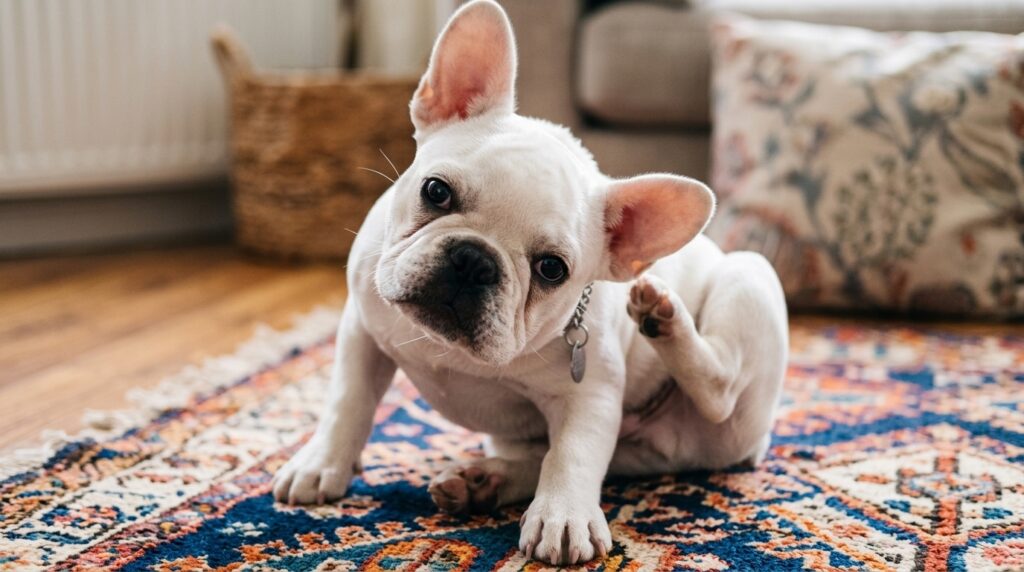
If you want a more symptom-focused breakdown of what this can look like day to day, it may help to read about French Bulldog itchy skin. Itchiness, paw licking, red skin, and repeated scratching often overlap with allergies, but they can also point to other skin issues, so looking at the full pattern is important.
French Bulldog allergies and ears
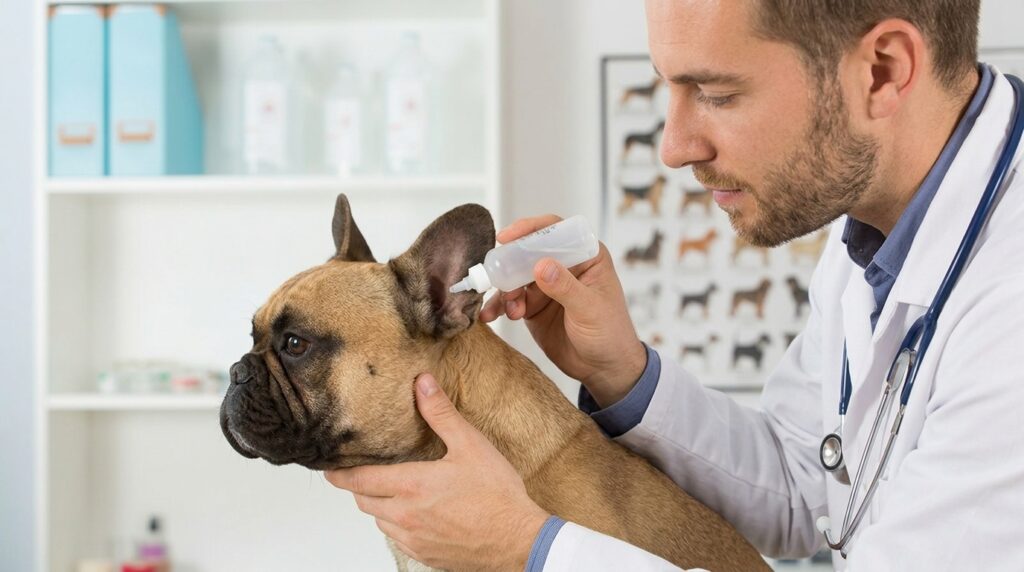
Ears deserve special attention because they are often part of the same pattern. If your Frenchie has repeated ear scratching, odor, discharge, or head shaking, that may be part of the allergy picture rather than a separate problem.
If your dog is also dealing with ongoing ear issues, our older guide on Ear Infection in French Bulldog connects closely with this topic and may help you spot the difference between irritation, infection, and recurring allergy signs.
FAQ
Final thoughts
French Bulldog allergies are common, but they are also easy to misunderstand. The most useful approach is to stay calm, look for patterns, and avoid guessing too early. If the signs are mild and short-lived, simple supportive steps may help. If the problem keeps coming back, if ears are involved, or if the skin is becoming red, smelly, or painful, a veterinary exam is the right next step.
In other words, French Bulldog allergies are best handled as a pattern to investigate, not just a symptom to cover up. That approach is safer for the dog and more useful for the owner.

French Bulldog Paw Licking: Common Causes and When to Worry
French Bulldog Itchy Skin: Common Causes and Safe Relief

French Bulldog Food Allergies: Signs, Common Triggers, and How to Confirm It
French Bulldog Allergies: Signs, Causes, and What Owners Should Know.
Ear Infection in French Bulldog: Signs, Causes, and When to Worry